Thursday, May 31, 2018

Specific Impulse


We just learned about Rocket Engine Thrust.

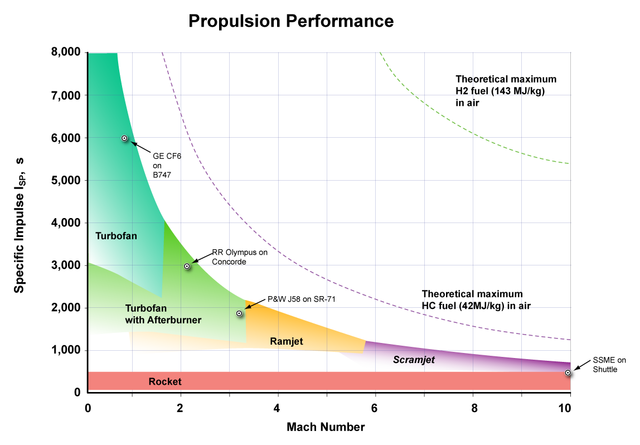
Another part of rocket science is called the Specific Impulse.

This is a way for scientists to measure how fast a rocket moves along, combined with how fast it uses up it's fuel as the rocket engine is blasting off.

The rocket can only burn up so much fuel before it runs out, so the more thrust the rocket for every little drop of its fuel really matters!


(from: wikipedia - specific impulse)


Kid Facts - Blast from the past: Grinding

Wednesday, May 30, 2018

Giant Cuttlefish


We just learned about the Mimic Octopus.

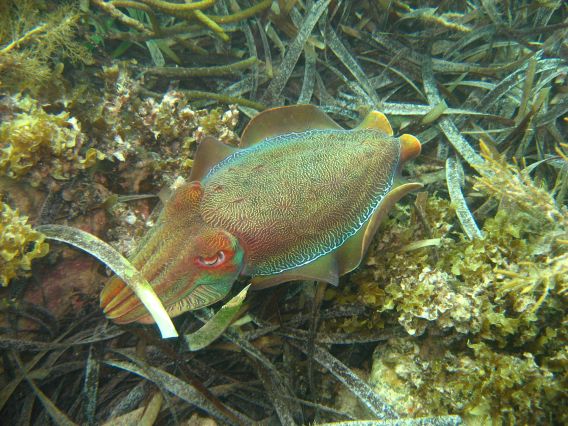
Another type of cephalopod is the Giant Cuttlefish.

This is the largest cuttlefish in the world, and they live around the southern part of Australia.

They are very colorful and can change their whole body to white, red or yellow, and very bright or very dark to try and either get the attention of other cuttlefish, or to confuse the animals they are hunting.

They also can raise up little bumps on their skin to make themselves look either bumpy or smooth, so they can look like rocks, sand or seaweed.

The giant cuttlefish is so popular in Australia, that for a festival someone made a 42 foot long parade float shaped like a cuttlefish, named "Stobie the Disco Cuttlefish" that could move its arms, blink its eyes, and had flashing lights and dance music.


(from: wikipedia - sepia apama)


Kid Facts - Blast from the past: Waxy Monkey Tree Frog

Tuesday, May 29, 2018

Central Incisors


We just learned about the Baby Teeth.

Usually the first baby teeth that people get are the Central Incisors.

Most babies start with two front bottom teeth, and then later the two front top teeth come in.
These incisors are made to be sharp and bite through things like carrots.


(from: wikipedia - maxillary central incisor)


Kid Facts - Blast from the past: Hair Root Sheath

Monday, May 28, 2018

Castel del Monte


We just learned about the Schwerin Castle.

Another famous castle is Castel del Monte in Andria Apulia Italy, built in 1240 by Holy Roman Emperor Frederick II, .

This castle is very different because it is octagon shaped, with eight sides and eight towers.
Some people believe there used to be a large curtain wall going around the outside of the castle.
The castle wall is 82 feet high, and the sides of the octagon are 54 feet wide.

It is a little different that there is no moat and no drawbridge.
There are only 2 entrances, one fancy one in the front, and a simple one in the back for servants.
It is very famous in Italy, and is on the one cent Italian Euro coin.


(from: wikipedia - castel del monte, apulia)


Kid Facts - Blast from the past: Ontario

Sunday, May 27, 2018

Luke the Evangelist


We just learned about Mark the Evangelist, one of the seventy disciples.

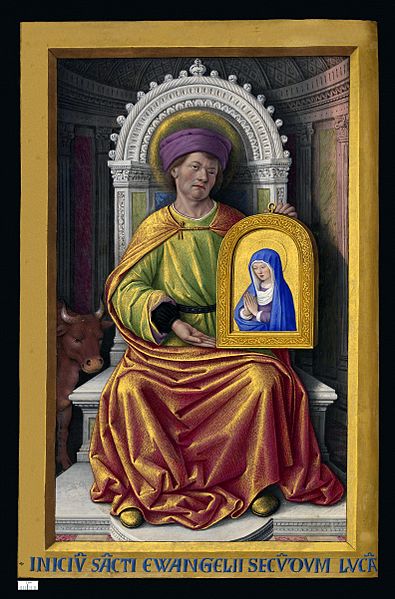
Another of the seventy was Luke the Evangelist.

Luke was a doctor, an artist and a historian, and was the person who wrote the gospel book of Luke in the bible.


(from: wikipedia - luke the evangelist)


Kid Facts - Blast from the past: Psalm 137

Saturday, May 26, 2018

Six Ritual Jades - Hu


We just learned about three of the ancient Chinese Six Ritual Jades:
Cong - earth, Bi - sky/heaven, and Huang - North.

Another of the Six Ritual Jades was the Hu.

This was something like a vase, and it was used to mean "West".


(from: wikipedia - category:chinese jade)


Kid Facts - Blast from the past: David - Michelangelo

Friday, May 25, 2018

Greek - January, February


Let's learn about the months of the year in Greek!

January - Ιανουάριος (Ianouários) - sounds like ee-ah-no-AH-dee-oh-ss
February - Φεβρουάριος (Fevrouários) - sounds like feh-v-doo-AH-dee-oh-ss

center for the greek language
(from: wikipedia - center for the greek language)

ASL: January, February

Italian: Gennaio, Febbraio

German: Januar, Februar

Spanish: Enero, Febrero

French: Janvier, Février

Thursday, May 24, 2018

Rocket Engine Thrust


We just learned about the Rocket Engine.

Another part of rocket science is the Thrust.

We learned that a rocket has propellant in a tank, and an engine that burns up that propellant and pushes the burning fuel out the back of the rocket at the nozzle.

As the fuel is being burned and pushed out of the nozzle, the rocket is pushed along through the air.
That push is called THRUST.

Some rocket engines have a lot of thrust and make rockets go very fast, blasting off into outer space.
Others only have a little bit of thrust, but they are very careful about exactly how much thrust they make in the right direction, like for steering a rocket.

Scientists have to know exactly how much thrust a rocket will have, so they know how much propellant they need, and how big of a tank to use and the shape of the nozzle.


(from: wikipedia - rocket engine)


Kid Facts - Blast from the past: Hole Saw

Wednesday, May 23, 2018

Mimic Octopus


We just learned about the Vampire Squid.

Another type of cephalopod is the Mimic Octopus.

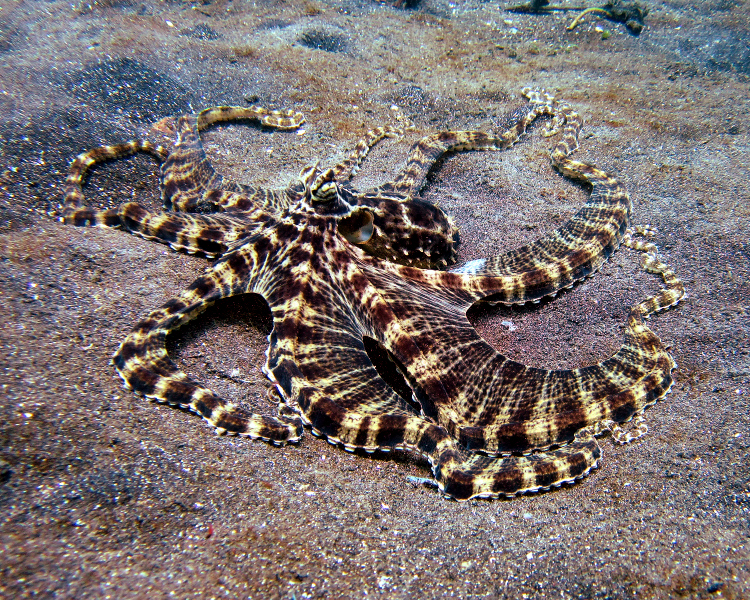
This octopus lives on the sea floor, and tries to look like other animals.
It can change it's body color, puff it's head up, wave its arms around or hold its body in a certain way to look like other animals.

Sometimes it will try and look like it's prey like a crab, so that it can sneak up on the crab and eat it before the crab even figures out there is a dangerous octopus nearby.

Other times it will try and look like a poisonous animal like a lionfish, so that predators that might attack the octopus will stay away and not try to eat it.

Theses octopuses have been seen trying to look like a lion fish, sea snake, flat fish, jelly fish, crab or even a sponge!

They are very smart animals, and will decide which animal to try and look like depending on which other animal they meet.
These smart cephalopods have been seen looking like up to 15 different animals!




(from: wikipedia - mimic octopus)


Kid Facts - Blast from the past: Pouched Frog
Tuesday, May 22, 2018

Baby Teeth


We just started learned about human teeth!

Humans are usually born with no teeth, and around six months after they are born the teeth start to pop out!
We call these first teeth Baby Teeth, and they are also known as milk teeth, temporary teeth, primary teeth or deciduous teeth.

There are twenty baby teeth that come in, with ten on top and ten on bottom.
They usually start with the bottom middle ones, then the top middle and then next on the bottom and top until all twenty are in.

The baby teeth are very important, because they help keep the jaw strong and in the right place, and they are holding a place for the bigger adult teeth that come in later.


(from: wikipedia - deciduous teeth)


Kid Facts - Blast from the past: Hair Plexus

Monday, May 21, 2018

Schwerin Castle


We just learned about Caerlaverock Castle in Scotland.

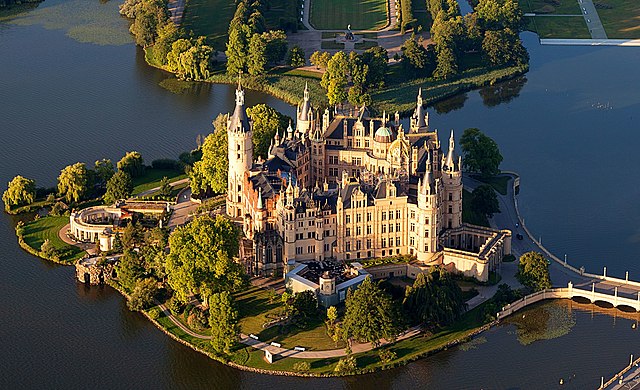
Another famous castle is Schwerin Castle in Schwerin Mecklenburg-Vorpommern Germany, built in 973 AD. Germany.

As different rulers came and went in Germany, this castle was taken over by different people and used for things like military forts, schools, museums or palaces for royal people.

It is now where the state's parliament meets and works.

The castle has over 650 rooms, and is on an island in the middle of Lake Schwerin.

There is a legend of a good ghost named Petermännchen living in the castle, that sneaks around and unlocks doors at night, and will also scare away thieves or intruders.
Stories say that if soldiers guarding the castle fall asleep at night, the ghost will make noises to wake them up!


(from: wikipedia - schwerin palace)


Kid Facts - Blast from the past: Canadian Provinces