Tuesday, May 7, 2019

Palatal Rugae


We just learned about the soft part on the roof of the mouth called the Soft Palate.

Another part of the top of the mouth is the Palatal Rugae.

These are the little ridges on the top of the mouth behind the teeth.
Because of the way they are shaped, they help move food toward the back of the mouth.

Palatal means it is on the hard palate in the mouth, and the word rugae (sounds like roo-gah-ee) means ridges.


(from: wikipedia - rugae)


Kid Facts - Blast from the past: Human Mouth

Monday, May 6, 2019

Merlon


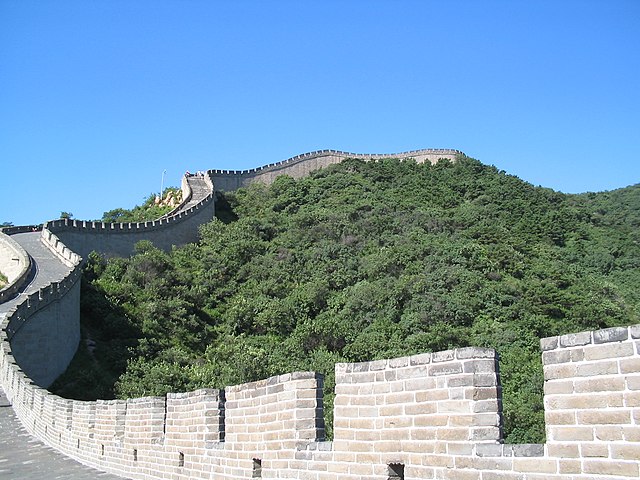
We've already learned about parts of the tops of castles, like the Wall Walk where people can walk along the edge of the castle behind a wall, the Parapet which is a short wall and the Crenel which is a small gap in the wall.

Another part of a wall walk on the castle is the Merlon.

This is the opposite of the crenel, and is a higher part of the wall where people can hide behind.
So usually castles would have merlons and crenels right next to each other, so they could hide behind the merlon and attack people from the crenels.

Having a bunch of crenels and merlons right after each other is called crenellation.


(from: wikipedia - merlon)


Kid Facts - Blast from the past: Bodiam Castle

Sunday, May 5, 2019

Constantine the Great


We just learned about the Battle of Milvan Bridge where Emperor Constantine saw a vision of God.

The Emperor Constantine was the first emperor to become a Christian.
He tried to bring all of Rome together and be the only emperor, and also changed the laws so people could worship however they wanted.

During his time he also had many battles, and used the Chi-Rho symbol on his army, and he believed it was God helping lead him into battle.

Because he helped Christianity and was the first Christian emperor, he later on was called Constantine the Great.

Under Constantine's rule, the Roman empire went all the way up to England, Spain, France, all the way over to Greece, Turkey and Israel, and even covered the northern part of Africa, like Egypt.


(from: wikipedia - constantine the great)


Kid Facts - Blast from the past: Nicolaus

Saturday, May 4, 2019

Banteay Srei Sculptures


We just learned about the Taj Mahal.

Anther place with a lot of history in sculpture is the country of Cambodia.
This is in southeast Asia, and long ago was part of a land called the Khmer empire.

In the 10th century, there was a temple called the Banteay Srei built in the city of Angkor.
It has many stone cut sculptures all over it, made mostly from red sandstone that was very easy to cut.


(from: wikipedia - banteay srei)


Kid Facts - Blast from the past: Six Ritual Jades - Bi

Friday, May 3, 2019

Norwegian - Monday, Tuesday, Wednesday


We just learned in Norwegian that to say his face is rough is Ansiktet hans er grovt

Let's learn the days of the week in Norwegian!

Monday - Mandag - Sounds like mah-n-dah
Tuesday - Tirsdag - Sounds like tee-sh-dah
Wednesday - Onsdag - Sounds like oh-n-s-dah

norwegian language
(from: wikipedia - norwegian language)

Greek: Δευτέρα (Deftéra), Τρίτη (Tríti), Τετάρτη (Tetárti)

ASL: Monday, Tuesday, Wednesday

Italian: Lunedi, Martedì, Mercoledì

German: Montag, Dienstag, Mittwoch

Spanish: Lunes, Martes, Miercoles

French: Lundi, Mardi, Mercredi

Thursday, May 2, 2019

Forensic Anthropology


We just learned about how scientists can look at guns with Forensic Firearm Examination to see who committed a crime.

Another part of forensic science is Forensic Anthropology.

This is the science of looking at the bones of a person and trying to figure out what happened.
Sometimes this is used in archeology for bones that are hundreds or thousands of years old.
Other times it can be used by police when they find some bones, to try and figure out who the person was.

Scientists can look at teeth to see how old the person was, or the length of their arm or leg bones, or even the size of their skull.

They can even look at the hip bones of a person to see if they were a man or a woman.
Sometimes this helps solve a crime if they find an old skeleton, and they don't know who the person was when they were alive.
If they figure out who it was, they can look for marks on the bones, to maybe tell how they died.
They can also look at the teeth, and sometimes match them up with x-rays from a dentist office to see if they can figure out who it was.

It might seem a little scary or creepy, but by using science with old bones we can solve crimes and make sure the bad guys don't get away!
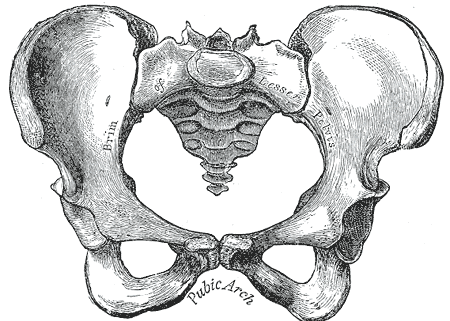
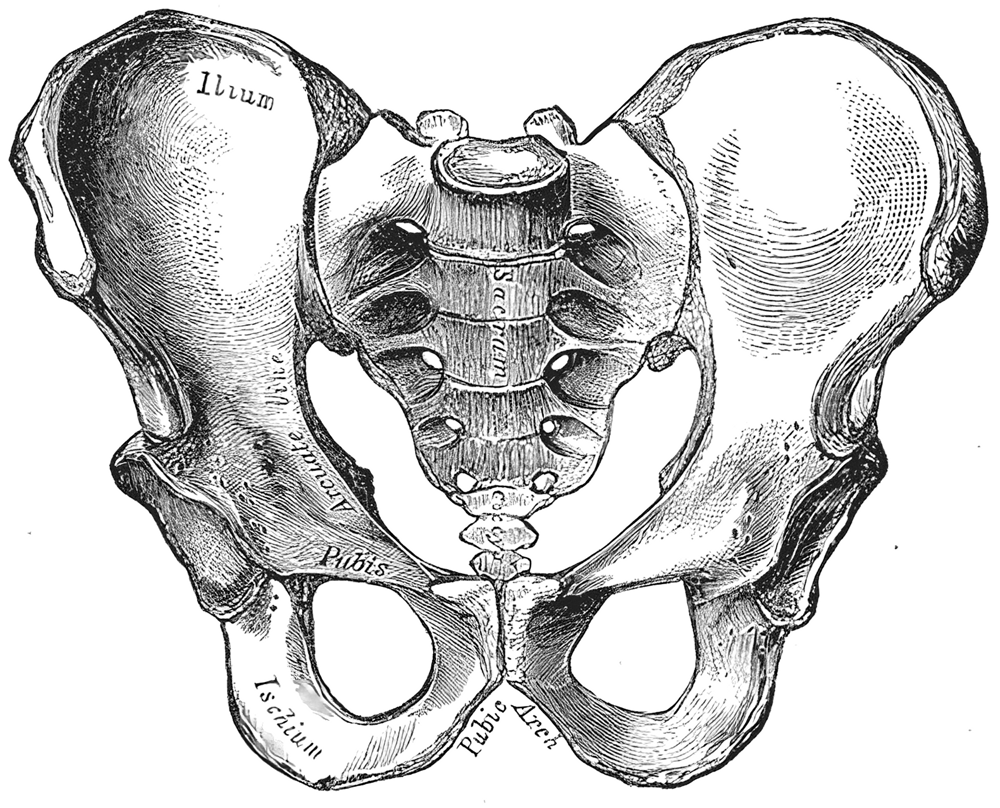

(from: wikipedia - forensic anthropology)


Kid Facts - Blast from the past: Rocket Propellant Tank

Wednesday, May 1, 2019

Atolla Jellyfish


We just learned about the Irukandji Jellyfish.

Another type of jellyfish is the Atolla Jellyfish, also called the Atolla wyvillei or Coronate medusa.

The atolla jellyfish live very deep in the ocean, from 1,000 to 4,000 meters deep.

These are very tiny jellyfish, only growing about 170 milimeters wide.
They have about 20 tentacles floating off of their bell, and then one really long one that hangs out trying to trap prey to eat.

Because these jellies are so small, they get eaten a lot by other animals.
When they think they are in danger, they are able to flash their body like a blinking blue light.

When this happens, sometimes a bigger animal will come along and eat the smaller animal that is trying to eat the jelly.
This gets the jelly the nickname of "Alarm Jelly" because it's alarm goes off when it gets scared.

Scientists have copied this flashing blue light and used it to try and get other big deep sea animals to come check it out.


(from: wikipedia - atolla jellyfish)


Creatures of the Deep | Atolla Jelly - oceannetworks canada


Kid Facts - Blast from the past: Lituites Nautilus

Tuesday, April 30, 2019

Soft Palate


We just learned about the Hard Palate on the roof of the mouth.

Another part of the mouth is the Soft Palate.

This is on the roof of your mouth, right at the back of your throat.
You can feel that this is soft, and under the skin are five different muscles that help you swallow.

They all have big long names, but they make sense if you understand what they are doing:

- Levator & Tensor veli palatini - Lift and tightens up the palate to block the back of the throat so food doesn't go up to your nose

- Palatoglossus & Palatopharyngeus - Use the palate muscles to pull on the back of your throat (pharynx) to close up the place where you breathe (trachea) and make sure the food goes down the esophagus where it's supposed to

- Musculus uvulae - Moves the uvula to help block food from going up your nose


(from: wikipedia - soft palate)


Kid Facts - Blast from the past: Interphalangeal Ligaments

Monday, April 29, 2019

Crenel


We just learned about the short wall on top of a castle called a Parapet.

Another part of a castle is the Crenel.

Sometimes people would have gaps in the parapet wall, so that they could attack their enemies with arrows or even throw rocks on them.

The gap or low spaces on the parapet walls are called the crenel, or embrasure.


(from: wikipedia - battlement)


Kid Facts - Blast from the past: Balmoral Castle

Sunday, April 28, 2019

Battle of the Milvan Bridge


We just learned about the Edict of Milan written in 313 AD by the emperor Constantine that it legal to be a Christian.

In the year 312 AD there was a big battle called the Battle of the Milvan Bridge in Ponte Milvio, Rome.

At that time Constantine was in a war with another emperor Maxentius.
Some time before the battle Constantine had a vision telling him to use the Chi-Ro symbol for his army, and he would win the battle with that as his sign.

We learned before that the chi-rho is the greek letters that look like X and P, and were for the Greek word for Christ, that started with those two letters.

Constantine put that symbol on the shields of his army, and beat Maxentius.

It was after he won that battle that he went back and wrote the Edict of Milan to make Christians free.


(from: wikipedia - battle of the milvan bridge)


Kid Facts - Blast from the past: Parmenas

Saturday, April 27, 2019

Taj Mahal


We just learned about the Jama Masjid.

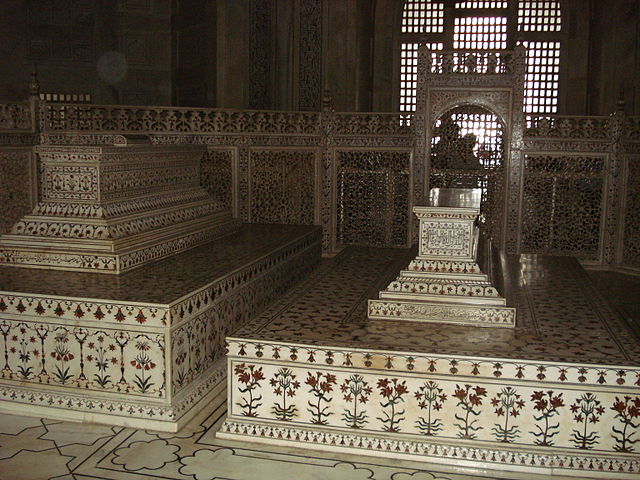
Another famous Indian work of art is the Taj Mahal, built in 1632 AD in Agra, Uttar Pradesh, India.

The building is 240 feet tall, and the area where the building is covers 42 acres of land.
There is a mosque and a guest house, and fancy gardens.

It was made as a tomb for the wife of the emperor Shah Jahan.
He was so sad when his wife Mumtaz Mahal died that he wanted to make a very fancy place for her body to be put to rest.
The name Taj Mahal means "Crown of the Palaces".
It took about 20,000 people to make all the artwork, the buildings, gardens and towers to get it done.


(from: wikipedia - taj mahal)


Kid Facts - Blast from the past: Houmuwu Ding