Wednesday, February 27, 2013

Zebras


We just learned about Prairie Dogs.

Is a zebra white with black stripes, or black with white stripes?
zebra
(from: wikipedia - zebra)

Every zebra's stripe patterns are different, but if you look on their bodies
you can see the stripes on their face, neck and shoulders go up and down,
but on their legs and behind they go side to side.

There are lots of different ideas about why zebras have stripes.
Some people say it's to help them hide in grass, or confuse predators
by blending all of their stripes together.
Others have found that it helps confuse flies so they don't get bitten so much!

Whatever the reason is, they're definitely dressed to party.
Even an albino zebra still looks pretty wild!
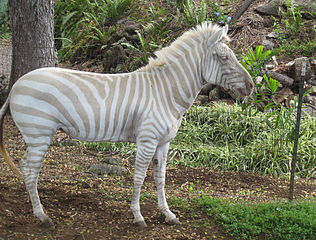
albino zebra

Tuesday, February 26, 2013

Foot Phalanges


We just learned about the Metatarsus bones in the foot.

We learned a while back about the three types of phalanges in the hand:
proximal, intermediate and distal.

The toe bones are also named phalanges, and they have the same parts as the finger bones.
foot phalanges
(from: wikipedia - phalanges of the foot)

Monday, February 25, 2013

Mexico


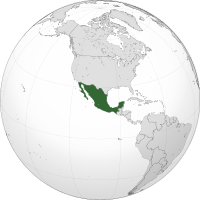
The country of Mexico is located in North America, just below the United States of America.

mexico
(from: wikipedia - mexico)

The language in Mexico is Spanish.

Mexico City has the most people of any city in North America, with over 21 million,
and is in the top 10 most populated cities in the world.

A long time ago in Mexico there were other people called the
Aztecs and the Mayans who built some huge pyramids.
In a city called Chichen Itza there is a pyramid about 100 feet tall.
chichen itza

Sunday, February 24, 2013

Apostle's Creed - Part 12


Apostle's Creed - all done!

We just learned about Part 11.

Let's learn the rest!

I believe in God, the Father Almighty, maker of heaven and earth.
And in Jesus Christ, his only Son, our Lord
who was conceived by the Holy Spirit, and born of the virgin Mary,
suffered under Pontius Pilate, was crucified, died and was buried.
He descended into hell. On the third day He rose again from the dead.
He ascended into heaven and sits at the right hand of God the Father Almighty.
From thence He will come to judge the living and the dead.
I believe in the Holy Spirit,
the holy Christian Church, the communion of saints,
the forgiveness of sins,
the resurrection of the body,

Here's part 12:

and the life everlasting, Amen.


(from: wikipedia - apostle's creed)

This means we believe in heaven.

Saturday, February 23, 2013

Jupiter


We just learned about the planet of Mars.

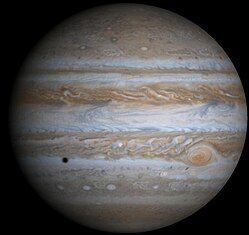
The largest planet in our solar system is Jupiter
jupiter
(from: wikipedia - jupiter)

Jupiter is called a gas giant because it is mostly made up of gases like air instead of solids or liquids.

It is so big, that it is over 11 times bigger around than earth is!

We only have one moon on the Earth, but Jupiter has 67 moons.
One of them called Ganymede is about half as big as Earth, and bigger than the planet Mercury!

Another interesting thing about Jupiter is something called the Great Red Spot.
It is a giant storm that can be seen on Jupiter's surface.
great red spot
(from: wikipedia - great red spot)

The spot is over 100 years old, and is so big you could fit more than two whole Earths inside it!

Friday, February 22, 2013

French - You are sad


We just learned how to say I am happy in French.

Now let's learn how to say You are sad.

We can break it up into the three words:
You - Vous - sounds like vooz /?/
Remember that we learned Vous is pronounced like voo, in très bien merci et vous?
But when there is a vowel sound after vous then you say a Z sound at the end.

are - êtes - sounds like et /?/
sad - triste - Sounds like tuh-east-uh /?/

Since the êtes ends with a t sound, and the triste starts with a t sound,
they mix together.

So all together Vous êtes triste sounds like vooz-eh-tuh-east-uh.

Thursday, February 21, 2013

Voltage


We just learned about Neutrons, Protons and Electrons.

How does the electricity from the plug in the wall go through the wires,
and to the lamps, TVs and toys we use every day?

You can't see it with your eyes, but scientist have studied and discovered that
there are three basic parts for most of the electricity that we see every day:
Voltage, current, and resistance.

We'll take time to learn about these one at a time,
starting with voltage which is sometimes called potential difference.

It can be confusing to try and imagine the way electricity works when it's zapping through a wire or a plug,
so we try to compare it to a pipe filled with water, since that's something easy to picture in our imagination.

If you have a big pipe filled with water, you can think of the voltage
as the speed of the water going through, or the speed that it is being pushed through the pipe.
pipe
(from: wikipedia - hydraulic analogy)