Sunday, May 3, 2020

The Prince's Crusade


We just learned about the The People's Crusade that was mostly just poor people and not soldiers.

Another part of the First Crusade was The Prince's Crusade.

This was not like the People's Crusade which was just a bunch of poor people.

This was actual armies, with thousands of people.
There were soldiers, horses and even nobles like counts and dukes.
No one is for sure how many, but some people think it was around 10,000 knights, 50,000 soldiers, and a total of 100,000 people in the army.

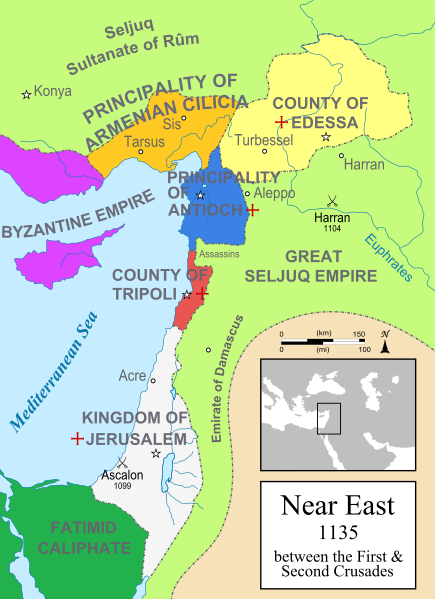
The armies came out of Europe into what is now Turkey, and fought their way down to Jerusalem.
They fought for 3 years, from the year 1096 to the year 1099 and killed about 100,000 people in the battle.

At the end of it all they took over Jerusalem, left some soldiers there but most people went home.

Through the years many wars have been fought between different countries, and a lot of times the people in power would use religion as the reason why people should go fight and kill others.

Because the army in the First Crusade won their battles, the countries in Europe used that as a reason to have even more wars using Christianity as the reason to go to war.


(from: wikipedia - first crusade)


Kid Facts - Blast from the past: Constantine the Great

Saturday, May 2, 2020

Meat for Wild Men - Charles Marion Russell


We just learned about the sculpture Patience and Fortitude - Edward Clark Potter.

Another famous American sculpture is Meat for Wild Men made by Charles Marion Russell in 1920.

Russell was born in Missouri in 1864 Missouri.
Growing up he would see explorers coming through town and really liked everything about the wild west.
He would draw pictures and make sculptures of what he saw.

When he grew up he moved to Montana where he worked on a sheep ranch, then as a hunter and trapper, lived with Native Americans, and even worked as a cowboy.

Because he spent time in the west watching animals, cowboys, and Native Americans he knew them very well and started making very good paintings and sculptures of them.

He made over 2,000 of these types of paintings, and was nicknamed "The Cowboy Artist".

The sculpture he made called Meat for Wild Men is supposed to be a bunch of cowboys hunting a buffalo.


(from: wikipedia - charles marion russell)


Kid Facts - Blast from the past: Banteay Srei Sculptures

Friday, May 1, 2020

Russian - Monday, Tuesday, Wednesday


We just learned in Russian that to say his face is rough is Его лицо грубо (Yego litso grubo)

Let's learn the days of the week in Russian!

Monday - Понедельник (Ponedel'nik) - Sounds like poh-n-yeh-deh-l-neek 文A

Tuesday - Вторник (Vtornik) - Sounds like f-toh-r-neek 文A

Wednesday - Среда (Sreda) - Sounds like s-ray-dah 文A


russian language
(from: wikipedia - russian academy of sciences)

Norwegian: Mandag, Tirsdag, Onsdag

Greek: Δευτέρα (Deftéra), Τρίτη (Tríti), Τετάρτη (Tetárti)

ASL: Monday, Tuesday, Wednesday

Italian: Lunedi, Martedì, Mercoledì

German: Montag, Dienstag, Mittwoch

Spanish: Lunes, Martes, Miercoles

French: Lundi, Mardi, Mercredi

Thursday, April 30, 2020

Steam Cylinder


We just learned about the Vacuum Pump.

Another part of the history of steam engines is the Steam Cylinder.

One inventor named Denis Papin had the idea to have a tube or a cylinder with hot water in it.
He found out that when you heated up the hot water, the pressure got really high with the steam and air pushing very hard on the walls of the cylinder.

This was the opposite of the vacuum pump, where it was sucking in, this was air pushing out.
He got the idea to have a pole or a piston that could be pushed out when the steam was heated up.
This piston could be used to push something up like a big machine.

So if the steam cooled down, the piston would go down.
If the steam heated up, the piston would go up.


(from: wikipedia - denis papin)


Kid Facts - Blast from the past: Forensic Anthropology

Wednesday, April 29, 2020

Andean Mountain Cat


We just learned about the Pampas Cat.

Another type of wild cat is the Andean Mountain Cat.

This is a small cat that lives in the Andes mountains, and is endangered with less than 2,500 left in the world.

It lives up in the mountains, up above 5,900 feet!
They are about 3 feet long, one foot tall and weigh about 12 pounds.
Their fur is grey with some spots, and they have dark rings on their tails.

These cats look a lot like the Pampas Cat, and a lot of people mistake them.
There are a lot of very small differences that people can use to tell them apart, but they really have to know the differences!


(from: wikipedia - andean mountain cat)


Kid Facts - Blast from the past: Atolla Jellyfish

Tuesday, April 28, 2020

Meibomian Gland


We just learned about the Epicanthic Fold.

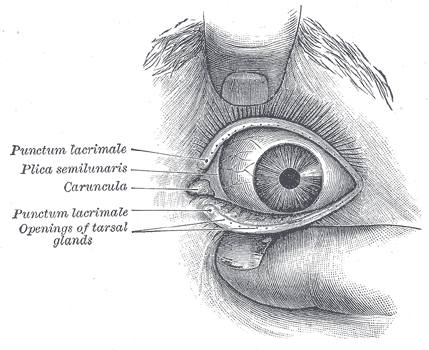
Another part of the eye is the Meibomian Gland.

Just inside the top and bottom eyelids are some small glands that help keep your eyes wet.
They let out a little bit of oily liquid called meibum that helps spread around the water tears that come out, help keep the tears from spilling over onto your face, and help keep the water from just evaporating.

If someone is having problems with their meibomian glands they can get really dry eyes.
The word "meibomian" was named after the person who discovered the glands, Heinrich Meibom.

(from: wikipedia - meibomian gland)


Kid Facts - Blast from the past: Soft Palate

Monday, April 27, 2020

Palmer Station


We just learned about the ANSMET Station.

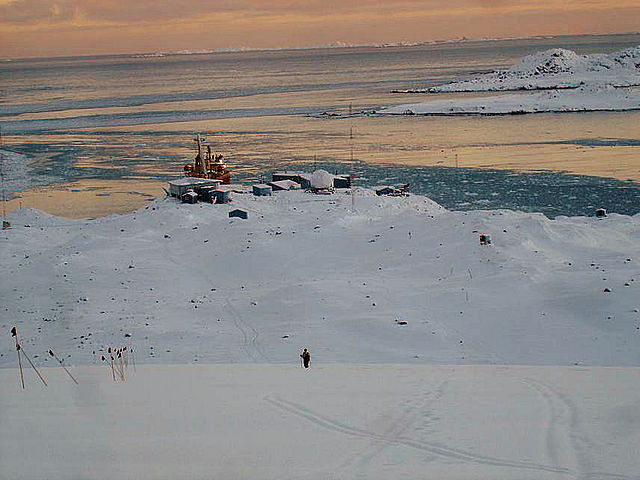
Another research station in Antarctica is Palmer Station.

This station is right along the Antarctic Peninsula, and is actually on a small island named Amsler Island.
Because it is right on the water, this station spends most of its time studying the sea and the animals living in it near Antarctica.

There is a boat called the Laurence M. Gould that helps people travel from the station to South America.


(from: wikipedia - palmer station)


Kid Facts - Blast from the past: Crenel

Sunday, April 26, 2020

The People's Crusade


We just learned a little about the The Crusades.

At the beginning of the Crusades, some of the church leaders were very upset because some people in other lands called Turks had come along and taken over other lands.
The Turks were not Christians, and many people said that the Turks were not nice to Christians in the lands they took over.
They also took over the holy places like Jerusalem.

Some of the church leaders called for people all over to attack anyone that wasn't a Christian, and even to kill them.
They called it a holy war, and told people that Jesus wanted this to happen and that if they died for this war Jesus would be happy, even though Jesus tried to teach people not to kill or hurt people.

One of the church leaders in Germany named Peter the Hermit gathered thousands of people and got them very angry at anyone that wasn't Christian.
These people were very poor and scared, and they followed him carrying shovels and pitchforks and not much else.
They were not well trained soldiers, but they were all told to go kill anyone that wasn't Christian, so they went through some parts of Germany and killed thousands of people.

Later they went up against some actual Turk soldiers, and almost all of the poor people were killed.

Because it was just normal people and not soldiers, this was called the People's Crusade.
It was a very sad time because these people didn't really know much of what was going on, they just needed someone to follow and they were poor and starving.
So they started the crusade, killed a lot of people, and then were killed themselves.


(from: wikipedia - people's crusade)


Kid Facts - Blast from the past: Battle of Milvan Bridge

Saturday, April 25, 2020

Patience and Fortitude - Edward Clark Potter


We just learned about the On the Prowl - Edward Kemeys.

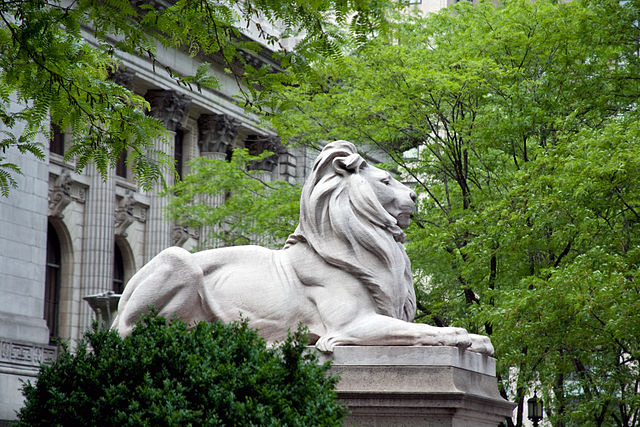
Another famous American sculpture is Patience and Fortitude made by Edward Clark Potter in 1910.

Potter was born in Connecticut in 1857, and grew up in Massachusetts.
He started off going to college to be a minister, but then later studied to be an artist.

He worked with famous artist Daniel Chester French where he learned about animal studies, and when he was 53 he made the sculpture of two lions out of pink Tennessee marble that are outside the front of the New York public library.

He named the lions Leo Astor and Leo Lenox for the private libraries that are inside the library.
During the Great Depression, the mayor of New York said that the people there were showing great Patience and Fortitude, so they renamed the lions to Patience and Fortitude to honor the people that lived through the Depression.


(from: wikipedia - edward clark potter)


Kid Facts - Blast from the past: Taj Mahal

Friday, April 24, 2020

Russian - His face is rough


We just learned in Russian hands are soft is Ее руки мягкие (Yeye ruki myagkiye).

To say his face is rough you would say Его лицо грубо (Yego litso grubo).
His - Его (Yego) - sounds like yay-go 文A

face - лицо (litso) - sounds like lee-t-soh 文A

rough - грубо (grubo) - sounds like g-roo-boh 文A


So all together Его лицо грубо (Yego litso grubo) sounds like yay-go lee-t-soh g-roo-boh.


russian language
(from: wikipedia - russian academy of sciences)

Norwegian: Ansiktet hans er grovt

Greek: Το πρόσωπό του είναι τραχύ (To prósopó tou eínai trachý)

ASL: His face is rough

Italian: il suo volto è ruvida

German: Sein Gesicht ist rau.

Spanish: Su cara es áspera

French: Son visage est rude

Thursday, April 23, 2020

Vacuum Pump


We just learned about the Steam Turbine.

Let's learn a little about how steam engines work.
First we need to learn a few other things that people discovered before they could make a steam vacuum.

One thing people discovered was the Vacuum Pump.

A long time ago people didn't understand a long time ago was how a vacuum worked.
Not like the vacuum cleaner that sucks dirt up from the floor, but a vacuum like a ball or a tube that is so empty that it has suction holding itself closed.

You can think about this like a plastic pop bottle that you suck air out of.
As soon as you let go, it will suck the air in and fill itself up again.

Back in 1654 people didn't understand this, so a man named Otto von Guericke came up with an experiment to show them.
He took two half circles made of metal, called the magdeburg hemispheres, and put them together like a closed ball.
Then he used a pump to suck out all of the air from inside, creating what is called a vacuum.

A vacuum is a space that has no air, or very little air.
Because he used a pump to do this, it was called a vacuum pump.

After that he challenged people to try and pull the half circles apart, but not even teams of horses could do it.
This understanding of how a vacuum works was one of the things that helped people invent steam engines.


(from: wikipedia - magdeburg hemispheres)


Kid Facts - Blast from the past: Forensic Firearm Examination