Wednesday, March 20, 2013

Arctic Fox


We just learned about the Chameleon.

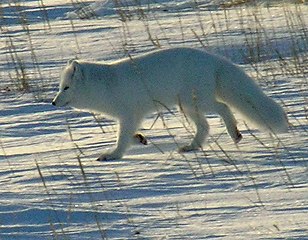
The arctic fox's fur changes color from brown in the summer, to white in the winter!
arctic fox
(from: wikipedia - arctic fox)

It does this of course to blend in to the snow so it can hide from predators or prey.

The arctic fox also has super great hearing.
If there is an animal buried underneath the snow, the fox can listen to find exactly where it is,
then pounce down into the snow and get it!

Tuesday, March 19, 2013

Frontal Bone


We learned before that the part of your cranium where your brain is at is called the neurocranium

There are eight bones that make up the neurocranium,
one of them is called the Frontal Bone
frontal bone
(from: wikipedia - frontal bone)

It starts above your forehead, and goes all the way down to the top of your nose and eyeballs.

Monday, March 18, 2013

Caribbean Islands


We just learned about the country of Greenland.

We've covered the larger countries in North America,
but there's one thing we haven't mentioned yet... the islands!

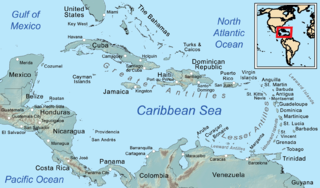
The area that is South of the state of Florida is called the Caribbean Sea.
There are more than 30 island countries there, spread out over 7,000 islands!

caribbean islands
(from: wikipedia - caribbean)

The most populated islands in the Caribbean are Cuba, Dominican Republic and Haiti, each of them with over 10 million people.

There are over 40 million people spread across those small islands,
more people than live in the whole country of Canada!

Sunday, March 17, 2013

Genesis


Remember we learned about how the Old Testament is all about what happened before Jesus was born, and that you can split it up into 4 parts: Law, History, Poetry, Prophecy.

There are five books of Law, and they are:
Genesis, Exodus, Leviticus, Numbers and Deuteronomy.

The first book Genesis means beginning.

There are many well known people from this book that you might remember:

Adam & Eve - The first people God created.

Cain & Abel - Children of Adam & Eve.

Noah - Built the ark to avoid the flood.

Abraham - Made a promise with God, father of the Israelites.

Isaac - Abraham's only son, almost sacrificed but saved by an angel.

Jacob & Esau - Twins, Jacob gets renamed as Israel.

Joseph - Coat of many colors.


(from: wikipedia - Book of genesis)

Saturday, March 16, 2013

Neptune


We just learned about the planet of Uranus.

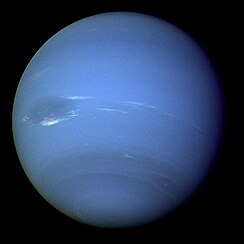
Neptune is the eighth and last planet in our solar system,
but it wasn't always that way!
neptune
(from: wikipedia - neptune)

For almost 100 years, Neptune was known as the last planet in our solar system.
Then in 1930, someone discovered Pluto!

For 40 years, Pluto was the furthest planet from the Sun in our solar system,
but then in 1979 it's orbit brought it closer to the Sun and Neptune became the furthest (and ninth) planet.

It was like that for 20 years and then switched back to Pluto being furthest.

Then in 2006, Pluto was reclassified as a dwarf planet,
making Neptune the furthest again.

Friday, March 15, 2013

French - We are surprised


We've now learned how to say I am happy,
you are sad, he is angry, and they are excited, in French.

Now let's learn how to say We are suprised.

We can break it up into the three words:
We - Nous - sounds like nooz /?/
are - sommes - sounds like sum /?/
surprised - surpris - Sounds like see-uh-puh-ee /?/


All together Nous sommes surpris sounds like noo-sum-see-uh-puh-ee.

Thursday, March 14, 2013

Electrical Circuit


Now that we've learned about voltage, current and resistance,
we can try to understand an electrical circuit.

Remember what we've learned already by comparing electricity to water flowing through a pipe:
Voltage - The speed of the water flowing through
Current - How big around the pipe is
Resistance - A part where the pipe gets smaller and makes it tougher for water to get through

When people draw pictures to represent electrical circuits, they use special pictures and letters:
electrical circuit
(from: wikipedia - electrical circuit)

v with the circle and +- in it stands for voltage.
i with an arrow stands for current
R with the zig-zag lines stands for resistance

So if you think of it like a water hose, the faucet is starting at v and the voltage
is how much you've turned on the faucet. Just a drip or full blast?.

The current i is for how big around the hose is.
Is it just a regular garden hose, or a big fire truck hose?

The resistance R is if there are any kinks in the hose,
or if anything is stuck in the hose.

You can see that all those things together make the water come out of the end of the hose really fast or really slow!