Saturday, May 25, 2013

Constellations - Taurus


We've now learned about the constellations the Big Dipper and Orion.

Next up is Taurus.
This one is supposed to be a giant bull in the sky.
The best way to find it is to first find Orion, then look to the left of Orion's belt and you should see a bunch of stars that make up a V shape.
That's Taurus!

Follow the points of the V and you should find two stars that make up the points of the bull's horns.
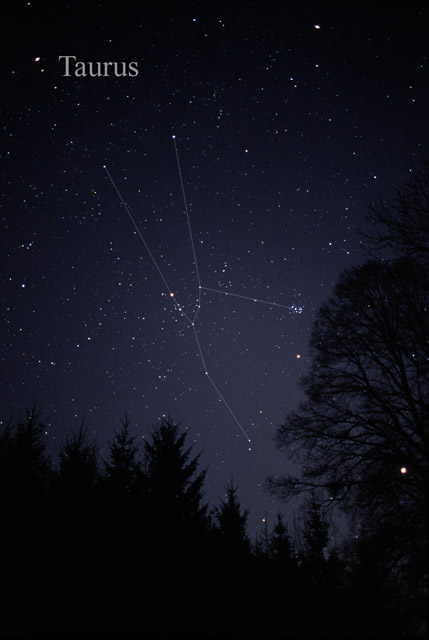
taurus
(from: wikipedia - taurus constellation)


Friday, May 24, 2013

French - Thursday, Friday


Let's keep learning the days of the week in French.

We already learned that Monday, Tuesday and Wednesday was Lundi, Mardi and Mercredi

Next up is Thursday and Friday.

Thursday - Jeudi - sounds like zhuh-dee /?/

Friday - Vendredi - sounds like vahn-duh-ah-dee /?/

Thursday, May 23, 2013

Ions


We just learned a little about Mass.

A while back we learned about atoms,
and the parts inside of them protons, neutrons and electrons

Electrons have a negative charge, and Protons have a positive charge.

If an atom has more electrons than protons or more protons than electrons,
then we call it an ion.

If we know the number of electrons and protons, we can figure out whether it is more negative or more positive.

So if an atom has 4 electrons and 2 protons, then there are 2 more electrons.
This would give the atom a negative charge of 2.
An ion with a negative charge is called an anion.

If an atom has 6 protons and 2 electrons, then there are 4 more protons.
This would give the atom a positive charge of 4.
An ion with a positive charge is called a cation.


(from: wikipedia - ion)

Wednesday, May 22, 2013

Wasps and Bees


We just learned about the Flying Squirrel.

Let's learn about Wasps and Bees.

When striped yellow bugs are flying in the air, it can be hard to tell sometimes if it is a bee or a wasp.
Maybe because there are over 100,000 types of wasps, and 20,000 types of bees!

The biggest difference you can notice is that most bees have some hair on them, and wasps have no hair.
Bees eat nectar from flowers, and wasps eat other bugs.
Most bees die when they sting you, and most wasps don't die and can keep stinging.

Even though we might be scared of bee and wasp stings, they do help us out!
Bees help make flowers grow, and wasps eat small bugs that can hurt plants and crops.

Here is a honey bee:
honey bee
And a bumble bee:
bumble bee

Here is a yellow jacket (wasp):
yellow jacket
Here is a hornet:
hornet
(from: wikipedia - characteristics of common wasps and bees)


Tuesday, May 21, 2013

Vomer


Let's learn the other parts of the facial skeleton!

We've already learned about the mandible, maxilla and nasal bone.
Next up is the vomer. You can't really see where it is but it's a bone below your nose and above the roof of your mouth.
vomer
(from: wikipedia - vomer)

Monday, May 20, 2013

France


We just learned about the South American Islands.

Let's learn about the countries in Europe!

First up is France.

In France they speak French, and to say hello you would say Bonjour!.
More people go on vacation to France than any other place in the world.
france
(from: wikipedia - france)

The most famous city in France is Paris.

There you will find things like the eiffel tower:
eiffel tower
and the Louvre museum:
louvre

Sunday, May 19, 2013

King Saul


Let's keep learning about the kings from the books of Samuel, Kings and Chronicles.
We already learned about the prophet Samuel.

Next up is King Saul.

Saul was a very handsome man, and led God's people to win battles with other people.

He later had problems because he was impatient.
When he didn't listen to some instructions God gave him through Samuel, God was angry.

Saul was also jealous of David, because people were talking about how great a warrior he was.
So he planned to kill David, but Saul's son Jonathan was David's best friend and he saved him.

Saul was eventually killed in a battle.

king saul
(from: wikipedia - saul)