Monday, March 9, 2020

Robert Falcon Scott


We just learned about the Roald Amundsen.

Another famous Antarctic explorer was Robert Falcon Scott.

He was a British sailor who joined up with a man named Ernest Shackleton for the "Discovery" mission to get to the south pole in 1901.

They landed in Antarctica and did some exploring, but did not make it to the south pole.

Scott went again in 1909 on the "Terra Nova Expedition" and was famous for using motor sleighs for a lot of the work, and also horses as well as dogs.

He was going to the south pole at the same time as Roald Amundsen, but Amundsen got there first.

At the very last part of the trip, he chose 4 men to go to the pole, and sent everyone else back.
On the way the motor sleighs stopped working, so the men had to pull the sleds themselves, but they kept going.

After his team of 4 men made it to the south pole, they took pictures as proof, but on the way back they had many troubles.
The temperature dropped a lot lower, the winds that were supposed to push them along stopped, everyone was getting frostbite, and they ran into some terrible storms.

They finally made it to the place where there was supposed to be some food, and also some sled dogs to help them make the trip back.
Because of the bad weather, the people who were supposed to bring the sled dogs did not make it there in time, and so the four men froze and died.

Later on in November of that year they made a trip out into the cold and found Scott and his men.
They made a grave site there, put up a big cross and named the place Observation Hill.

Before those men died, some of them had dug into the ice and found some fossils, and kept them.
There were over 2,100 things found that they collected and sent back to England to study.

With these discoveries, they proved that at one time Antarctica was warm and had trees before it was all frozen over.


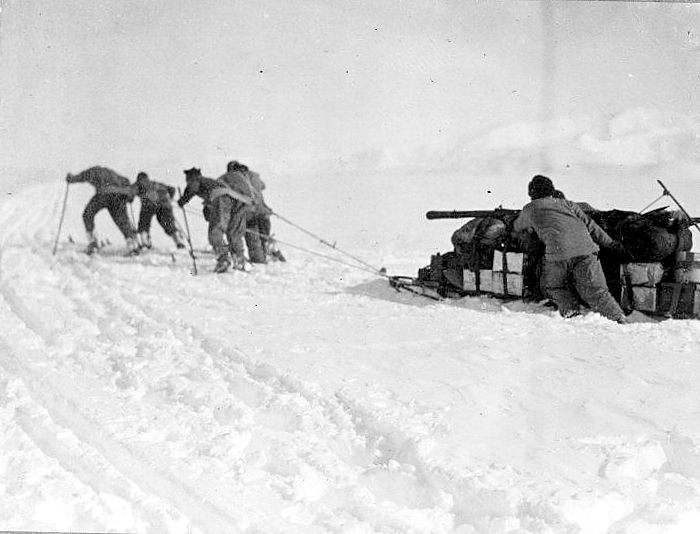

(from: wikipedia - robert falcon scott)


Kid Facts - Blast from the past: Castles and Palaces

Sunday, March 8, 2020

Neume


We just learned about the Cyrillic Script.

Another part of early Christianity is the Neume.

In the 900s, there were a lot of monks that were living in France, and they were writing music for things like Gregorian Chant.

They started using marks on their papers to show what kinds of notes to sing, like high or low or how long or short a note should be.

These writings turned into the music notes that we know today like half notes, quarter notes and the musical staff.

The word neume either comes from the Greek word πνεῦμα meaning "breath" or the word νεῦμα meaning "sign".


(from: wikipedia - neume)


Kid Facts - Blast from the past: Peshitta

Saturday, March 7, 2020

Nathan Hale - Frederick William MacMonnies


We just learned about the sculpture of Standing Lincoln by Augustus Saint-Gaudens.

Another famous American statue is the sculpture of Nathan Hale by Frederick William MacMonnies in 1893.

MacMonnies was born in New York in 1863, and when he was 17 he started working with the famous artist Augustus Saint-Gaudens and became friends with him.

After a few years he went to Paris to study sculpture, and even opened his own art studio there.
He was one of the few American artists who was famous both in America and Paris.

When he was 30 years old he got a job in New York to make a big statue of Nathan Hale, who was a famous hero from the American Revolution.

It is about eight feet tall and made of Bronze, made in France and then brought over to America.


(from: wikipedia - nathan hale (statue))


Kid Facts - Blast from the past: Mukteshvara Temple

Friday, March 6, 2020

Russian - This house is big


We just learned that in Russian we are surprised is Мы удивлены (My udivleny).

Let's learn about some of the things we see every day.

To say this house is big in Russian you say Этот дом большой (Etot dom bol'shoy).

This - Этот (Etot) - sounds like eh-tuh-t 文A
house - дом (dom) - sounds like doh-m 文A
big - большой (bol'shoy) - sounds like boh-l-show-ee 文A

russian language
(from: wikipedia - russian academy of sciences)

Norwegian: Dette huset er stort

Greek: Αυτό το σπίτι είναι μεγάλο

ASL: This house is big

Italian: Questa casa è grande

German: Das Haus ist groß

Spanish: Esta casa es grande

French: Cette maison est grande

Thursday, March 5, 2020

Hydraulic Cylinder


We just learned about Hydraulics, using water to move things.

Another part of hydraulics is a Hydraulic Cylinder.

This is a tube that is filled with liquid like oil, and a special motor pushes more oil into the cylinder which pushes something like a big metal rod out of the tube.


(from: wikipedia - hydraulic cylinder)


Kid Facts - Blast from the past: Space Shuttle

Wednesday, March 4, 2020

Clouded Leopard


We just learned about the Snow Leopard.

Another type of cat is the Clouded Leopard.

This cat lives in the himalayan mountains in Asia near China.
There are not many of these cats left, with only about 10,000 of them around.
The clouded leopard and sunda clouded leopard are actually two different types of cats, but are very difficult to tell apart other than where they live, as the sunda lives in Borneo and Sumatra.

These cats have dark grey fur, with black and dark blotched spots on them.
They have black ears and some stripes on their face and shoulders.

The clouded leopards are much smaller than other leopards, weighing only about 50 pounds, and being less than 4 feet long.

Because these cats live in the mountains, they are great climbers.
They can even climb down a tree head first, hanging on with their back paws wrapped around the tree.
These cats are also great jumpers, and can easily jump over 4 feet high.


(from: wikipedia - clouded leopard)


Kid Facts - Blast from the past: Nomura's Jellyfish

Tuesday, March 3, 2020

Depth Perception


We just learned about Rapid Eye Movement.

Another part of how eyes work is Depth Perception.

Because humans have two eyes that are set apart from each other, they can look at the world and tell if something is close and if something is far away.

With just one eye it is very hard to tell that, but because two eyes are looking at something from different angles, the human brain can use those two different pictures and figure out if something is close or far.


(from: wikipedia - depth perception)


(from: wikipedia - binocular vision)


Kid Facts - Blast from the past: Foliate Papillae

Monday, March 2, 2020

Roald Amundsen


We just learned about Adriene de Gerlache, the first person to explore Antarctica.

Another famous explorer of Antarctica was Roald Amundsen, from Norway.

Amundsen was one of the people who went with Gerlache on the first trip to Antarctica, so he had some idea what to expect down there.
He worked with a famous explorer named Nansen to get a special boat called Fram which was made special so that it would not get stuck in the ice.

Amundsen at first was planning to go to the North pole, but right at the same time the news came in that someone else had just made it to the North pole so he changed his plans.

He started his trip to the South pole starting in the year 1910 AD.
Unlike some other explorers, Amundsen knew that sled dogs were great for traveling in the cold, so he got 100 sled dogs from Greenland.
He knew how cold it got in Antarctica, so he had boots and clothes specially made from seal, reindeer and wolf skins as they were natural protection against the cold.
They made special long skis and long sleds to be used on the glaciers, and big strong tents that could hold up to the wind and cold.

Amundsen knew that people could get sick if they did not eat right, so he made sure they planned to eat lots of seal meat and fruits.
He knew they could go crazy from the cold and darkness, so he brought some wine, some music instruments and records, and thousands of books to give people something to do.

When he landed in the south part of Antarctica by the Ross Ice shelf, they set up a special camp called "Framheim" which meant the home for Fram, their boat.
They built a big shed there to be safe from the cold, and then started making trips out toward the south pole.
Taking the sled dogs, they would travel for about 15 miles and then put up a tent with some supplies called a depot, and then go back.
Every time they would go along, stop at a depot for supplies and then go a little further.
Eventually it was getting too close to winter and they had to stop and wait for months for it to stop.

At the same time that Amundsen was there, some other explorers from Britain were there too, so it was a big race to get there.
The British were using motorized sleds instead of dogs.

In 1911 after being at the pole for eight months, they set out on their trip to the South pole with five people, four sleds and 52 dogs.
They had a very tough time, and lost 40 of their dogs, but finally made it to the South pole and put up their tent.
The name they gave to their tent was Polheim, meaning "Home at the Pole", and they left supplies for any other travelers that might make it there.

They went back to their ship and went home to Norway where they were made heroes and given the Norwegian South Pole medal Sydpolsmedaljen.


(from: wikipedia - amundsen's south pole expedition)


Kid Facts - Blast from the past: Frankenstein Castle

Sunday, March 1, 2020

Cyrillic Script


We just learned about the Christianity in Bulgaria.

Another part of early Christianity is the Cyrillic Script.

We learned before about the Glagolitic Alphabet made by the monks Cyril and Methodius.

The schools in the country of Bulgaria worked together to make a new writing language that would be easy for people in the area to read.
They wanted people to be able to read and have church services in their local language instead of Greek.

The Cyrillic Script is used today by over 250 million people in several languages like Russian or Ukranian.


(from: wikipedia - early cyrillic alphabet)


Kid Facts - Blast from the past: Gospel Harmony

Saturday, February 29, 2020

Standing Lincoln - Augustus Saint-Gaudens


We just learned about the statue of Charles Sumner by Anne Whitney.

Another famous American statue is Standing Lincoln made by Augustus Saint-Gaudens in 1887 in Chicago.

Saint-Gaudens was born in Ireland in 1848, but moved to New York when he was a baby.
Growing up he learned about sculpture, and when he was 19 he moved to Paris and Rome to learn more about art.

He came back to American and in his adult life became very famous for making sculptors of Civil War heroes like Abraham Lincoln or Robert Gould Shaw.

His Standing Lincoln statue of Abraham Lincoln in Chicago is one of his most famous.
It is sometimes called "Abraham Lincoln: The Man" and is 12 feet tall made of bronze.

Many people say it is the most important sculpture of Lincoln from this time, and shows him rising from a chair about to give a speech.
Saint-Gaudens was at Lincoln's inauguration when he became president, and also at his funeral.
He really liked Lincoln a lot, and tried his best to make a statue that would stand for a long time honoring Lincoln.

It was such a famous statue in Chicago that famous people like Jane Addams would walk to the statue sometimes to look at it and be inspired by Lincoln's life.


(from: wikipedia - abraham lincoln: the man)


Kid Facts - Blast from the past: Konark Sun Temple

Friday, February 28, 2020

Russian - We are surprised


We just learned that in Russian I am happy is Я счастлив (ya shastliv),
you are sad is Ты грустный (Ty grustnyy),
he is angry is Он сердится (On serditsya),
and they are excited is Они взволнованы (Oni vzvolnovany).

Let's learn how to say We are surprised.

Мы удивлены (My udivleny)

We can break it up into two words:

We - Мы (My) - Sounds like Moo 文A
are surprised - удивлены (udivleny) - Sounds like oo-dee-v-lay-n-ee 文A

So all together Мы удивлены sounds like Moo oo-dee-v-lay-n-ee.

russian language
(from: wikipedia - russian academy of sciences)

Norwegian: Vi er overrasket

Greek: Είναι έκπληκτοι

ASL: We are surprised

German: Wir sind begeistert

Spanish: Estamos sorprendido

French: Nous sommes surpris