Thursday, July 30, 2020

Train Whistle


We just learned about the Cab where the Engineer and Fireman work.

Another part of the steam locomotive is the Train Whistle, also called the air whistle or steam trumpet.

When locomotives started becoming popular, people knew it would be dangerous for a big train to be rolling down the tracks and it was very tough for a train to stop.

The engineers put a whistle on the top of the train and hooked it up so that steam could get blown out of the whistle to make noise.

It was hooked up to a lever, and it could be pulled hard or soft, so it could make a little woo or a big WOOO or even a woo-ahh woo-ahh sound.

Because it made different noises, each engineer could have their own style of blowing the whistle, and people could sometimes figure out who was driving the train based on what the whistle sounded like.

Later on they made the whistles even better and would have 2 or 4 different notes combined to make a nice sounding whistle that could be heard for miles.

The engineers used the whistle to tell people the train was getting ready to go, to warn someone at a crossing that the train was coming, and also to let people at the train stations know they were coming.


(from: wikipedia - train whistle)


Kid Facts - Blast from the past: Pulley

Wednesday, July 29, 2020

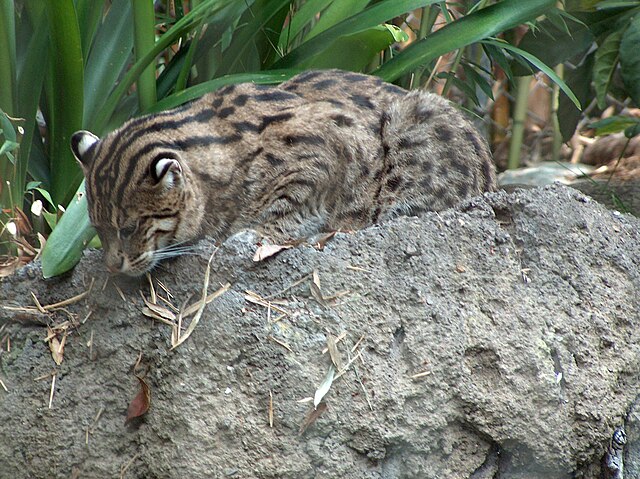
Fishing Cat


We just learned about the Leopard Cat.

Another type of wild cat is the Fishing Cat.

This is another cat that lives in South Asia, and looks a lot like the Leopard Cat.
It is about 2 feet long and weighs about 15 pounds.

The Fishing Cats are brown with stripes and spots just like the leopard cat, but they have a white spot on the back of their ears.

These cats live mostly in swamps, marshes and wetlands so they spend a lot of time in the water hunting for food.
They are very good swimmers and can even swim underwater.

Because these cats spend so much time in the water, they have layered fur that helps keep them warm, and keeps some of their fur dry even if the outside layers get wet.


(from: wikipedia - fishing cat)


Kid Facts - Blast from the past: Blue Jellyfish

Tuesday, July 28, 2020

Lymph


Let's learn more about the Lymphatic System.

One of the first things to learn about the lymphatic system is Lymph.

The word lymph comes from an ancient Roman goddess of water named Lympha.

Lymph is a liquid that is sent all around the body in little tubes, a lot like blood is carried all over the body.

Every time the heart pumps it pushes blood out to all the parts of the body, and then pulls it back to the heart to get more oxygen and nutrients.
When the blood is pulled back, it leaves behind a lot of things like proteins and other liquids that just float around in the body.

The digestive system also leaves some things like fatty white liquids and other things behind after digestion.

Lymph is all of these left over liquids that get sent back around the body through the lymphatic system.
It can be made of proteins, fats, bacteria or other liquids.


(from: wikipedia - lymph)


Kid Facts - Blast from the past: Eyes

Monday, July 27, 2020

Antarctic Convergence


We just learned about the Antarctic Circumpolar Current.

Another part of Antarctica is the Antarctic Convergence, also called the Antarctic Polar Front.

This is the line in the water around Antarctica where the cold water of Antarctica meets the warm water from the rest of the oceans.

Where the waters meet the cold water usually sinks down below, and the warm water goes to the top.
Because of this mixing, a lot of sea animals like krill live there, which also means a lot of other animals that eat krill come around.

The mixing of this cold and warm water has a lot of effects on the rest of the ocean.


(from: wikipedia - antarctic convergence)


Kid Facts - Blast from the past: Bastion

Sunday, July 26, 2020

Heresy


We just learned about the Rosary.

Another part of early Christianity is Heresy.

Through the hundreds of years after Jesus died, the church had a lot of talks about what was true, and what was right.
Their decisions were put together into books like the Decretum Gratiani that we learned about.

Sometimes people would say things that went against those rules.
When some idea was against the rules the church decided, it was called heresy.
Someone who said something that was heresy was called a heretic.

The word comes from the Greek word αἵρεσις (haíresis) which means choice.

When the church started getting their own soldiers and having wars, they started using that new power to force people not to say any heresies.


(from: wikipedia - heresy)


Kid Facts - Blast from the past: Seven Ecumenical Councils

Saturday, July 25, 2020

Crazy Horse Memorial


We just learned about the Mount Rushmore.

Another famous monument carved into a mountain is the Crazy Horse Memorial.

This is a carving of the famous Native American warrior named Crazy Horse who lived during the late 1800s.

The sculpture is not finished, but the plan is for it to be of Crazy Horse riding a horse.
It would be over 640 feet long and over 560 feet tall.

The statue was started a long time ago in 1948, and is still very far from being completed.
Korczak Ziolkowsk was the sculptor who first started it.
He had worked as a helper on Mount Rushmore before working on this sculpture.


(from: wikipedia - crazy horse memorial)


Kid Facts - Blast from the past: Church of Saint George, Lalibela

Friday, July 24, 2020

Russian - Counting to Thirty Nine


We counted to 29 in Russian, let's keep going!

30 тридцать (tridtsat') - sounds like t-dee-d-sit 文A

31 тридцать один (tridtsat' odin) - sounds like t-dee-d-sit ah-d-yin 文A

32 тридцать два (tridtsat' dva) - sounds like t-dee-d-sit d-vah 文A

33 тридцать три (tridtsat' tri) - sounds like t-dee-d-sit t-dee 文A

34 тридцать четыре (tridtsat' chetyre) - sounds like t-dee-d-sit cheh-tee-dee 文A

35 тридцать пять (tridtsat' pyat') - sounds like t-dee-d-sit pee-yah-t 文A

36 тридцать шесть (tridtsat' shest') - sounds like t-deh-tee shay-st 文A

37 тридцать семь (tridtsat' sem') - sounds like t-dee-d-sit seh-m 文A

38 тридцать восемь (tridtsat' vosem') - sounds like t-deh-tee voh-ee-sem 文A

39 тридцать девять (tridtsat' devyat') - sounds like t-deh-tee dee-ay-vit 文A


russian language
(from: wikipedia - russian academy of sciences)

Norwegian: tretti, trettien, trettito, tretti tre, trettifire, trettifem, trettiseks, trettisyv, trettiåtte, trettini

Greek: τριάντα (triánta), τριάντα ένα (triánta éna), τριάντα δύο (triánta dýo), τριάντα τρεις (triánta treis), τριάντα τέσσερις (triánta tésseris), τριάντα πέντε (triánta pénte), τριάντα έξι (triánta éxi), τριάντα επτά (triánta eptá), τριάντα οκτώ (triánta októ), τριάντα εννέα (triánta ennéa)

ASL: thirty, thirty one, thirty two, thirty three, thirty four, thirty five, thirty six, thirty seven, thirty eight, thirty nine

Italian: Trenta, trentuno, trentadue, trentatré, trentaquattro, trentacinque, trentasei, trentasette, trentotto, trentanove

German: einunddreißig, zweiunddreißig, dreiunddreißig, vierunddreißig, fünfunddreißig, sechsunddreißig, siebenunddreißig, achtunddreißig, neununddreißig

Spanish: treinta y uno, treinta y dos, treinta y tres, treinta y cuatro, treinta y cinco, treinta y seis, treinta y siete, treinta y ocho, treinta y nueve

French: trente et un, trente-deux, trente-trois, trente-quatre, trente-cinq, trente-six, trente-sept, trente-huit, trente-neuf

Thursday, July 23, 2020

Cab - Engineer and Fireman


We just learned about the Tender.

Another part of a steam locomotive is the Cab.

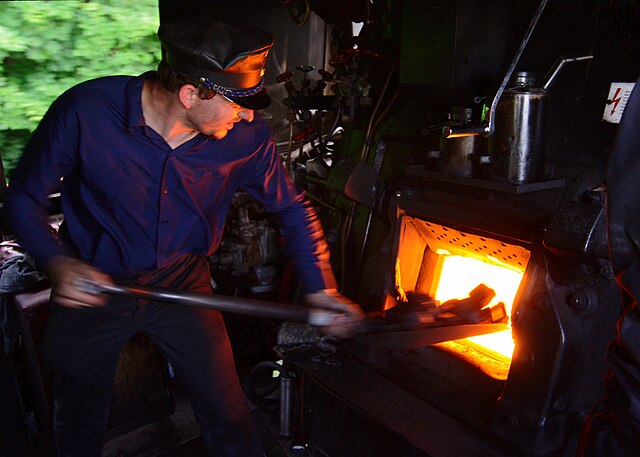
This is where the engineer and the fireman are at.
The engineer or driver is the person who uses all the controls to make the locomotive go faster or slower, and to help control the engine.

The fireman is the person who is in charge of the fire that keeps the train going.
So he has to shovel coal from the coal bunker into the engine, and also help refill the water compartment for the steam.


(from: wikipedia - cab (locomotive))


Kid Facts - Blast from the past: Sprocket

Wednesday, July 22, 2020

Leopard Cat


We just learned about the Rusy-Spotted Cat.

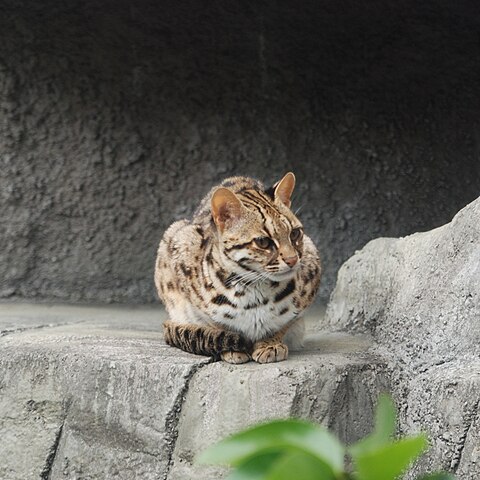
Another type of wild cat is the Leopard Cat, also called prionailurus bengalensis.

This cat lives in the South and East parts of Asia.
They can grow to be about 2 feet long and weigh 8 pounds.
On their head they have two dark stripes on their head and they have a white mouth.
Just like a leopard they have black spots all over their body, and yellow brown fur.

Scientists have discovered that this type of cat was kept as a pet in China 5,000 years ago.
One type of house cat called the Bengal Cat is related to the Leopard Cat, and has a lot of the same marks but is more friendly and makes a better pet.


(from: wikipedia - leopard cat)


Kid Facts - Blast from the past: Velella

Tuesday, July 21, 2020

Lymphatic System


We just learned about Presbyopia.

We've learned a whole lot about Eyes, from the Cornea, Pupil, Iris and Retina to the Rods, Cones and Fovea!

Let's move on now and learn about something else, called the Lymphatic System.

This is a part of the body that helps make new blood cells, and also helps fight off diseases.
It's part of both the circulatory system and immune system, and goes through the whole body.

The lymphatic system isn't as well known as other parts of the body like the bones or muscles, but it was discovered over 300 years ago, so scientists have been studying it for a long time to figure out how the body works.


(from: wikipedia - lymphatic system)


Kid Facts - Blast from the past: Tonsils

Monday, July 20, 2020

Antarctic Circumpolar Current


We just learned about the Nunatuk rock formations.

Another part of Antarctica is the Antarctic Circumpolar Current, also called the ACC.

In the ocean around Antarctica the water flows around it in a clockwise loop.

This water flow called a current is the largest ocean current in the world, mostly because it flows around and around without hitting any other land.
Most other ocean currents eventually run into other continents.

The looping current goes around Antarctica and the south pole like a circle, which is why it's called "Circumpolar".
With the water going around and around, it helps keep the warmer ocean water from getting to Antarctica.
This helps keep the south pole cold and the glaciers from melting.


(from: wikipedia - antarctic circumpolar current)


Kid Facts - Blast from the past: Butter Churn Tower