This is a hard covering for the tooth just like the enamel that we learned about,
but it is covering the part of the tooth going down below the gums, called the root.
We just learned about Philologus - Bishop of Sinope, one of the seventy disciples.
t Caius - Bishop of Ephesus, one of the seventy disciples.
Another two of the seventy were Olympus and Rhodion.
Rhodion was also known as Herodion of Patras, and he was a relative of Paul and became a leader of the church in the town of Patras.
He had a very rough life and was beaten up by people who didn't like to hear what he said, and eventually he was killed along with his friend Olympas.
Another ancient Chinese work of art is the Eight Nested Relic Boxes.
Long ago in China a man called Buddha lived and many people followed him because of all the wise things he had to say.
He was so famous that when he died, they saved one of his finger bones and put it inside of a nicely carved box.
This box was put into another box and another.
There were a total of eight boxes, made of either gold, silver or jade, and wrapped in silk.
These boxes are in a museum now for people to come visit and see the box that people believe has the finger bone of Buddha inside.
Another part of navigating rockets is the science of Ballistics.
This is all about the forces that are moving the rocket around, and what happens to the rocket because of those forces.
Usually there are 4 forces on the rocket:
1. Thrust from the engine
2. Gravity
3. Drag - which is like the air blowing against the rocket
4. Lift - which is like air blowing with the rocket
Another type of cephalopod is the Opalescent Inshore Squid, also called Doryteuthis opalescens.
This is a very small squid, only growing to about 7 inches.
They live in the Pacific ocean by the eastern short of North America, all the way from Alaska to Mexico.
These squids are tiny but there are lots and lots of them.
The mother squids lay their eggs on the ocean floor, and there are so many that they cover acres and acres in the sand.
Because there are so many eggs there, a lot of ocean predators like starfish will go eat the eggs.
When the squids grow up, they are still very tiny but when they get together in groups there can be millions of them all in one place!
With so many of them swimming around, they are a big snack for other animals like sharks and seals.
Another ancient Chinese work of art is the Seven Sages of the Bamboo Grove sculpture.
The seven sages in Chinese history were wise men, musicians and writers that lived in China around 200 AD.
They were very famous, and this sculpture is made of more than 300 bricks, carved to make a picture when they were put together.
It is over 8 feet long and about three feet tall.
Another part of rocket science is an Inertial Navigation System, or just INS for short.
We've learned that accelerometers, gyroscopes and magnetometers are all sensors that can tell a rocket where it is going.
An INS is a computer that is hooked up to different sensors like these, and it steers the rocket the right way based on what the sensors tell it.
Another type of cephalopod is the Big Blue Octopus also called the octopus cyanea or day octopus.
This octopus lives in the pacific, all the way from Hawaii to Africa.
It grows to about 3 feet long, and lives in coral reefs.
Like a lot of other cephalopods, this octopus can changes its color and whether it has bumpy or smooth skin.
It can even make stripes or dots on its body, or even make itself look bumpy like a rock.
One scientist studying a big blue octopus watched it change the way it looked 1,000 times in 7 hours!
Sometimes the octopus will even make moving and changing colors on its body, like a cloud is passing over head.
The outside of the tooth that you can see is called Enamel.
Enamel is the hardest thing in the whole body, even harder than bone and nails.
It is made up mostly of something called hydroxyapatite, which is a kind of crystalline calcium.
Enamel is mostly white, but can be a little bit yellow or blueish if it is stained from food.
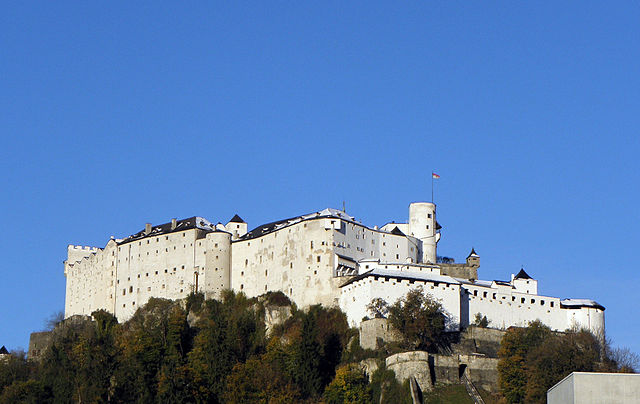
Another ancient castle is Spiš Castle, built around 1100 AD in Slovakia, and it over 400,000 square feet.
This castle was owned by the kings of Hungary, and then later was passed on to different families before it was taken over by the state of Slovakia.
At one time in the past the family that owned it abandoned it to move to the nearby village because they said it was not very comfortable.
A little while later there was a big fire and a lot of the castle was destroyed for over almost two hundred years.
The castle has now been fixed up and has a museum inside showing many things from the history of the castle.
Another of the seventy was Caius - bishop of Ephesus.
The city of Ephesus used to be part of the Roman empire, and is now part of the country of Turkey.
In the Bible there is a book called "Ephesians" that was a letter that the Apostle Paul wrote to the church in the city of Ephesus.
Some time around 100 AD, Caius (also known as Gaius) was the leader of the church in the city of Ephesus.
Another ancient Chinese work of art is the Nestorian Stele.
It has writing on it telling the story of Christian missionaries coming into China all the way back to 635 AD.
There was a time when people did not want Christians in China so they had to bury the tablet underground, and it was lost for about 800 years.
The sculpture is in Chinese and says it is for the "Memorial of the Propagation in China of the Luminous Religion from Daqin".
Daqin was the name of the Roman Empire.
On top of the tablet there is a sculpture of two dragons holding up a pearl.
Lots of Chinese artwork used dragons to show powerful or important things, and the pearl is probably from the Bible story saying that heaven is a precious treasure like a pearl.
There is also a cross and some clouds below the carvings.