Wednesday, June 17, 2020

Bay Cat


We just learned about the Asian Golden Cat.

Another type of wild cat is the Bay Cat, also called the Borneo bay cat, or catopuma badia.

Bay cats are like the Asian golden cat, but a lot smaller.
Their fur is a light red-brown color, and their tail is long with a white tip.
They have rounded small ears that have black and brown fur on them.

These cats are a little over 2 feet long, with a 1 foot long tail, and they weigh about 8 pounds.
On their heads they have an "M" mark, and they have white cheeks and a white chin.

This cat lives mostly on the island of Borneo, and there are only about 2,500 of them left in the world.
At one time these cats were almost extinct and people could not even find 100 of them.
People worked to find them and take care of them, and help keep them safe so they would not go extinct.


(from: wikipedia - bay cat)


Kid Facts - Blast from the past: Venus Girdle Jellyfish

Tuesday, June 16, 2020

Refractive Error


We just learned about the Myokymia.

Another part of how the eye works is a Refractive Error.

Some people have better vision than others and can see farther, closer or more clearly.

The reason some people have problems seeing is because the shape of the eyeball is not perfect, or because a person is old and their eye muscles aren't working as well as they used to.

The eye needs to be able to focus on things far away or up close, and switch between the two.
If you use a camera sometimes you can see that it is blurry at first and then focuses.

Refraction means how the eye changes the direction and size of the light coming into the eye.

All of the different parts of the eye have to work together to get the picture right and send it to your brain.
If one of them is not right, then your eyes have a refractive error and you can wear glasses to see better.


(from: wikipedia - refractive error)


Kid Facts - Blast from the past: Philtrum

Monday, June 15, 2020

Melt Pond


We just learned about the Antarctic Sea Ice.

Another part of the ice Antarctica is the Melt Pond.

Sometimes when it gets warm enough for ice to start melting, the top of it will melt and make a little pond on top of the other ice.
This melt pond area is darker than the white snow colored ice, so it warms up more with the sun and can cause it to melt more and get bigger.
Sometimes melt ponds are on top of sea ice.
If the sea ice melt pond keeps getting deeper as it melts, it will melt all the way through the ice.
Melt ponds are fresh water, but if they melt through to the ocean underneath that is salt water.
The salt water will melt the sea ice even more and make a bigger melt pond.

Other times melt ponds are on top of glaciers.
If a melt pond gets big and deep enough it will just hit the land underneath.

Melt ponds can also be underneath a glacier, like an underground lake.


(from: wikipedia - melt pond)


Kid Facts - Blast from the past: Moat

Sunday, June 14, 2020

Decretum Gratiani


We just learned about the Teutonic Order.

Another part of early Christianity is the Decretum Gratiani.

We've learned before that "Biblical Canon" means the things that are approved or agreed by the church.
And the word comes from the Greek word "κανών" which means rule or measuring stick.

Through the years many people were arguing about which writings about Jesus were real and which were fake.
They also argued about what all of the real and true writings meant, and what was the best way to live your life.

Like was it ok to make paintings of Jesus or famous people from church history?
How should people be baptized, and how should churches be built?
These decisions and a lot more rules had been made in the time over a thousand years since Jesus was born.

Around 1150 AD, a man named Gratian decided to try and put together all of the different rules and laws that the Catholic church had written down.

He put them into what he called the "Decretum Gratiani" which means "The Decree of Gratian".
People believe this to be the first real law book that listed all of the laws for how to live.

He listed them out in a very organized way, so that later on if someone was talking about a certain law of the church, they could talk about "Decretum c. 1. d. XI". Instead of writing out over and over what the law said, they could just basically say "Go look it up in the law book, at this spot."
This book of law put together by Gratian was the first part of what would become the Canon Law used by the church to rule if someone was guilty of breaking a church law or not.


(from: wikipedia - decretum gratiani)


Kid Facts - Blast from the past: True Cross

Saturday, June 13, 2020

Black Hawk Statue - Lorado Taft


We just learned about the sculpture of Johns Hopkins by Hans Schuler.

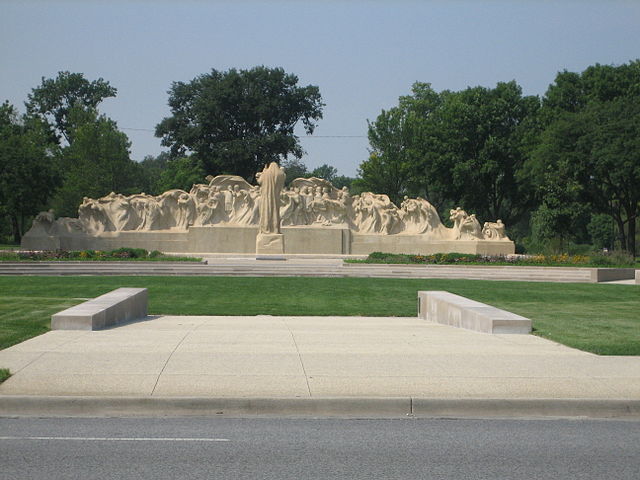
Another famous American sculpture is the Black Hawk Statue, also called The Eternal Indian made by Lorado Taft in 1911, in Oregon Illinois.

This statue is 48 feet tall, and stands on a 77 foot high cliff by the Rock River overlooking the city.
Black Hawk was a Sauk Native American who fought many battles for his tribe in Illinois.
The statue is the second tallest concrete statue of a person, just after the statue of Jesus in Rio de Janeiro.

Taft made many other monument statues honoring people in the Midwest area.
In Chicago he made a 126 foot long sculpture with 100 people called Fountain of Time showing the peace of the US and Great Britain for 100 years.
He also made The Soldier's Monument in Oregon Illinois, honoring the people who fought in the Spanish-American war.

Taft was born in Elmwood Illinois, where he grew up learning about sculpting.
When he was 20 he moved to Paris to learn more about sculpting, and then moved back in 1886 to Chicago to make sculptures and become a teacher.

He helped teach sculpting to many other people in America that went on to become famous.


(from: wikipedia - black hawk statue)


(from: wikipedia - fountain of time)


(from: wikipedia - the soldier's monument)


Kid Facts - Blast from the past: Benin Bronzes

Friday, June 12, 2020

Russian - July, August


We already learned that January, February is Январь (Yanvar'), Февраль (Fevral'), March, April is Март (Mart), Апрель (Aprel'),
and May, June is Май (May), Июнь (Iyun').

Let's keep going!

July - Июль (Iyul') - sounds like ee--yoo-l 文A

August - Август (Avgust) - sounds like ah-v-goo-st 文A


russian language
(from: wikipedia - russian academy of sciences)

Norwegian: Juli, August

Greek: Ιούλιος (Ioúlios), Αύγουστος (Ávgoustos)

ASL: July, August

Italian: Luglio, Agosto

German: Juli, August

Spanish: Julio, Agosto

French: Julliet, Août

Thursday, June 11, 2020

Cugnot's - Fardier à vapeur


We just learned about the North River Steamboat.

Another part of the history of steam engines is Cugnot's - Fardier à vapeur.

A lot of people made steam powered boats that many people liked.
But it took a lot longer for people to make steam powered engines on wheels that people liked.

The first known steam powered engine on wheels was made by a French man named Nicolas-Joseph Cugnot, and he called it the "machine à feu pour le transport de wagons et surtout de l'artillerie" which is French for "fire engine for transporting wagons and especially artillery".

Since that's a long name, people just called it the "Fardier à vapeur" which means "Steam wagon".

He built it in 1769, but not a lot of people used it.
It went about 2 miles per hour, and could carry about 2 tons of weight.

Because it was very slow and broke down a lot, it was not very popular, and steam wagons like this were not used a lot for a long time.


(from: wikipedia - nicolas-joseph cugnot)


Kid Facts - Blast from the past: Forensic Podiatry

Wednesday, June 10, 2020

Asian Golden Cat


We just learned about the Marbled Cat.

Another type of wild cat is the Asian Golden Cat, or the Catopuma temminckii.

This type of cat lives mostly in south India and China.
They are about 4 feet long, and weigh about 35 pounds.

Asian golden cats are golden, brown, or red-brown.
Some even have dark black fur like a panther.

These cats live alone and mostly stay up at night to hunt.
They hunt a lot of different animals, and can even climb trees to hunt birds.

When they want to talk, these cats can hiss, meow, purr or growl just like other cats.


(from: wikipedia - asian golden cat)


Kid Facts - Blast from the past: Sea Wasp

Tuesday, June 9, 2020

Myokymia


We just learned about the Rheum.

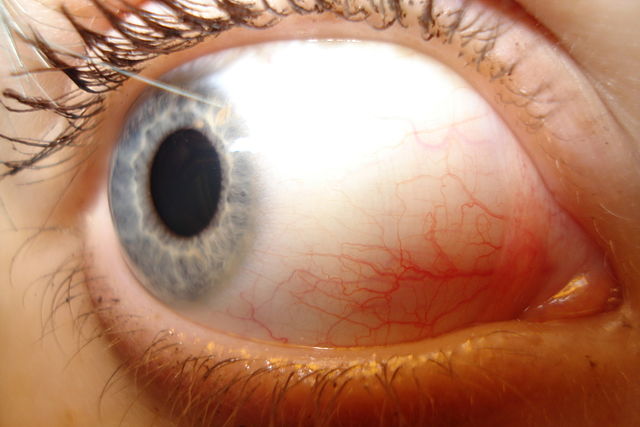
Another part of the eye is a Myokymia, which is a type of eye spasm where the eyelid twitches.

Sometimes without doing it on purpose the upper or lower eyelid might twitch a little.
It usually goes away after a while, and is usually caused by not getting enough sleep or not drinking enough water.

If it is really bad and doesn't go away for months, then it is called a blepharospasm.


(from: wikipedia - blepharospasm)


Kid Facts - Blast from the past: Vermillion Border

Monday, June 8, 2020

Antarctic Sea Ice


We just learned about the South Pole.

Another part of Antarctica is the Antarctic Sea Ice.

We've learned before about the big Antarctic Ice Sheet that covers the continent.
And we've learned about the Ice Shelves that stick out from the Ice Sheet above the water.

The ice shelves are very thick, sometimes 1 kilometer deep.
Sea ice is a lot thinner, and is usually only a few meters thick.
Sometimes it is touching the shelf ice, and sometimes it's just floating out in the ocean close to Antarctica.

During the winters in Antarctica, the frozen sea ice goes out very far from the main land of Antarctica, and then in the summer most of it melts back to the ice shelves.


(from: wikipedia - antarctic sea ice)


Kid Facts - Blast from the past: Barbican

Sunday, June 7, 2020

Teutonic Order


We just learned about the Knights Templar.

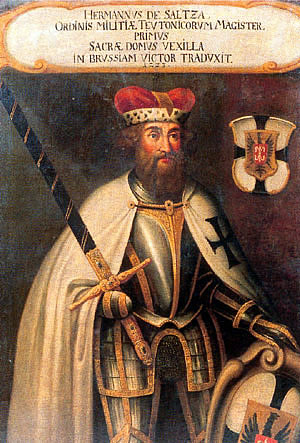
Another military group in the Catholic church was the Teutonic Order, also called the Order of the Brothers of the German House of Saint Mary in Jerusalem.

Just like the Knights Hospitaller and the Knights Templar, these were soldiers who wore armor and worked for the church.

The job of the Teutonic Order was mostly to protect Christians that were traveling to the Holy Land of Jerusalem, and to also help set up some hospitals.

This group is actually still around but the people are not soldiers anymore, they are just a group of people who try to do good things for the world.


(from: wikipedia - teutonic order)


Kid Facts - Blast from the past: Church of Holy Sepulchre

Saturday, June 6, 2020

Johns Hopkins - Hans Schuler


We just learned about the Civil War Memorial by Martin Milmore.

Another famous American work of art is the statue of Johns Hopkins, made in 1935 in Baltimore Maryland by Hans Schuler.

Schuler was born in Germany in 1874, and then came to American when he was young.
He went to art school in Maryland, and then later moved to France to work with some famous sculptors there.

When he was 32, he moved back to Maryland and stayed there for the rest of his life.
He was famous for making public monuments in Baltimore, and was called "Baltimore's Monument Maker".
There are a few cemeteries in town that he made a lot of sculptures for.

When he was 61 he made the statue of Johns Hopkins.
Johns Hopkins was famous for helping build hospitals and schools, and also was famous for fighting against slavery.
This statue of him was placed at Johns Hopkins University.


(from: wikipedia - hans schuler)


Kid Facts - Blast from the past: Mask for King Obalufon II

Friday, June 5, 2020

Russian - May, June


Let's keep learning about the months of the year in Russian!

We already learned that January, February is Январь (Yanvar'), Февраль (Fevral'), and March, April is Март (Mart), Апрель (Aprel').

Let's keep going!

May - Май (May) - sounds like mah-ee 文A

June - Июнь (Iyun') - sounds like ee-oon 文A


russian language
(from: wikipedia - russian academy of sciences)

Norwegian: Mai, Juni

Greek: Μάιος (Máios), Ιούνιος (Ioúnios)

ASL: May, June

Italian: Maggio, Giugno

German: Mai Juni

Spanish: Mayo, Junio

French: Mai, Juin

Thursday, June 4, 2020

North River Steamboat


We just learned about the Sun and Planet Gear.

Another part of early machines was the North River Steamboat, also called the Clermont.

After all the pieces were invented to make a working steam engine, people started to try and use them to move things around.

In 1807 in New York, the North River Steamboat was built to take people along the Hudson River from New York City to Albany.

The boat was 142 feet long, and went about 5 miles per hour on the river.
It went about 150 miles, and took about 30 hours to make the trip!
Today in a car that takes about 2 hours, but back then it was a big deal.


(from: wikipedia - north river steamboat)


Kid Facts - Blast from the past: Forensic Epidemiology

Wednesday, June 3, 2020

Marbled Cat


We just learned about the Oncilla.

Another type of wild cat is the Marbled Cat.

This cat lives in Asia, in the forest mountains near places like the Himalayas.
They are about the same size as a normal house cat, but they have more rounded ears and a really long tail.
Their fur is brown or grey, and they have stripes on their head neck and back.

Marbled cats weigh about 11 pounds, and are around 2 feet long with a 2 foot furry tail.
That means their tail is about as long as their whole body!
The extra long tail works kind of like a squirrel's tail and helps them balance when they are running around in the trees.


(from: wikipedia - marbled cat)


Kid Facts - Blast from the past: Diplulmaris Antarctica

Tuesday, June 2, 2020

Rheum


We just learned about the Eyelash.

Another part of the eye is Rheum.

This is what some people call sleep, sleepy seeds, sleepy bunds, sleepy sand, eye goop, sleep dust or sleepy dirt.

Sometimes when you wake up in the morning there is some hard crusty thing by the inside corner of your eye.
It is hard almost like a piece of sand, and you can wipe it away.

This is called rheum, and it is just the oils that come from your glands building up and drying by your eye.
These oils are coming out all day long, but when you blink they get spread out on your eye or they dry up.
When you sleep you aren't blinking so it dries up and gets crusty.

In the old days people made up a person called the Sandman that comes around and sprinkles sand on the eyes of kids to bring them good dreams.
When you wake up in the morning, that's the leftover sand from the sandman.


(from: wikipedia - sandman)


Kid Facts - Blast from the past: Cupid's Bow

Monday, June 1, 2020

South Pole


We just learned about Pole of Inaccessibility Research Station.

We learned before about adventurers traveling to the South Pole.

The south pole is at the very bottom of the planet, and at the opposite end of the north pole.
We know the first person to get there was Roald Admundsen, and the Amundsen-Scott station is right at the south pole.

There is a red striped pole with a silver globe on top with flags all around for picture taking at the south pole. This is called the Ceremonial South Pole, and it is a few feet away from the real south pole.
The warmest the south pole has ever been is 9 F, and the coldest ever was -117 F.

There is also the South Magnetic Pole, which is in a different spot.
When you use a compass and one end points north, the other end points south.
This is because the earth's poles are magnetic which helps a lot for travel!
These north and south poles actually move a little based on the changes in the earth under the ground like the moving magma.

There is also the South Geomagnetic Pole, which is in another different spot.
The earth spins around and makes a magnetic field around it.
You can think about it like how static electricity can move things around.
This is really the true magnetic pole, but the moving of magma and other parts of the earth makes the magnetic pole move around and be different than the geomagnetic pole.

Another place is the South Pole of Inaccessibility.
This is the place in the south pole that is the hardest to get to, as it is the farthest place inland from the ocean.
There was a Russian base there for a while but it has been abandoned.


(from: wikipedia - south pole)


Kid Facts - Blast from the past: Sally Port

Sunday, May 31, 2020

Knights Templar


We just learned about the Knights Hospitaller.

Another part of early Christianity is the Knights Templar.

Just like the Knights Hospitaller, this was a group of people who fought battles for the church, usually for the Crusades.
They were known for the outfits they wore with a white background and a red cross on it.
Part of the meaning of the red cross was that they would go to war and kill people in the name of God, and he would reward them in heaven.

Some of the people in the Knights Templar did not fight battles, they were more like farmers or bankers.
Because a lot of people knew about them, people would give them money to help fight the Crusades that people thought were good.
With this money they built a lot of buildings and churches across all of Europe.

Later on one of the kings of France did not like the knights, so he said a lot of bad things about them, had many of them killed, and later on the church decided the knights should either quit or join the Knights Hospitaller and there would be no more Templars.


(from: wikipedia - knights templar)


Kid Facts - Blast from the past: Saint Catherine's Monastery

Saturday, May 30, 2020

Civil War Memorial - Martin Milmore


We just learned about the statue of Joan of Ark by Anna Hyatt Huntington.

Another famous American sculpture is the Civil War Memorial by Martin Milmore in 1873 in Pennsylvania.

After the civil war was over, many cities wanted to put up statues for memorials for soldiers that fought and died in the war.
In Chester cemetery in Pennsylvania, there is a statue of a Union soldier made by Martin Milmore in 1873.

Underneath the soldier is a stone base that has the words:

"The people of Delaware County erected this monument to commemorate the patriotism of their citizens, soldiers and sailors who fell in defense of the Union in the War of the Rebellion 1861-1865"

Martin Milmore was a sculptor who was born in Ireland and then moved to Boston.
His older brother helped him learn to be a sculptor, and then he took art lessons to keep getting better.

He was already getting jobs as a sculptor when he was 20 years old, and he became famous for making soldier's monuments.

Sadly he died very young at only 38 years old.

He was a good friend of sculptor Daniel Chester French, who made a famous sculpture at his grave site called Death and the Sculptor.
It shows an image of a woman who is supposed to be the spirit of death, coming to take a young Martin Milmore away.


(from: wikipedia - chester rural cemetery)


(from: wikipedia - death and the sculptor)


Kid Facts - Blast from the past: Nok Terracotta

Friday, May 29, 2020

Russian - March, April


Let's keep learning about the months of the year in Russian!

We already learned that January, February is Январь (Yanvar'), Февраль (Fevral')

Let's keep going!

March - Март (Mart) - sounds like mah-r-t 文A

April - Апрель (Aprel') - sounds like ah-p-ray-l 文A


russian language
(from: wikipedia - russian academy of sciences)

Norwegian: Mars, April

Greek: Μάρτιος (Mártios), Απρίλιος (Aprílios)

ASL: March, April

Italian: Marzo, Aprile

German: März, April

Spanish: Marzo, Abril

French: Mars, Avril


Thursday, May 28, 2020

Sun and Planet Gear


We just learned about the Rotative Beam Engine.

Another part of the early steam engines is the Sun and Planet Gear.

After the rotative beam engine came up with a way to have a beam go up and down and spin a wheel around,
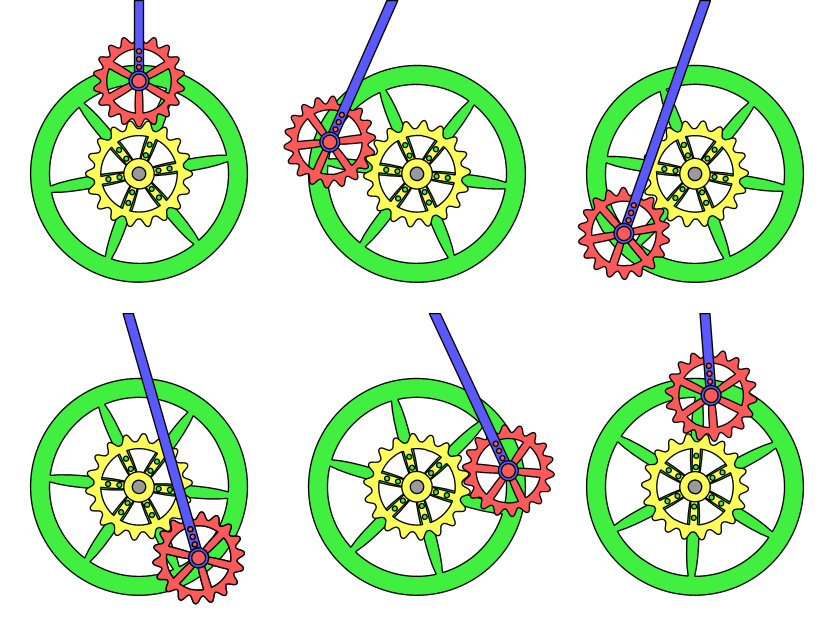
it was hooked up to a type of gear called a sun and planet gear.

It was called that because one gear goes around the other, kind of like a planet going around the sun.


(from: wikipedia - sun and planet gear)


Kid Facts - Blast from the past: Forensic Entomology

Wednesday, May 27, 2020

Oncilla


We just learned about the Geoffroy's Cat.

Another type of wild cat is the Oncilla, also called the northern tiger cat, little spotted cat, and tigrillo.

These are small spotted cats who live in South America.
They are like the margay and ocelot, but smaller.
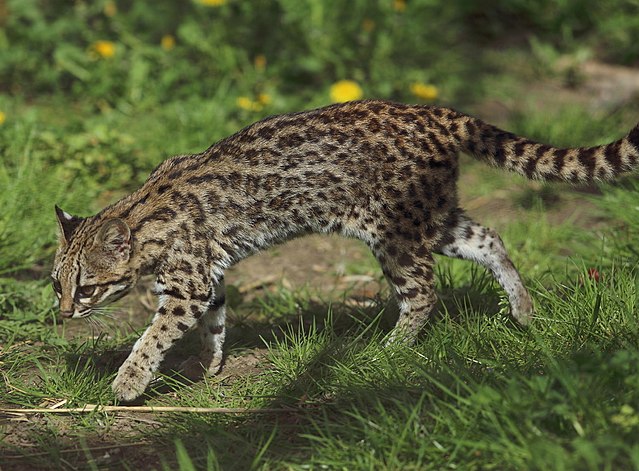
Oncillas grow to be about 2 feet long with a 16 inch tail, and they weigh about 6 pounds.

Their fur is brown with rosette spots on their body.
One of the only differences between the oncilla and the ocelot is that the Oncilla has a smaller mouth and fewer teeth.

Just like some of the other South American small cats, the Oncilla is a great climber and mostly stays awake at night to hunt.


(from: wikipedia - oncilla)


Kid Facts - Blast from the past: White Spotted Jellyfish

Tuesday, May 26, 2020

Eyelash


We just learned about the Bulbar Conjunctiva.

Another part of the eye is the Eyelash, also called the cilium.

The hair on the eyelids helps protect the eyes from dust and other things that might fly into it.
There are three layers of eyelids on the edge of the eyelids.

Eyelashes grow on the body even before a person is born.
They do not keep growing forever, they stop after growing out a little.
These hairs take about 7 to 8 weeks to grow, and after a while they will fall out and new ones will grow in the same place.


(from: wikipedia - eyelash)


Kid Facts - Blast from the past: Lips

Monday, May 25, 2020

Pole of Inaccessibility Research Station


We just learned about the Carlini Base.

Another research base in Antarctica is the Pole of Inaccessibility Research Station.

This is in the place on Antarctica that is the farthest from any point of water where a boat could land with explorers.
Since it's so hard to get to it's called the most inaccessible.

The Russians built a small base for 4 people there in 1958, and they stayed for 8 days and then left.
Since then the base has been covered by snow, and the only part showing is the statue of the old Russian leader Lenin that was on the top of the base.

Some people still visit the spot to do some research, but the base is buried so no one stays there anymore.


(from: wikipedia - pole of inaccessibility (antarctic research station))


Kid Facts - Blast from the past: Curtain Wall

Sunday, May 24, 2020

Knights Hospitaller


We just learned about the Third Crusade.

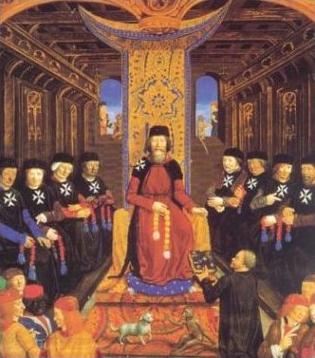
Another part of early Christianity is the Knights Hospitaller, also called the Order of Knights of the Hospital of Saint John of Jerusalem, the Knights of Malta, or the Order of Saint John.

During the Crusades, the Catholic church started making groups of people to fight battles for them.
The first one they started was in Jerusalem, and then moved to Rhodes, then Malta and later on Saint Petersburg Russia.


(from: wikipedia - knights hospitaller)


Kid Facts - Blast from the past: Church of Pater Noster

Saturday, May 23, 2020

Joan of Ark - Anna Hyatt Huntington


We just learned about the Penguins - Albert Laessle.

Another famous American sculpture is Joan of Ark by Anna Hyatt Huntington made in New York in 1915.

She became famous for making bronze sculptures of people and animals like Andrew Jackson, El Cid, Don Quixote, and Abraham Lincoln.

In 1915 she was asked to make a statue of Joan of Ark, and it was so well known that even people like Thomas Edison's wife came to see it.


(from: wikipedia - equestrian statue of arc (new york city)


Kid Facts - Blast from the past: Pisa Griffin

Friday, May 22, 2020

Russian - January, February


We just learned about the days of the week.

Let's learn about the months of the year in Russian!

January - Январь (Yanvar') - sounds like yah-n-var 文A

February - Февраль (Fevral') - sounds like feh-v-rah-l 文A


russian language
(from: wikipedia - russian academy of sciences)

Norwegian: Januar, Februar

Greek: Ιανουάριος (Ianouários), Φεβρουάριος (Fevrouários)

ASL: January, February

Italian: Gennaio, Febbraio

German: Januar, Februar

Spanish: Enero, Febrero

French: Janvier, Février

Thursday, May 21, 2020

Rotative Beam Engine


We just learned about the Newcomen Engine.

Another part of steam engine history is Rotative Beam Engine.

After the Newcomen Engine was built, people worked to make it even better.

In the old types of engines, the big rod that was moved by the steam was just pushed up and down.
For a rotative beam engine, one end of the beam uses a type of crank or gear to spin a wheel around.

This moving wheel could be used as a wheel to paddle a boat, or a wheel to move a train.


(from: wikipedia - beam engine)


Kid Facts - Blast from the past: Forensic Dentistry

Wednesday, May 20, 2020

Geoffroy's Cat


We just learned about the Kodkod.

Another kind of wild cat is Geoffroy's Cat.

This cat lives in South and Central America, and is about the size of a house cat.
They are brownish yellow with black spots all over their bodies.
Some cats are all black like a panther.

They are about 2 feet long, and weigh from 4 to 11 pounds.
Most of these cats live in the woods and like to hide.
When they are hungry they hunt for food at night.
Sometimes they like to stand up on their hind legs and look around, using their tail to help thems tand up.
They can climb trees but they usually don't.


(from: wikipedia - geoffroy's cat)


Kid Facts - Blast from the past: Lobed Comb Jellyfish

Tuesday, May 19, 2020

Bulbar Conjunctiva


We just learned about the Lacrimal Lake.

Another part of the eye is the Bulbar Conjunctiva.

This is a very thin layer of skin on top of the white sclera that helps bring tears to the eye, and also has blood vessels coming into the eye.


(from: wikipedia - conjunctiva)


Kid Facts - Blast from the past: Palatine Raphe

Monday, May 18, 2020

Carlini Base


We just learned about the Brown Station.

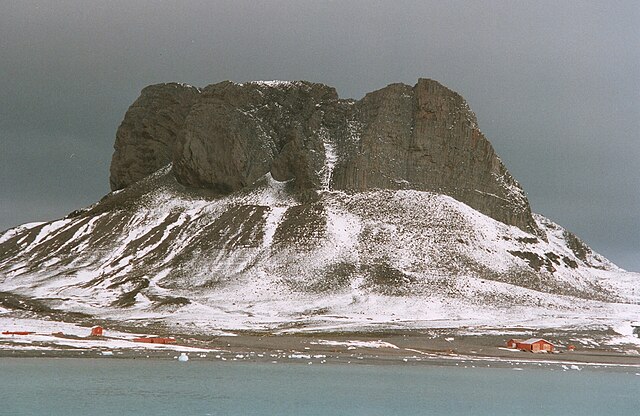
Another base in Antarctica is Carlini Base.

This base is owned by Argentina and is on the Antarctic peninsula, and holds about 60 people.
It was built in 1953, and is used mostly to study the weather, the animals and the ocean.

There are tourists that sometimes come to visit the station, so they have a radio station and a movie theater there for people.
In 2013 the rock band Metallica came down to Antarctica to play a concert, so that they could say they played on every continent.
Because the loud guitars, drums and speakers would hurt the ice, animals and environment down there, they played the concert with no amplifiers, just using their instruments in a special dome that kept in the sounds.

Living by this base are thousands of penguins and hundreds of sea lions that they watch over and study.


(from: wikipedia - carlini base)


Kid Facts - Blast from the past: Machicolation

Sunday, May 17, 2020

Third Crusade


We just learned about the Second Crusade.

Another part of the crusades was the Third Crusade.

After the Second Crusade, one of the Muslim rulers named Saladin took back Jerusalem in some other battles.

So the church and the European countries decided to go to war again.
They battled their way through Asia toward Jerusalem, and took over a lot of land but did not take back Jerusalem.

Even though they won most of their battles, people were still upset that they did not take back Jerusalem, and came back home.


(from: wikipedia - third crusade)


Kid Facts - Blast from the past: Church of Nativity

Saturday, May 16, 2020

Penguins - Albert Laessle


We just learned about the John Dill - Herbert Haseltine.

Another famous American statue is Penguins by Albert Laessle, made in 1917 in Philadelphia.

Laessle was born in 1877 in Philadelphia, and went to college to learn about art.
When he was 27 he moved to Paris to study art with some other masters.

He was famous for making sculptures of animals, like his bronze Penguins sculpture which is at the Philadelphia zoo.


(from: wikipedia - albert laessle)


Kid Facts - Blast from the past: Trà Kiệu Pedestal

Friday, May 15, 2020

Russian - Saturday, Sunday


We just learned that Monday, Tuesday, Wednesday in Russian is Понедельник (Ponedel'nik), Вторник (Vtornik), Среда (Sreda) and Thursday, Friday is Четверг (Chetverg), пятница (Pyatnitsa).

Let's keep learning the days of the week!

Saturday - Суббота (Subbota) - sounds like soo-boh-tah 文A

Sunday - Воскресенье (Voskresen'ye) - sounds like voh-skray-say-n-yeh 文A


russian language
(from: wikipedia - russian academy of sciences)

Norwegian: Lørdag, Søndag

Greek: Σάββατο (Sávvato), Κυριακή (Kyriakí)

ASL: Saturday, Sunday

Italian: Sabato, Domenica

German: Samstag, Sonntag

Spanish: Sabado, Domingo

French: Samedi, Dimanche

Thursday, May 14, 2020

Newcomen Engine


We just learned about the Steam Pump.

Another part of the history of steam engines is the Newcomen Engine.

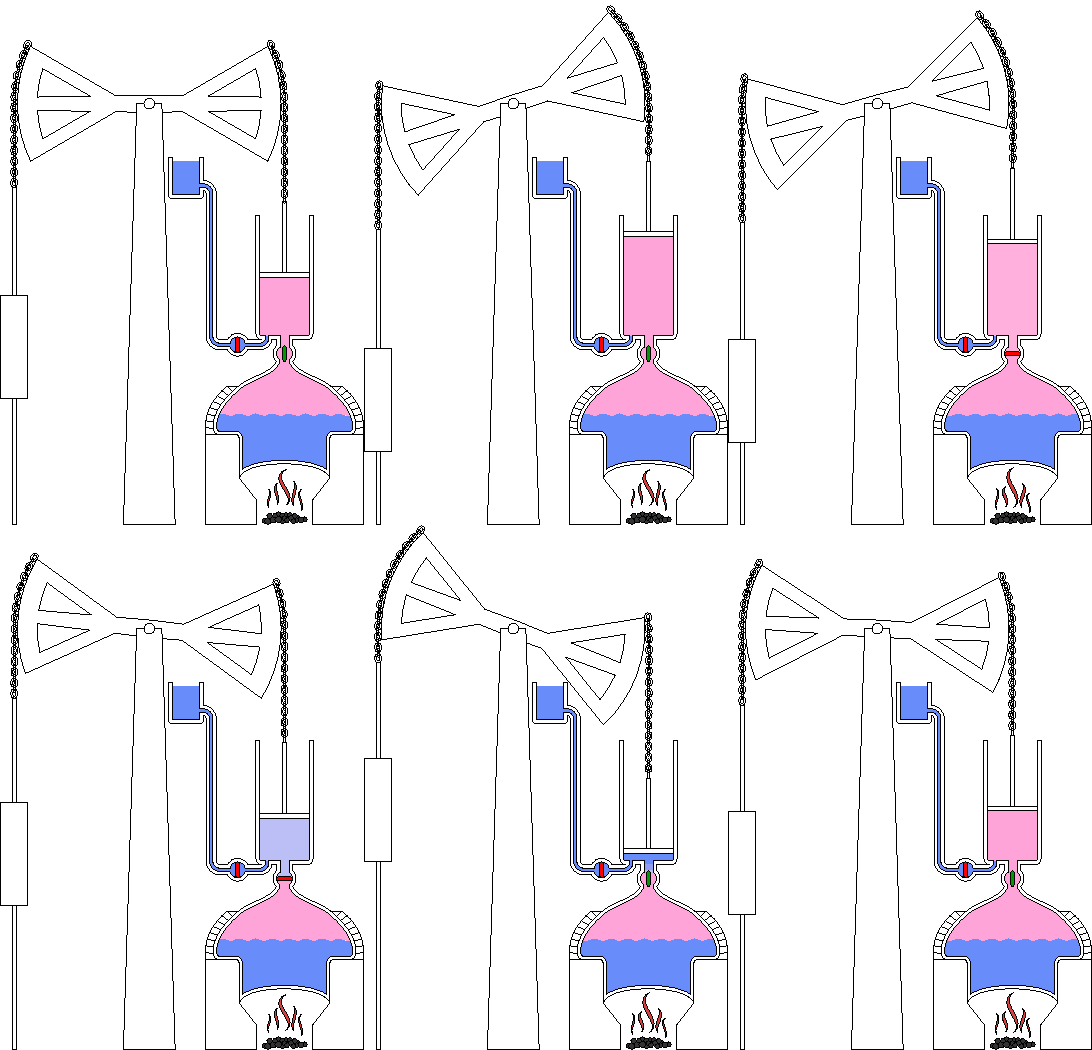
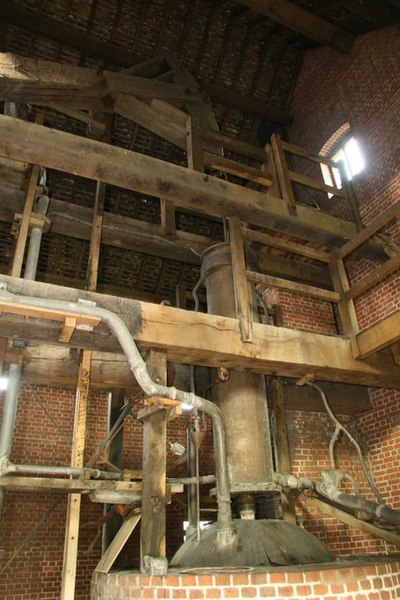
In 1712 in England, Thomas Newcomen took the idea of the Steam Pump and made his own type of steam engine.

He had a big tank full of water called a boiler that was being heated up by a coal fire underneath.
The water would boil and make steam that was let up into another smaller cylinder tank.
That steam would expand and push up on a piston that was hooked to a big long beam.
The beam was like a see-saw, and when the one side got pushed up, the other side was pushed down.

After the steam had filled the cylinder, a plug valve would be closed so no more steam would come in, and another tank of cold water would splash some cold water onto the steam.
This created a vacuum, which sucked the piston back down, pulling the beam down, and pulling the other side of the beam up.

With this steam engine, it would rock the beam back and forth like a see-saw.
The other end of the beam was hooked up to a pump to help pull water out of mines that were flooded.

At first the plugs had to be opened by a person called the "plug man" who would run around and pull the plugs at just the right time.
Later someone figured out a way to use a board with some chains on it called a "plug tree" with weights on it that would automatically open and close the valves.


(from: wikipedia - newcomen atmospheric engine)


Kid Facts - Blast from the past: Forensic Botany