Thursday, October 11, 2018

Shock Diamond


We just learned about the Multi-stage Rocket.

Another part of rocket science is the Shock Diamond.

When a rocket engine is pushing itself along, the burned up rocket fuel coming out of the nozzle is the exhaust.
This exhaust sometimes is coming out faster than the speed of sound, which is called supersonic speed.

When something is moving through the air it is making waves, and when it moves at supersonic speeds it makes these special diamond shapes in the exhaust called shock diamonds.

This is all because the waves that the exhaust is making are moving faster than the sound waves can move, so they overlap and make shapes that you can see.
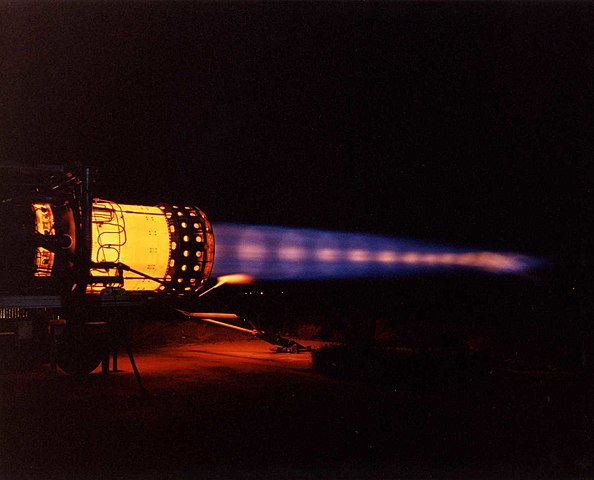
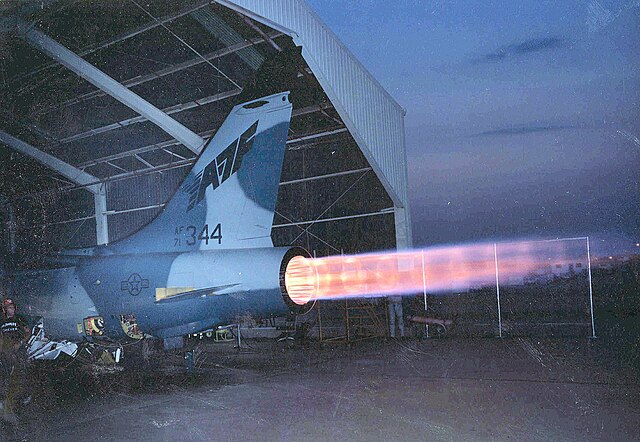

(from: wikipedia - shock diamond)


Kid Facts - Blast from the past: Mainshock
Wednesday, October 10, 2018

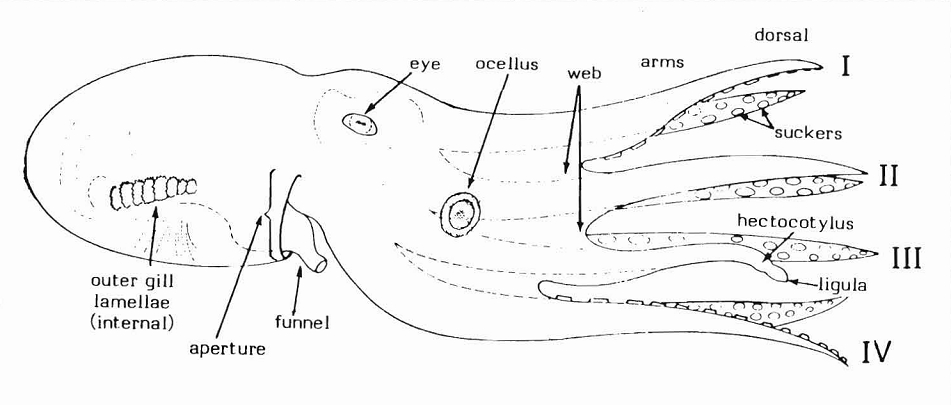
Octopus Gills


We just learned about the Mantle of an Octopus or squid.

When the octopus or squid wants to breathe, they breathe through Gills just like fish.

The gills are inside the mantle, so they will take water into their mantle, and use some muscles to close their mantle.
This makes the water push through their gills where they can get the oxygen they need.


(from: wikipedia - octopus)


Amazing breathing of an Octopus - isarounddaworld


Kid Facts - Blast from the past: Bornean Eared Frog

Tuesday, October 9, 2018

Tooth Root


We just learned about the Crown.

Another part of the tooth is the Root.

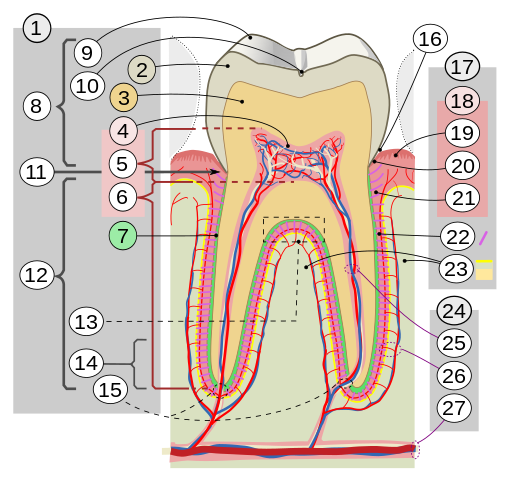
This is the part of the tooth below the gums, that has the cementum and pulp in it.


(from: wikipedia - root canal)


Kid Facts - Blast from the past: Xiphoid Process

Monday, October 8, 2018

Château de Chantilly


We just learned about Peleș Castle.

Another famous castle is the Château de Chantilly, in Chantilly France, built in 1358, and rebuilt a few times through 1882.

This Château has a very large library with thousands of books in it, and a large art museum called the Musée Condé which has many paintings by famous artists like Raphael.

There is also a horse racing track on the property that is still used.
One of the princes who owned this Château believed that some day when he died he would come back as a horse, so he had very fancy stables and race tracks to live in when he did.


(from: wikipedia - château de chantilly)


Kid Facts - Blast from the past: Guanajuato

Sunday, October 7, 2018

Sosipater - Bishop of Iconium


We just learned about the Jason - Bishop of Tarsus, one of the seventy disciples.

Another of the seventy was Sosipater - Bishop of Iconium.

Sosipater worked with the apostle Paul to help tell people about Jesus.
He also traveled with Jason Bishop of Tarsus and together they worked to spread God's word.

Later he became a church leader in the town of Iconium, which is in Turkey.


(from: wikipedia - sosipater)


Kid Facts - Blast from the past: Cenobitic Monks

Saturday, October 6, 2018

Shaka Triad of Hōryūji - Tori Busshi


We just learned about the Haniwa.

Another ancient Japanese masterpiece is the sculpture of Shaka Triad of Hōryūji made in 623 AD by artist Tori Busshi.

Busshi was a famous artist in Japan who started out as a saddle maker.
Working with saddles helped hi learn how to work with wood carving and metal casting, and he learned to be a sculptor.

The Shaka was a sculpture that Busshi made after the death of some rich and powerful people.
Some people believed that this sculpture could help these people in the afterlife where they went after they died.


(from: wikipedia - tori busshi)


Kid Facts - Blast from the past: Three Derby Figures - Derby

Friday, October 5, 2018

Greek - Fruits


We just learned how to say some things to drink in Greek.

Let's learn how to say some fruits.

apple μήλο (mílo) - sounds like chah-ee-MOH
orange πορτοκάλι (portokáli) - sounds like chah-ee-MOH
banana μπανάνα (banána) - sounds like chah-ee-MOH

center for the greek language
(from: wikipedia - center for the greek language)

ASL: apple, orange, banana

Italian: mela, orange, banana

German: Apfel, Orange, Banane

Spanish: manzana, naranja, banana

French: pomme, orange, banane

Thursday, October 4, 2018

Multistage Rocket


We just learned about a rocket's Lift.

Another part of rocket science is Multi Stage Rockets.

Sometimes when rockets are going to go into outer space, the rocket is split up into a few different parts that go off at different times.

The first part of the rocket burns up all of its fuel, then splits off and falls to the ground.
When it does this, the rest of the rocket is lighter, and it starts up another rocket engine that burns and thrusts it up higher.
Each one of these parts is called a stage.
These rockets can have anywhere from 2 to 5 stages, sometimes using different types of fuel, like liquid or solid or gas.


(from: wikipedia - multistage rocket)


Kid Facts - Blast from the past: Foreshock

Wednesday, October 3, 2018

Mantle


We just learned about the Octopus Beaks.

Another part of the Octopus is the Mantle.

This is the part of their body above their eyes and arms, that usually has fins on it.
The mantle usually has the heart and stomach and other organs inside of it.


(from: wikipedia - mantle (mollusc))


Kid Facts - Blast from the past: White's Tree Frog

Tuesday, October 2, 2018

Crown


We just learned about the Pulp.

Another part of the tooth is the Crown.

This is the top part of the tooth that sticks out over the gums.


(from: wikipedia - crown (tooth))


Kid Facts - Blast from the past: Costal Cartilage

Monday, October 1, 2018

Peleș Castle


We just learned about the Citadel of Qaitbay.

Another famous castle is Peleș Castle, built in 1914 in Romania.

This castle is actually more like a palace, and was hundreds of years after some other castles.
It has over 34,000 square feet of living space with over 170 rooms like libraries, offices and art galleries, and 30 bathrooms!

There is an armory there with over 4,000 weapons, and the art gallery has about 2,000 works of art.

One very different thing about this castle is that many different workers from all over europe came to help build it.
Different countries had people with different talents, so the Italian people were there to do the brick and stone work, and the Germans were there as carpenters.


(from: wikipedia - peleș castle)


Kid Facts - Blast from the past: Puebla

Sunday, September 30, 2018

Jason - bishop of Tarsus


We just learned about the Lucis - Bishop of Laodicea in Syria, one of the seventy disciples.

Another of the seventy was Jason - bishop of Tarsus.

Jason was talked about in the Bible as a person that helped out the Apostle Paul when he was in Thessalonica, because some people who did not like Jesus were angry with Paul for talking to people about Jesus.

Jason was born in Tarsus, and Paul gave him the job to try and help lead the church in Tarsus.

He traveled around to tell a lot of people about Jesus, and was thrown in jail in a place called Corfu.
The king there did not like people becoming Christian, so he fought with Jason and other disciples, but eventually the king became a Christian and then the disciples were free to live there and tell people about God.


(from: wikipedia - tarsus, mersin)


Kid Facts - Blast from the past: Eremetic Monks

Saturday, September 29, 2018

Haniwa


We just learned about the Shakōki-dogū.

Another type of ancient Japanese sculpture is the Haniwa.

These are small figures made out of clay, that were made for special times like funerals.

Some people believed that the soul of the person who had died would go into the haniwa if they put the sculpture on top of the place where they were buried.

Sometimes the sculptures were warriors with swords or other weapons, and sometimes they were bowls, or animals like horses, chickens or fish.
These were all meant to become part of the afterlife of the person who died.


(from: wikipedia - haniwa)


Kid Facts - Blast from the past: Pair of Lovers - Bustelli

Friday, September 28, 2018

Greek - Drinks


We counted to 900 in Greek! Wow!

Let's learn how to say some things to drink.

water νερό (neró) - sounds like nay-ROH
milk γάλα (gála) - sounds like GAH-lah
juice χυμό (chymó) - sounds like chah-ee-MOH

center for the greek language
(from: wikipedia - center for the greek language)

ASL: water, milk, juice

Italian: acqua, latte, succo

German: Wasser, Milch, Saft

Spanish: agua, leche, jugo

French: eau, lait, jus

Thursday, September 27, 2018

Lift


We just learned about the Air Resistance, part of ballistics which is the science of the forces that move a rocket around.

Another part of ballistics is Lift, which is all about how the air flows underneath a rocket that helps it fly up.

You can feel lift if there is a strong wind and you put your hand out flat, the air will try to push your hand up like a kite.
The way you hold your hand changes how the wind pushes on you, and rockets can use small fins or wings to try and use lift to help them fly.


(from: wikipedia - lift (force))


Kid Facts - Blast from the past: Ring Fault

Wednesday, September 26, 2018

Octopus Beaks


We just learned about the Japanese Flying Squid.

We've learned about a lot of fun cephalopods, like the octopus, squid, nautilus and cuttlefish!.
Let's learn a little bit about how their bodies work!

An Octopus Body is made up of interesting parts like the mantle, fins, siphons, tentacles, gills, beaks, fins suckers and even things like humans have, like eyes, hearts, arms and skin.

One of the most interesting parts is the Octopus Beak, also called the rostrum, as it is one of the only hard parts of the body for many octopuses.

The beak is made up of two parts, with an upper and lower part that fit together like scissors, and are controlled by jaw muscles just like humans.

It is mostly made up of some proteins mixed in with something called chitin (pronounced like kah-ee-tin), which is actually a kind of sugar.

This chitin is hardened so the beak is super sharp and is used by an octopus to break open the shells of animals they want to eat like clams.


(from: wikipedia - cephalopod beak)

Kid Facts - Blast from the past: Lemur Tree Frog

Tuesday, September 25, 2018

Pulp


We just learned about the Cementum.

Another part of the tooth is the Pulp.

This is the inside of the tooth underneath the dentin, where the living cells are like the nerves and blood vessels.


(from: wikipedia - pulp (tooth))


Kid Facts - Blast from the past: Temporomandibular Ligament

Monday, September 24, 2018

Citadel of Qaitbay


We just learned about the Windsor Castle.

Another ancient castle is the Citadel of Qaitbay, built in 1477 AD, in Alexandria, Egypt.

This castle was built in the same place as the Lighthouse of Alexandria, which was known as one of the seven wonders of the ancient world before it was destroyed around 100 years before this castle was built.

It is on the north side of Egypt, right on the Mediterranean Sea where it was a strong place to defend Egypt against any ships that might be coming to attack.

It is now a maritime museum, which is a kind of museum for ships and other seaside things.


(from: wikipedia - citadel of qaitbay)


Kid Facts - Blast from the past: Jalisco

Sunday, September 23, 2018

Lucius - bishop of Laodicea in Syria


We just learned about the Olympus and Rhodion, one of the seventy disciples.

Another of the seventy was Lucius - bishop of Laodicea in Syria.

Paul talks about him in the Bible as being one of the early leaders of the Christian churches in Antioch, and people believe he was one of the early bishops in the town of Laodicea, which is now part of Turkey.


(from: wikipedia - laodicea on the lycus)


Kid Facts - Blast from the past: Basil of Cecarea

Saturday, September 22, 2018

Shakōki-dogū


We just learned about the Eight Nested Relic Boxes.

Let's learn about some ancient Japanese sculpture.

One type of sculpture is the Shakōki-dogū
The word dogū means "earthen figure" and "Shakōki" means "goggle-eyed", for the large eyes of the sculpture.

The dogū are small clay sculpture like a person or animal, made thousands of years ago.
Other different types of dogū were made, like heart shapes, horned owls or women.

There were many of these sculptures, and people have found about 15,000 of them in Japan.
Some people think they were made as magical objects that people thought could cure diseases or bad luck.


(from: wikipedia - dogū)


Kid Facts - Blast from the past: Fuga d'Attila Relief - Algardi

Friday, September 21, 2018

Greek - Nine Hundred


We counted to 100 in Greek, let's keep going!

200 διακόσια (diakósia) - sounds like dee-ah-KOH-see-ah
300 τριακόσια (triakósia) - sounds like d-dee-ah-KOH-see-ah
400 τετρακόσια (tetrakósia) - sounds like tay-t-dah-KOH-see-ah
500 πεντακόσια (pentakósia) - sounds like pay-n-tah-KOH-see-ah
600 εξακόσια (exakósia) - sounds like ay-ks-ah-KOH-see-ah
700 επτακόσια (eptakósia) - sounds like ay-p-tah-KOH-see-ah
800 οκτακόσια (oktakósia) - sounds like oh-k-tah-KOH-see-ah
900 εννιακόσια (enniakósia) - sounds like ay-nee-ah-KOH-see-ah

center for the greek language
(from: wikipedia - center for the greek language)

ASL: two hundred, three hundred, four hundred, five hundred, six hundred, seven hundred, eight hundred, nine hundred

Italian: duecento, trecento, quattrocento, cinquecento, seicento, settecento, ottocento, novecento

German: zweihundert, dreihundert, vierhundert, fünfhundert, sechshundert, siebenhundert, achthundert, neunhundert

Spanish: doscientos, trescientos, cuatrocientos, quinientos, seiscientos, sietecientos, ochocientos, novecientos

French: deux cent, trois cent, quatre cent, cinq cent, six cent, sept cent, huit cent, neuf cent

Thursday, September 20, 2018

Air Resistance


We just learned about Ballistics.

One part of ballistics is Air Resistance, which is also called drag.

When the rocket is flying through the air, it is pushing the air out of the way.
The shape of the rocket can make a big difference for how fast it can fly through the air.

If you think about it like pushing your hand through the water, if you point your hand it will go in the water fast.
But if you use the open flat part of your hand and smack the water, your hand will be more like a paddle and you'll slowly push the water out of the way.

We don't think about it much for air, but it works the same way for rockets trying to push through the air.
So the front of the rocket has to have a pointed shape for it to fly quickly.


(from: wikipedia - drag (physics))


Kid Facts - Blast from the past: Listric Fault

Wednesday, September 19, 2018

Japanese Flying Squid


We just learned about the Opalescent Inshore Squid.

Another Japanese Flying Squid.

These squids live in the Pacific around Japan and Vietnam, and can grow to around 2 feet long.

They swim along by sucking water in on one side of their siphon, and then spitting it out the other side like a jet.

Sometimes they will swim so fast that they will shoot themselves up out of the water, and have been seen flying for almost 100 feet over the water!


(from: wikipedia - japanese flying squid)


Kid Facts - Blast from the past: Hourglass Tree Frog