Wednesday, June 26, 2019

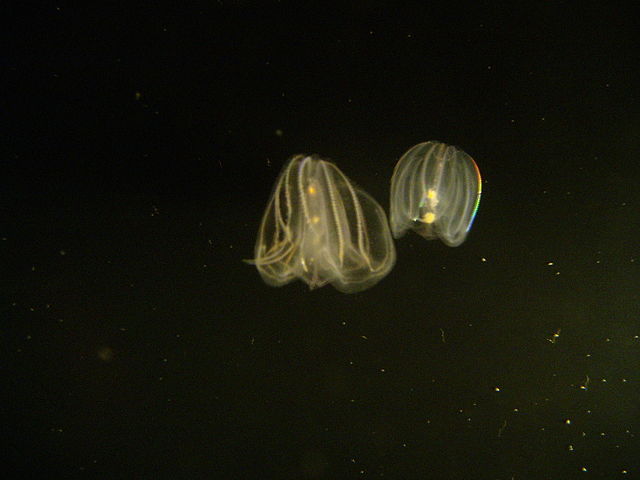
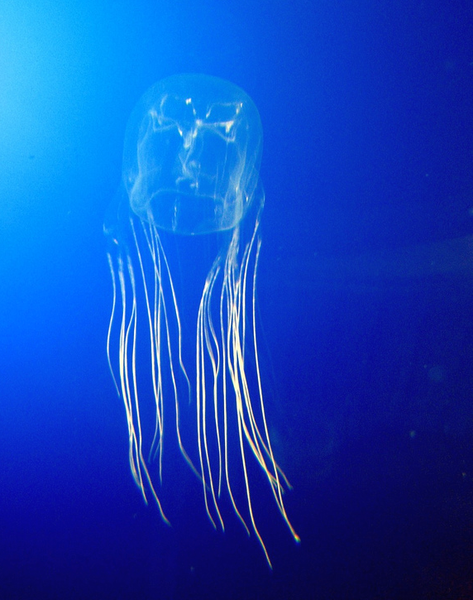
Warty Comb Jelly


We just learned about the long clear Venus Girdle Jellyfish.

Another type of jellyfish is the Warty Comb Jelly, also called the Sea Walnut, or the Mnemiopsis Leidyi.

These jellies mostly live in the west part of the Atlantic ocean, and are about 5 inches wide.

They are oval shaped, and they light up with blue-green colors with they get upset.


(from: wikipedia - mnemiopsis)


American comb jelly (Mnemiopsis leidyi) Гребневик мнемиопсис - Александр Куракин

Kid Facts - Blast from the past: Plectonocerida

Tuesday, June 25, 2019

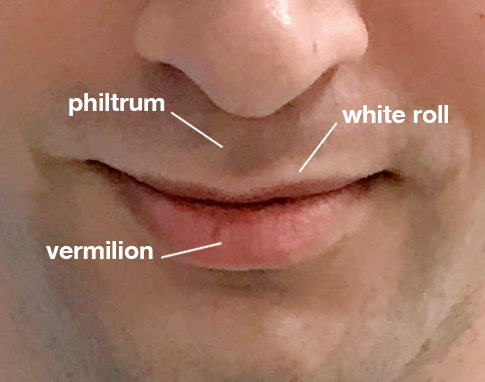
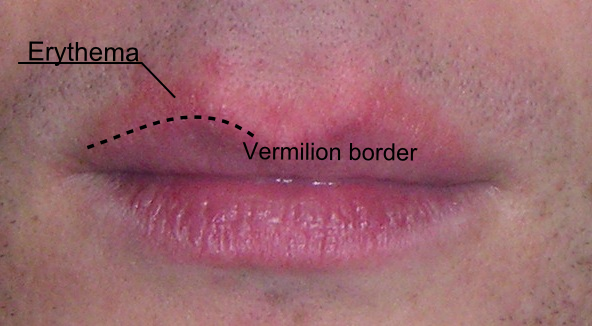
White Roll


We just learned about the bumpy spot on the upper lip called the Philtrum.

Another part of the mouth is the White Roll.

Right above where the lip changes from pink to normal skin color, there is a line where it is lighter than the rest of the skin on the face.
For a light skinned person this is almost white, so it is called the white roll.
For a dark skinned person it won't be white, but it will be lighter than the rest of the skin on the face.

The white roll shows up more for young people, and as people get older it gets less white and sticks out less.
Sometimes people will go get plastic surgery to make it stick out more to make themselves look young again.


(from: wikipedia - white roll)


Kid Facts - Blast from the past: Maxillary Second Preomlar

Monday, June 24, 2019

Ramparts


We just learned about the Moat that goes around a castle.

Another type of defense for a castle is the Ramparts.

These are hills or walls that are put up to try and hide behind or stand up on to look down on defenders.


(from: wikipedia - rampart (fortification))


Kid Facts - Blast from the past: Edinburgh Castle

Sunday, June 23, 2019

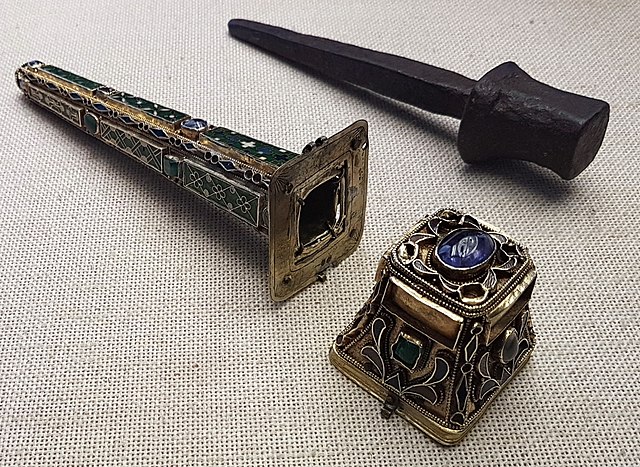
Holy Nails


We just learned about the True Cross that Saint Helen discovered.

Another part of early Christianity is the Holy Nails.

The legends of Saint Helen's discoveries after the true cross say that she also found the nails that were used on Jesus' body when he was crucified.

Some stories say that she had the nails put into the armor of her son Constantine so that he would be protected in battle.
There are other people that say that wasn't true, but it's hard to say for sure since that was over a thousand years ago!
Many churches also have special displays with nails or parts of nails that they say were the actual Holy Nails.


(from: wikipedia - holy nail)


Kid Facts - Blast from the past: Epnetus - Bishop of Carthage

Saturday, June 22, 2019

Chiwara


We just learned about the Benin Bronzes from Nigeria.

Another part of African sculpture is the Chiwara.

These are sculptures of antelopes that the Bambara people of the country of Mali used to teach their children about life and about farming.


(from: wikipedia - chiwara)


Kid Facts - Blast from the past: Da Yu ding

Friday, June 21, 2019

Norwegian - September, October


We already learned that January, February is Januar, Februar,
March, April is Mars, April,
May, June is Mai, Juni,
and July, August is Juli, August.

Let's keep going!

September - September - sounds like seh-p-tem-beh-dr
October - Oktober - sounds like oh-k-toh-beh-dr

norwegian language
(from: wikipedia - norwegian language)

Greek: Σεπτέμβριος (Septémvrios), Οκτώβριος (Októvrios)

ASL: September, October

Italian: Settembre, Ottobre

German: September, Oktober

Spanish: Septiembre, Octubre

French: Septembre, Octobre

Thursday, June 20, 2019

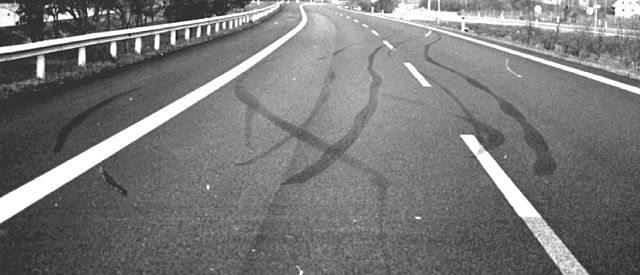
Tire Skid Marks


We just learned about the Forensic Podiatry.

Another part of forensic science is Tire Skid Marks.

These are the marks left on roads from tires.
Sometimes cars can leave these marks if they are going really fast, taking a sharp turn, stopping very fast, or if there is an accident.

The marks on the road usually look like one of three kinds:

- acceleration marks: These are when someone goes from slow to really fast and the tires are just spinning.

- braking marks: These are when someone hits the brakes and their tires lock up and slide.

- yaw marks: If the car slides sideways either on a turn or because they hit something.

When there is a car accident, the police can look at the skid marks to figure out how the crash happened.


(from: wikipedia - skid mark)


Kid Facts - Blast from the past: Gimbaled Thrust

Wednesday, June 19, 2019

Venus Girdle Jellyfish


We just learned about the very dangerous Sea Wasp jellyfish.

Another type of jelly is the Venus Girdle Jellyfish, also called the cestum veneris.

This is a very different kind of jellyfish because it looks like a big long clear ribbon with glowing white blue edges.

They can grow to be 1 meter (about 3 feet), and they usually live in the very warm waters of the ocean.


(from: wikipedia - venus girdle)


Venus Girdle Jellyfish - Rave Toy - DaveScuba

Kid Facts - Blast from the past: White Spotted Octopus

Tuesday, June 18, 2019

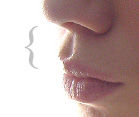
Philtrum


We just learned about the Vermillion Border no the top of the lip.

Another part of the mouth is the Philtrum.

The philtrum is on the outside of the upper lip, right in the middle, going from the nose to the lip.

For most people this is a little indent or groove.
Some scientists think that this part of the lip used to be used to try and help guide smells up to the nose, back when we used to have to hunt or smell our food more to see if it was ok to eat.


(from: wikipedia - philtrum)


Kid Facts - Blast from the past: Maxillary First Premolar

Monday, June 17, 2019

Moat


We just learned about the small castle guard buildings called Barbicans.

Another part of a castle is a Moat.

A moat is a trench or ditch going around the outside of the castle walls, to try and make it harder for attackers.
Usually a moat has water in it, but sometimes it doesn't and is called a "dry moat".

Moats make it so that people can't dig tunnels under the ground to sneak into the castle, and they also make it hard for attackers because they have to swim over to the castle.

Sometimes the water in moats was also used as water for the people in the castle to grow plants.

In some countries like Japan a castle might have 3 different moats, and the moats might be built like a winding river going around the castle.


(from: wikipedia - moat)


Kid Facts - Blast from the past: Cité de Carcassonne

Sunday, June 16, 2019

True Cross


We just learned about the Church of the Holy Sepulchre where Helena said she found the true cross.

The True Cross is said to be the actual wooden cross that Jesus was crucified on.

In her travels, Saint Helen went to Jerusalem and looked for it.
She had buildings torn down and had people dig around to try and find the cross, and they found three different crosses that they thought might be the right one.

The legends of Saint Helen say that she had a woman who was very sick come to see the crosses.
She touched the first two crosses and nothing happened, and then she touched the third one and was healed.

Today there are many churches that say they have a piece of the True Cross.


(from: wikipedia - helena (empress))


Kid Facts - Blast from the past: Crescens - Bishop of Carchedon in Gaul

Saturday, June 15, 2019

Benin Bronzes


We just learned about the Mask for King Obalufon II in Africa.

Another famous set of sculptures are the Benin Bronzes, from an old kingdom called Benin that is now part of Nigeria.

In the years of the 1700s, the people from Europe who were taking over parts of Africa did not think the art in all parts of Africa was very good.

Then in 1897 people from another country came to Benin and saw thousands of very good bronze and ivory sculptures that had been made over hundreds of years.


(from: wikipedia - benin bronzes)


Kid Facts - Blast from the past: Yixian Glazed Pottery Luohans

Friday, June 14, 2019

Norwegian - July, August


We already learned that January, February is Januar, Februar,
March, April is Mars, April, and May, June is Mai, Juni.

Let's keep going!

July - Juli - sounds like yoo-lee
August - August - sounds like ah-goo-st

norwegian language
(from: wikipedia - norwegian language)

Greek: Ιούλιος (Ioúlios), Αύγουστος (Ávgoustos)

ASL: July, August

Italian: Luglio, Agosto

German: Juli, August

Spanish: Julio, Agosto

French: Julliet, Août

Thursday, June 13, 2019

Forensic Podiatry


We just learned about the Forensic Epidemiology, trying to prove what causes things like diseases or accidents.

Another part of forensics is Forensic Podiatry.

Podiatry is the study of feet, so this means looking at a person's foot to figure out evidence.
This might be checking to see if a footprint matches their bare feet, or it might be looking at a shoe footprint and trying to find out if that person's foot fits into that shoe.


(from: wikipedia - foot)


Kid Facts - Blast from the past: Rocket Thrust Vectoring

Wednesday, June 12, 2019

Sea Wasp


We just learned about the Diplulmaris Antarctica.

Another type of jellyfish is the Sea Wasp also called the chironex fleckeri.

Some people call this jellyfish the most lethal jellyfish in the world, because it has caused deaths because of its painful sting.

They mostly live around the north side of Australia, and can have tentacles up to 10 feet long.

Their sting hurts very badly, and after getting stung a person needs to get to a hospital right away!

Luckily because these jellyfish only live in one spot in the world, people know to watch out for them, and try to put warning signs up where they are at in the water.


(from: wikipedia - chironex fleckeri)


(from: youtube - BOX Jellyfish - The Most Dangerous Sea Creature - Free Documentary)


Kid Facts - Blast from the past: Glass Squid

Tuesday, June 11, 2019

Vermillion Border


We just learned about the line of the top of the lips called the Cupid's Bow.

Another part of the lip is the Vermillion Border.

Vermillion is actually a word that means red.
The vermillion border is the place where the lip skin changes from pink or red to the color of the rest of the face.

(from: wikipedia - vermillion Border)


Kid Facts - Blast from the past: Maxillary Canine

Monday, June 10, 2019

Barbican


We just learned about the small back door on a castle called the Sally Port.

Another part of a castle is a Barbican.

This is a small building on the outside part of the castle that was built to help defend the castle.
Sometimes a barbican has a wall that goes from the barbican back to the castle, that defenders can walk on.

These small buildings would usually have some soldiers in them to help be the first line of defense before attackers could get to the main castle, and also help warn the castle that danger was coming.


(from: wikipedia - barbican)


Kid Facts - Blast from the past: Leeds Castle

Sunday, June 9, 2019

Church of the Holy Sepulchre


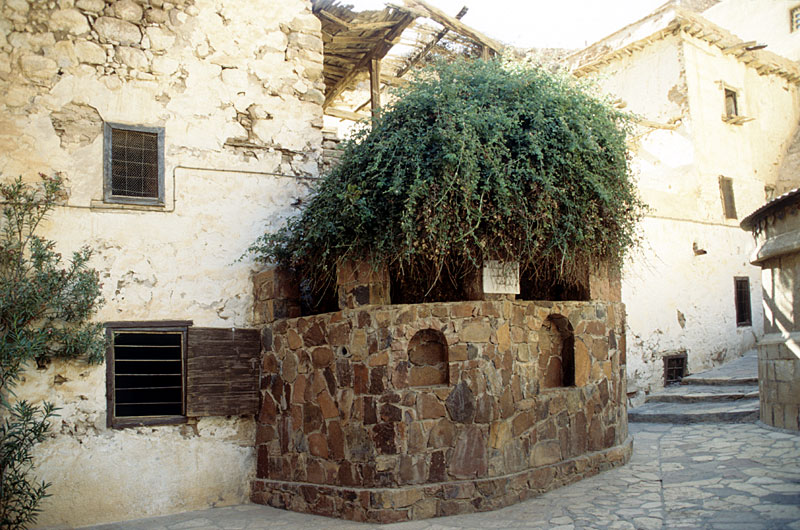
We just learned about Saint Catherine's Monastery, the church built where Moses saw the burning bush.

Another ancient church is the Church of the Holy Sepulchre, built in 335 AD in Jerusalem.

This is another church that was founded by Saint Helen while she traveled to find important places from the life of Jesus.

Inside this church is the tomb that Jesus was buried in, and also the rock where the cross was standing when he was crucified.


(from: wikipedia - church of the holy sepulchre)


Kid Facts - Blast from the past: Silvanus - Bishop of Thessalonica

Saturday, June 8, 2019

Mask for King Obalufon II


We just learned about the Nok Terracotta ancient sculptures from Nigeria.

Another ancient African sculpture is the Mask for King Obalufon II, made some time around 1300 AD.

This was a mask made out of copper for one of the kings of the Yoruba people.

The Yoruba are mostly from the west part of the African continent, in countries like Benin, Nigeria and Togo.

Many of the royal people in the history of the Yoruba people would wear masks for some of their celebrations, like this one that was made for King Obalufon II.

One other interesting thing about the Yoruba people is that there are more twins born in this area than any other part of the world!
No one is really sure why it happens, but some people believe that there is a kind of plant that grows there that makes it happen more often.

(from: wikipedia - yoruba art)


Kid Facts - Blast from the past: Six Ritual Jades - Zhang

Friday, June 7, 2019

Norwegian - May, June


We already learned that January, February is Januar, Februar
and March, April is Mars, April.

Let's keep going!

May - Mai - sounds like mah-ee
June - Juni - sounds like yoo-nee

norwegian language
(from: wikipedia - norwegian language)

Greek: Μάιος (Máios), Ιούνιος (Ioúnios)

ASL: May, June

Italian: Maggio, Giugno

German: Mai Juni

Spanish: Mayo, Junio

French: Mai, Juin

Thursday, June 6, 2019

Forensic Epidemiology


We just learned about Forensic Entomology, looking at evidence of bugs!

Another part of detective science is Forensic Epidemiology.

This is the science of looking at someone who is sick or injured, making a guess as to why it happened, and then trying to prove that the guess was right or wrong.

A lot of times people get sick or injured, and we think we know what caused it.
If someone has really bad breathing problems, detectives can look around for bad chemicals in the house, and then do some tests to see if that was really what caused their problems or if maybe they were a smoker or something else.

When a person gets into a car crash and then has neck problems, the science of epidemiology helps prove whether or not their neck problems were because of the car crash or if they would have had the same neck problems from something else.

This type of science is very important, because if scientists can prove that something is bad and causes sickness or injury, then things like bad chemicals can be made illegal, cars can be changed to have better safety, medicines and surgeries can be proven to be good or bad.

(from: wikipedia - forensic epidemiology)


Kid Facts - Blast from the past: Fire Arrow

Wednesday, June 5, 2019

Diplulmaris Antarctica


We just learned about the White Spotted Jellyfish.

Another type of jelly is the Diplulmaris Antarctica.

Jellyfish live in oceans all over the world, and like you might guess from this one's name it lives near Antarctica at the south pole!

These jellies only grow up to about 7 inches.
They have white tentacles and a mostly white bell.
The inside of the jelly where the stomach is at is a reddish orange color, so it really stands out against the rest of their white body.
It's frilly arms that help bring their food to their mouth are also the same orange red color, so they are pretty neat looking.


(from: wikipedia - )


Kid Facts - Blast from the past: Parapuzosia

Tuesday, June 4, 2019

Cupid's Bow


We just learned about the Lips that help us eat and protect our mouth.

Another part of the mouth is the Cupid's Bow.

This is the shape of the line on the upper lip, that is shaped kind of like a bow for a bow and arrow.

Because it is shaped like a bow, and because people use lips for kissing, this part of the mouth got the nickname cupid's bow.


(from: wikipedia - cupid's bow)


Kid Facts - Blast from the past: Maxillary Lateral Incisor

Monday, June 3, 2019

Sally Port


We just learned about the Curtain Wall that goes around the outside of a castle.

Another part of a castle is a Sally Port.

This is like a small door on the back or side of the castle that can be used to let people in or out.
It was usually in a protected location, like by the water, and sometimes the people in the castle would sneak out to go fight the people attacking the castle, and then go sneak back in.

Sometimes this door is also called a Postern.


(from: wikipedia - sally port)


Kid Facts - Blast from the past: Veste Coburg

Sunday, June 2, 2019

Saint Catherine's Monastery


We just learned about the Church of the Pater Noster where Jesus taught the Lord's Prayer to his apostles.

Another famous church that Saint Helen helped to set up is Saint Catherine's Monastery.

This is on Mount Sinai, and is believed to be the place where Moses saw the burning bush that was God speaking to him.

There is even an actual live bush growing there, that people say is still the same bush that was on fire when God spoke to Moses.

This church is also a monastery where monks live and study the Bible.
It has a library in it that has been around longer than any other library in the world, going all the way back to around the year 550 AD.


(from: wikipedia - saint catherine's monastery)


Kid Facts - Blast from the past:Silas - Bishop of Corinth

Saturday, June 1, 2019

Nok Terracotta


We just learned about the Pisa Griffin in Spain.

Another famous type of sculpture is the Nok Terracotta.

Thousands of years ago in an area called Nok in the country of Nigeria, people made sculptures out of a type of clay that hardened to be like ceramic, called terracotta.

These terracotta statues were usually small sculptures of people with very detailed heads and hairstyles, lots of jewelry, and all kinds of different shapes.

Since these were made thousands of years ago, it's hard to figure out why they were made or a lot about them, but people have dug up the ground and found many of these sculptures over the years.


(from: wikipedia - nok culture)


Kid Facts - Blast from the past: Six Ritual Jades - Gui

Friday, May 31, 2019

Norwegian - March, April


Let's keep learning about the months of the year in Norwegian!

We already learned that January, February is Januar, Februar

Let's keep going!

March - Mars - sounds like mah-r-ss
April - April - sounds like ah-p-d-eel

norwegian language
(from: wikipedia - norwegian language)

Greek: Μάρτιος (Mártios), Απρίλιος (Aprílios)

ASL: March, April

Italian: Marzo, Aprile

German: März, April

Spanish: Marzo, Abril

French: Mars, Avril


Thursday, May 30, 2019

Forensic Entomology


We just learned about how Forensic Dentistry can help use teeth to solve crimes.

Another type of science used by detectives is Forensic Entomology.

Entomology is the study of bugs!

Bugs can be pretty scary and gross, but sometimes they can actually help solve crimes that no one else can figure out.
When someone dies, and a detective has to figure out how it happened, they can look at all different types of bugs.

When a scientist is in a laboratory looking at the body of someone who died, they can sometimes find clues of different types of insects that touched the body.
This can help them figure out how long it's been since the person died, and even sometimes it can tell them where the person was at when they died.
This can be very useful in solving crimes!

Studying bugs can also help scientists figure out if there is a problem with bugs in an area.
Like if someone complains that there are fleas in their house, scientists can come by and help figure out where they are coming from, how they got in there, and how to get rid of them.

Forensic entomology also helps figure how helpful insects like bees are being killed, like if there is a type of chemical somewhere that is causing problems for them.

Bugs are not always pretty, but studying the science of bugs can help solve mysteries!


(from: wikipedia - forensic entomology)


Kid Facts - Blast from the past: Specific Impulse

Wednesday, May 29, 2019

White Spotted Jellyfish


We just learned about the Lobed Comb Jellyfish that lights up like a rainbow.

Another type of jellyfish is the White Spotted Jellyfish, also called the floating bell, Australian spotted jellyfish, or phyllorhiza punctata.

This type of jelly started out living in warm water in the Pacific ocean by Australia and Japan, but has now been found all the way over by California, and even in the Gulf of Mexico.
It grows to about 20 inches wide, and does have a sting but it doesn't really hurt humans.

They swim in large groups with other white spotted jellies, and because of this they can be harmful to other life in the ocean.
In their groups they swim along and eat all of the tiny little things like zooplankton, or eggs of crabs, shrimp or fish.
They also clog up the boat motors and cause problems with ships on the sea.


(from: wikipedia - phyllorhiza punctata)


(from: youtube - Underwater Beauty: Spotted Jellies - Shedd Aquarium)


Kid Facts - Blast from the past: Giant Cuttlefish

Tuesday, May 28, 2019

Lips


We just learned about the part on the roof of the mouth called the Palatine Raphe.

Another part of the mouth is the Lips.
The big long names for the upper and lower lips are the Labium superius oris and "Labium inferius oris.
Labium means lip, superius and inferius are for upper and lower, and then oris is for the face, near the mouth.

The lips have no sweat glands, and can not grow hair.
Skin on the lips is softer than the face skin.

Most of the skin on the face has 16 layers, but the skin on the lips only has about 4 layers.
It also doesn't have the same coloring cells as the face does, so you can see right through the top skin and see the blood vessels underneath it.
That's why the lips are pink or red, because of the blood vessels underneath.

There are a whole bunch of muscles for the lips that we learned about a while ago:
Upper lip: levator labii superioris and levator anguli oris
Lower lip: depressor anguli oris, depressor labii inferioris, mentalis

Lips are used to open and close for food, to help make sounds when we talk, and also to kiss!
Because lips are on the human face, people try very hard to make their lips look nice, sometimes using makeup or lip gloss, and sometimes even having surgery to make their lips look bigger.

The lips are very important to keep healthy, which is why there are things like lip balm to protect them.
Healthy lips help protect the mouth from the outside, and keep a healthy mouth!


(from: wikipedia - lip)


Kid Facts - Blast from the past: Central Incisors

Monday, May 27, 2019

Curtain Wall


We just learned about the hole in a castle wall called the Machicolation.

Another part of a castle is a Curtain Wall.

This is another wall that goes around the main castle, to help protect the castle inside the wall.

Its name makes sense because it's like a big curtain going around the outside of the castle.


(from: wikipedia - curtain wall (fortification))


Kid Facts - Blast from the past: Castel del Monte

Sunday, May 26, 2019

Church of the Pater Noster


We just learned about the Church of the Nativity in Bethlehem where Jesus was born.

Another part of early Christian history is the Church of the Pater Noster in Jerusalem.

In the Bible there was a place called the Mount of Olives, where Jesus appeared to the disciples and then ascended into heaven.

When the emperor Constantine sent his mother Helena out to find some of the important places in Christianity, she came to this place and made a church where the Mount of Olives was.

It's called Church of the Pater Noster because "pater" means father and "noster" means our.
In a cave below the Mount of Olives is where people believe Jesus taught his disciples the Lord's Prayer, which starts with the words "Our Father".


(from: wikipedia - church of the pater noster)


Kid Facts - Blast from the past: Luke the Evangelist