Friday, September 13, 2019

Norwegian - One Hundred


We counted to 99 in Norwegian, let's keep going!

100 ett hundre - sounds like eh-t hoo-n-deh-r
101 ett hundre og en - sounds like eh-t hoo-n-deh-r oh-ee eh-n
102 ett hundre og to - sounds like eh-t hoo-n-deh-r oh-ee too
103 ett hundre og tre - sounds like eh-t hoo-n-deh-r oh-ee t-day
104 ett hundre og fire - sounds like eh-t hoo-n-deh-r oh-ee fee-dah
105 ett hundre og fam - sounds like eh-t hoo-n-deh-r oh-ee feh-m
106 ett hundre og seks - sounds like eh-t hoo-n-deh-r oh-ee seh-ks
107 ett hundre og syv - sounds like eh-t hoo-n-deh-r oh-ee see-v
108 ett hundre og åtte - sounds like eh-t hoo-n-deh-r oh-ee oh-tuh
109 ett hundre og ni - sounds like eh-t hoo-n-deh-r oh-ee nee

norwegian language
(from: wikipedia - norwegian language)

Greek: εκατό (ekató), εκατόν ένα (ekatón éna), εκατόν δύο (ekatón dýo), εκατόν τρεις (ekatón treis), εκατόν τέσσερις (ekatón tésseris), εκατόν πέντε (ekatón pénte), εκατόν έξι (ekatón éxi), εκατόν επτά (ekatón eptá), εκατόν οκτώ (ekatón októ), εκατόν εννέα (ekatón ennéa)

ASL: One hundred, one hundred one, one hundred two, one hundred three, one hundred four, one hundred five, one hundred six, one hundred seven, one hundred eight, one hundred nine

Italian: cento, centodue, centotre, centoquattro, centocinque, centosei, centosette, sentotto, sentonove

German: einhundert, einhunderteins, einhundertzwei, einhundertdrei, einhundertvier, einhundertfünf, einhundertsechs, einhundertsieben, einhundertacht, einhundertneun

Spanish: ciento, ciento uno, ciento dos, ciento tres, ciento cuatro, ciento cinco, ciento seis, ciento siete, ciento ocho, ciento nueve

French: cent, cent, cent deux, cent trois, cent quatre, cent cinq, cent six, cent sept, cent huit

Thursday, September 12, 2019

Stator


We just learned about the Rotor shaft that spins inside an electric motor.

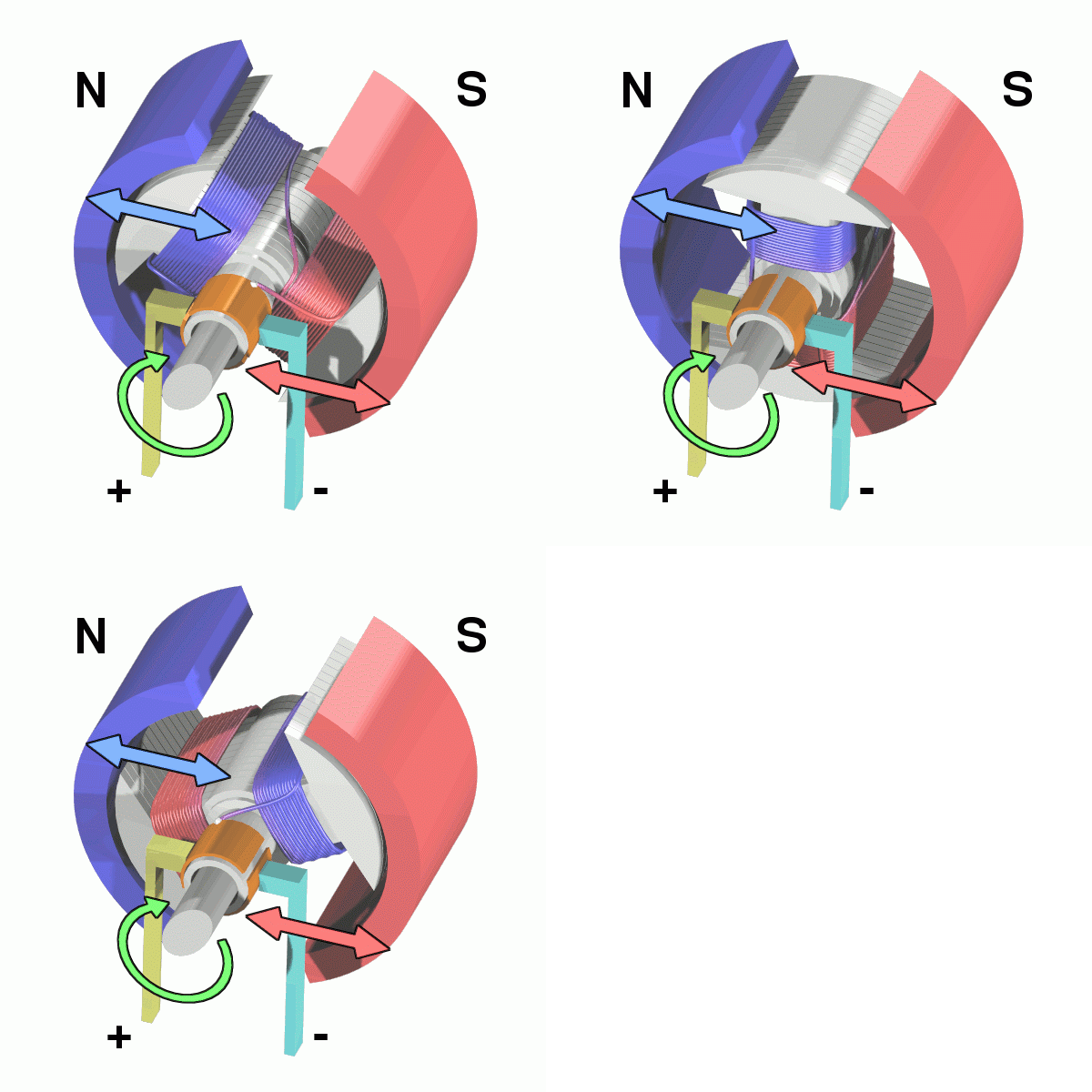
Another part of an electric motor is the Stator.

This is the circle hole that the rotor goes into when it is spinning.

Usually the stator has something like an electromagnet in it that is used to make the rotor spin around.
The stator doesn't move, and the rotor spins around inside it.


(from: wikipedia - stator)


Kid Facts - Blast from the past: Ballistics

Wednesday, September 11, 2019

Jellyfish Bell


We just learned about the long bubbly hydrozoan, the Marrus Orthocanna.

Let's learn a little bit about Jellyfish bodies.
The big part of the jellyfish that looks kind of like the head is called the Bell.


(from: wikipedia - jellyfish)


Kid Facts - Blast from the past: Opalescent Inshore Squid

Tuesday, September 10, 2019

Lens


We just learned about the Retina at the back of the eye.

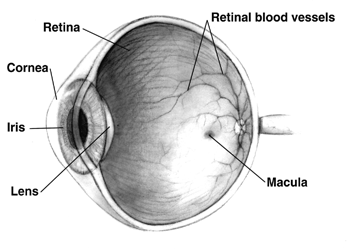
Another part of the eye is the Lens.

This is a part of the eye right behind iris and pupil.
It is clear and works like a magnifying glass to help the eye focus on things close or far away.

The eye has muscles to push and pull on the lens to change the focus.


(from: wikipedia - lens (anatomy))


Kid Facts - Blast from the past: Dentin

Monday, September 9, 2019

Battery Tower


We just learned about the Hoarding wooden shed attached to the castle wall.

Another fortification is a Battery Tower.

This is a type of tall tower on the edge of a castle, with holes in it for cannons and guns that people can use to defend the castle.


(from: wikipedia - battery tower)


Kid Facts - Blast from the past: Hohensalzburg Fortress

Sunday, September 8, 2019

Constantinople


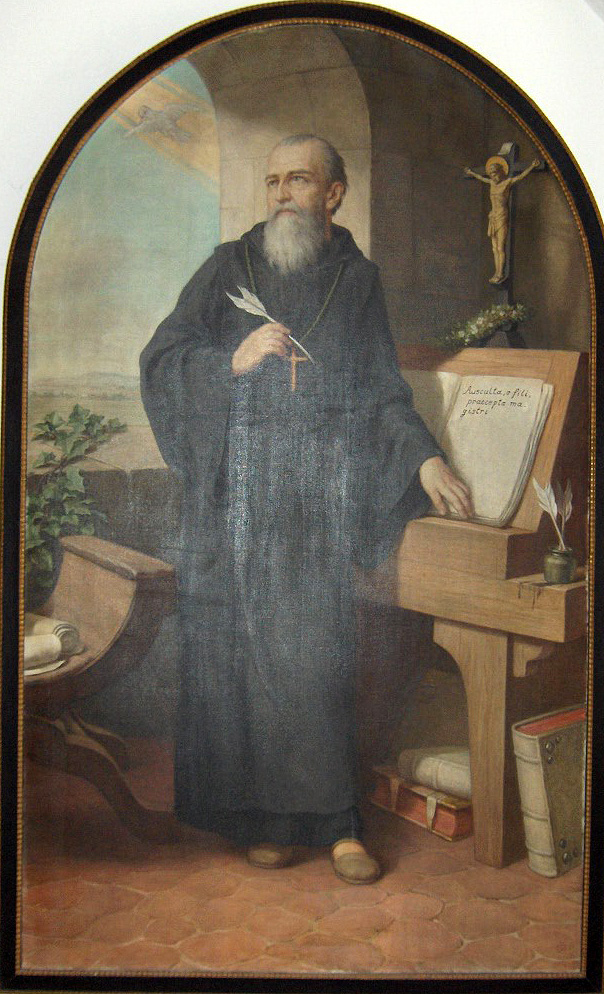
We just learned about the life of monks, called Monasticism.

Another part of early Christianity is the city of Constantinople.

In the old Roman empire, the head of the capital was the city of Rome in Italy.

When Constantine was the emperor, he wanted to make a new city to rule from that wasn't Rome. In the city of Byzantium in what is now the country of Turkey he built up the city and called it "Nova Roma" or "New Rome", and it was later called Constantinople.

In this city the emperor ruled the Roman empire and also helped churches get started and help spread Christianity.


(from: wikipedia - constantinople)


Kid Facts - Blast from the past: Philologus - Bishop of Sinope

Saturday, September 7, 2019

Double Headed Serpent


We just learned about the Serpent Labret with Articulated Tongue jewelry worn by Aztec people in their lip.

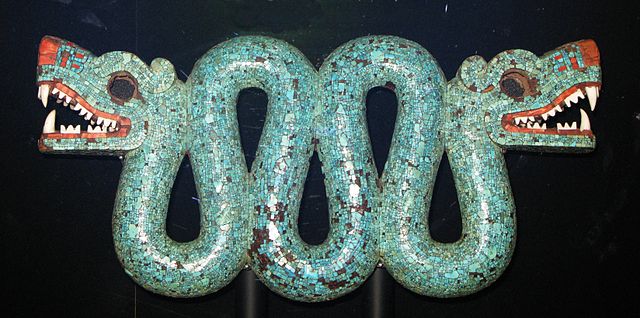
Another sculpture from ancient America is the Double Headed Serpent, made around 1500 AD in what is now Mexico.

The sculpture is a wavy snake with a head on either end.
It is made out of wood, turquoise, pine resin, shells and other things.
On the inside it is a wooden snake sculpture, and then turquoise stones were broken into tiny pieces and glued to the wooden body using pine resin.
It has holes for eyes, and some sticky beeswax in it so people think there might have been jewels for eyes before they fell out.
This was a sculpture made by the ancient Aztecs.


(from: wikipedia - double-headed serpent)


Kid Facts - Blast from the past: Seven Sages of the Bamboo Grove

Friday, September 6, 2019

Norwegian - Counting to Ninety Nine


We counted to 89 in Norwegian, let's keep going!

90 nitti - sounds like nih-tee
91 nittien - sounds like nih-tee eh-n
92 nittito - sounds like nih-tee too
93 nittitre - sounds like nih-tee t-day
94 nittifire - sounds like nih-tee fee-dah
95 nittifam - sounds like nih-tee fah-m
96 nittiseks - sounds like nih-tee seh-ks
97 nittisyv - sounds like nih-tee see-v
98 nittiåtte - sounds like nih-tee oh-tuh
99 nittini - sounds like nih-tee nee

norwegian language
(from: wikipedia - norwegian language)

Greek: ενενήντα (enenínta), ενενήντα ένα (enenínta éna), ενενήντα δύο (enenínta dýo), ενενήντα τρεις (enenínta treis), ενενήντα τέσσερις (enenínta tésseris), ενενήντα πέντε (enenínta pénte), ενενήντα έξι (enenínta éxi), ενενήντα επτά (enenínta eptá), ενενήντα οκτώ (enenínta októ), ενενήντα εννέα (enenínta ennéa)

ASL: Ninety, ninety one, ninety two, ninety three, ninety four, ninety five, ninety six, ninety seven, ninety eight, ninety nine

Italian: novanta, novantuno, novantadoue, novantatre, novantaquattro, novantacinque, novantasei, novantasette, novantotto, novantanove

German: neunzig, einundneunzig, zweiundneunzig, dreiundneunzig, vierundneunzig, fünfundneunzig, sechsundneunzig, siebenundneunzig, achtundneunzig, neunundneunzig

Spanish: noventa, noventa y uno, noventa y dos, noventa y tres, noventa y cuatro, noventa y cinco, noventa y seis, noventa y siete, noventa y ocho, noventa y nueve

French: quatre-vingts dix, quatre-vingt onze, quatre-vingt douze, quatre-vingt treize, quatre-vingt quatorze, quatre-vingt quinze, quatre-vingt seize, quatre-vingt dix sept, quatre-vingt dix huit, quatre-vingt dix neuf

Thursday, September 5, 2019

Rotor


We just learned about the Electric Motor.

In the motor, the spinning pole or shaft in the middle is called the Rotor.

The electric motor spins the rotor around, and then the rotor is connected to other gears or pulleys to use the spinning to move other things.


(from: wikipedia - rotor (electric))


Kid Facts - Blast from the past: Inertial Navigation System

Wednesday, September 4, 2019

Marrus Orthocanna


We just learned about the Green Hydra.

Another type of hydrozoan is the Marrus Orthocanna.

This animal looks like a long fiery string with bubbles on it.
It can grow to be several feet long, and forty inches wide.

These creatures live in very deep waters, over 600 feet deep and mostly in the Arctic Ocean.


(from: wikipedia - marrus orthocanna)


Kid Facts - Blast from the past: Big Blue Octopus

Tuesday, September 3, 2019

Retina


We just learned about the Cornea.

Another part of the eye is the Retina.

Remember that the black pupil in the eye is really just a hole for the light to come in.
The black color of the pupil comes from the inside of the eye, where the light hits the retina.

The retina is in the back of the eye.
Inside the eye it is shaped like a ball, with the pupil as the hole to let light in, and the retina as inside of the ball at the back.

The retina helps take the light that shines on it, and turn it into signals that are sent to the brain so you can understand what you are seeing.


(from: wikipedia - retina)


Kid Facts - Blast from the past: Tooth Enamel

Monday, September 2, 2019

Hoarding


We just learned about the big gated door called the Yett.

Another kind of castle fortification is a Hoarding.

This is a wooden shed that is built on the outside of a stone castle, to help protect archers and defenders of the castle during a battle.

These hoardings are usually not built on the castle until there is a battle.
When they are put up, there are holes in the side of a castle called putlogs or putlocks that they would put logs into, and then build the hoarding on top of that.


(from: wikipedia - hoarding (castle))

(from: wikipedia - putlog hole)


Kid Facts - Blast from the past: Spiš Castle

Sunday, September 1, 2019

Monasticism


We just learned about the Fifty Bibles of Constantine.

Another part of early Christianity is Monasticism, which means talking about monks.

We've learned a lot before about Monks and Nuns.

During the years 300-400 Christianity went from became illegal and people being killed for being a Christian, to being legal in the Roman empire.

Around that same time is when people started going off by themselves to live in caves, or live in buildings together called monasteries or convents.

Monks and Nuns have been around for hundreds of years, but it first started in the 4th century (300 - 400 AD) and when it was made legal people started making places for monks to live, and the monks also started being very important in how people understood the Bible.


(from: wikipedia - christian monasticism)


Kid Facts - Blast from the past: Caius - Bishop of Ephesus

Saturday, August 31, 2019

Serpent Labret with Articulated Tongue


We just learned about the Olmec Colossal Heads.

Another ancient art from the ancient Americas is the Serpent Labret with Articulated Tongue.

This is a type of jewelry that was worn in someone's pierced lower lip.
The snake would stick out, and the tongue would even move when they moved their head.
In the place now known as Mexico there were people called the Aztecs that would sometimes pierce their lips and wear things in their mouth like that.

It's made of gold, copper and silver, and was made long ago, some time around 1400 AD.


(from: wikipedia - serpent labret with articulated tongue)


Kid Facts - Blast from the past: Nestorian Stele

Friday, August 30, 2019

Norwegian - Counting to Eighty Nine


We counted to 79 in Norwegian, let's keep going!

80 åtti - sounds like aw-tee
81 åttiett - sounds like aw-tee eh-t
82 åttito - sounds like aw-tee too
83 åttitre - sounds like aw-tee t-day
84 åttifire - sounds like aw-tee fee-dah
85 åttifem - sounds like aw-tee fam
86 åttiseks - sounds like aw-tee seh-ks
87 åttisyv - sounds like aw-tee see-v
88 åtti οκτώ - sounds like aw-tee aw-tuh
89 åttini - sounds like aw-tee nee

norwegian language
(from: wikipedia - norwegian language)

Greek: ογδόντα (ogdónta), ογδόντα ένα (ogdónta éna), ογδόντα δύο (ogdónta dýo), ογδόντα τρεις (ogdónta treis), ογδόντα τέσσερις (ogdónta tésseris), ογδόντα πέντε (ogdónta pénte), ογδόντα έξι (ogdónta éxi), ογδόντα επτά (ogdónta eptá), ογδόντα οκτώ (ogdónta októ), ογδόντα εννέα (ogdónta ennéa)

ASL: eighty, eighty one, eighty two, eighty three, eighty four, eighty five, eighty six, eighty seven, eighty eight, eighty nine

Italian: ottanta, unottanta, ottantadue, ottantatre, ottantaquattro, ottantacinque, ottantasei, ottantasette, ottantotto, ottantanove

German: achtzig, einundachtzig, zweiundachtzig, dreiundachtzig, vierundachtzig, fünfundachtzig, sechsundachtzig, siebenundachtzig, achtundachtzig, neunundachtzig

Spanish: ochenta, ochenta y uno, ochenta y dos, ochenta y tres, ochenta y cuatro, ochenta y cinco, ochenta y seis, ochenta y siete, ochenta y ocho, ochenta y nueve

French: quatre-vingts, quatre-vingts-un, quatre vingt deux, quatre vingt trois, quatre vingt quatre, quatre vingt cinq, quatre vingt six, quatre vingt sept, quatre vingt huit, quatre vingt neuf

Thursday, August 29, 2019

Electric Motor


We just learned about the Bearing.

One type of motor used for a lot of things is an Elecric Motor.

This motor usually has some electric coils wrapped around a metal pole, spinning around inside a tube.

Some electric motors use the tube to force the pole to spin, and others take the energy from the spinning pole and use it to charge up electricity from the tube around it.


(from: wikipedia - electric motor)


Kid Facts - Blast from the past: Reaction Control System

Wednesday, August 28, 2019

Green Hydra


We just learned about the String Jellyfish.

Another type of hydrozoan is a Green Hydra, also called the Hydra Viridissima.

These are skinny green animals with tentacles, that are very small, only about 10 milimeters.

They eat tiny little insects and crustaceans.

Green Hydras mostly do not swim around anywhere and usually just live on top of other things in the water like plants.

Their green color comes from a type of green algea that grows on their body.

They can flex their body a little to move around if they have to, but mostly they just stay on the plant they are attached to.


(from: wikipedia - hydra viridissima)


Giftige Tierwelt: faszinierende Lebewesen im Tümpel. Süßwasserpolyp, Hydra viridissima - nature tv Lothar Lenz

Kid Facts - Blast from the past: Pharaoh Cuttlefish

Tuesday, August 27, 2019

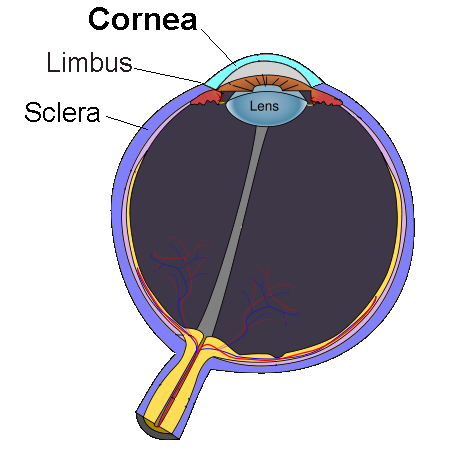
Cornea


We just learned about how we get different Eye Colors.

Another part of the human eye is the Cornea.

This is the clear bubble that is on the front part of your eye.

It works kind of like a magnifying glass, and helps bring light into the eye so you can see.


(from: wikipedia - cornea)


Kid Facts - Blast from the past: Tooth Impaction

Monday, August 26, 2019

Yett


We just learned about the Portcullis door that slides down.

Another type of castle door is the Yett.

This is a door made out of wrought iron bars, but it is on hinges and swings open and closed sideways like a normal door.


(from: wikipedia - yett)


Kid Facts - Blast from the past: Buda Castle