Monday, December 17, 2018

Mysore Palace


We just learned about the Pena Palace.

Another famous castle is Mysore Palace, in Karnataka India in 1912 AD.

There are actually seven palaces in Mysore, but the biggest one is called Mysore Palace.

The special way the building looks is called Indo-Saracenic, which means it mixes together different construction styles, like Hindu, Mughal, Rajput and Gothic.
It is three stories high and has a 145 foot high tower.

There are three main entrances to the palace, and also many secret tunnels going between the palaces.
On top of one of the buildings is a statue of the Hindu Goddess Gajalakshmi that stands for wealth and fortune.
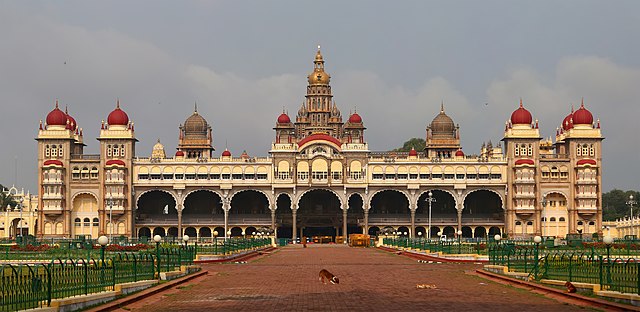


(from: wikipedia - mysore palace)


Kid Facts - Blast from the past: Coahuila

Sunday, December 16, 2018

The Great Fire of Rome


We just learned about the Ante Nicene Period.

Another part of early Christianity is the Great Fire of Rome.

In 62 AD there was a big fire that burned for 6 days, and burned down many parts of the city of Rome.
No one is sure how the fire started, but after it was done the Roman Emperor Nemo blamed the fire on the Christian people living in Rome.

After that a lot of Christians were treated very badly, and sometimes even killed.


(from: wikipedia - category:great fire of rome)


Kid Facts - Blast from the past: Desert Mothers

Saturday, December 15, 2018

The Great Buddha of Kamakura


We just learned about the sculpture Sahasrabhuja-arya-avalokiteśvara by Tankei.

Another Japanese sculpture is The Great Buddha of Kamakura, made some time around 1252 AD.

No one is really sure who made the statue, but they think it might have been either Ōno Gorōemon or Tanji Hisatomo who were both famous artists at the time.

The statue is made out of bronze, and was made as a replacement for a wooden statue just like it.
It is over 40 feet tall, and weighs over 100 tons.
It's hollow, and people can actually go inside and look around.


(from: wikipedia - kōtoku-in)


Kid Facts - Blast from the past: George Washington - Canova

Friday, December 14, 2018

Norwegian - Six, seven, eight, nine, ten

We learned in Norwegian that 1-5 is en, to, tre, fire, fem.
Now let's count up to ten!

6 seks - sounds like seh-ks
7 syv - sounds see-v
8 åtte - sounds like oh-tay
9 ni - sounds like NEE
10 ti - sounds like tee


norwegian language
(from: wikipedia - norwegian language)

Do you remember how to say it in other languages?

Greek: έξι, εφτά, οχτώ, εννέα, δέκα

ASL: Six, seven, eight, nine, ten

Italian: sei, setto, otto, nove, dieci

German: seis, sieben, acht, neun, zehn

Spanish: seis, siete, ocho, nueve, diez

French: six, sept, huit, neuf, dix

Thursday, December 13, 2018

L'Astronautique - Robert Esnault-Pelterie


We just learned about the Tsiolkovsky rocket equation.

Another part of rocket history is the book L'Astronautique by Robert Esnault-Pelterie.

Robert was a French scientist who was studying airplanes.
He made his own "REP" airplanes not long after the Wright Brothers in America made their first flight.

A while later he got very interested in space travel using rockets, and wrote some books and papers about using atomic power for jets.

He later worked with other scientists in France to try and make rockets using liquid rocket fuel, and worked so hard that one time after an explosion he lost three fingers from his right hand!

The vectored thrust that we learned about, where the nozzle is moved to steer a rocket was first invented by him.

(from: wikipedia - robert esnault-pelterie)


Kid Facts - Blast from the past: Slow Earthquake

Wednesday, December 12, 2018

Cephalopod - Cirrus


We just learned about the Cephalopod Eyes.

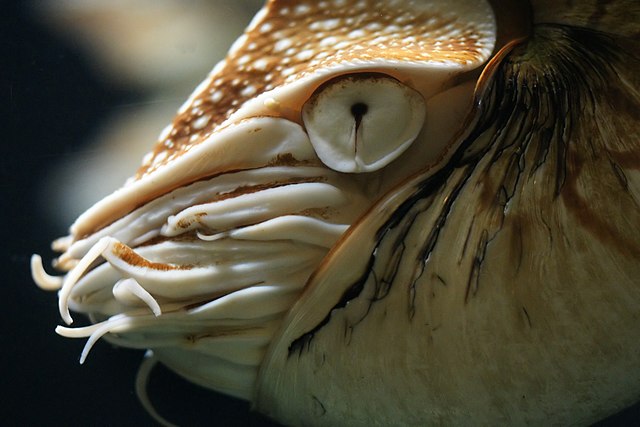
Another part of the Cephalopod is the Cirrus.

A cirrus is a type of harder tentacle that doesn't bend as well, and doesn't have any suckers or hooks.
More than one cirrus is called cirri.

The nautilus has cirri that it uses to grab it's prey.
Each cirrus has ridges on it, so they use that to try and hold on really strong.
They hold on so strong with their cirri, that if the prey does get away they have probably ripped the cirri right off!


(from: wikipedia - nautilus)


Kid Facts - Blast from the past: Masked Tree Frog

Tuesday, December 11, 2018

Alveolar Process


We just learned about the Dental Alveoli.

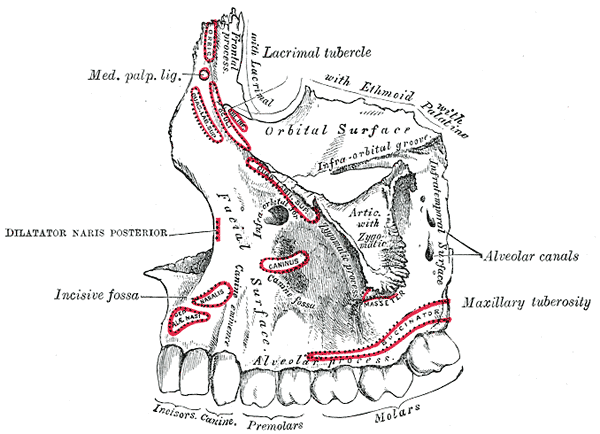
Another part of the mouth is the Alveolar Process.

This is the jaw bone that holds on to the tooth sockets, or dental alveoli we just learned about.


(from: wikipedia - alveolar process)


Kid Facts - Blast from the past: Scapula & Clavicle Ligaments

Monday, December 10, 2018

Pena Palace


We just learned about the Potala Palace.

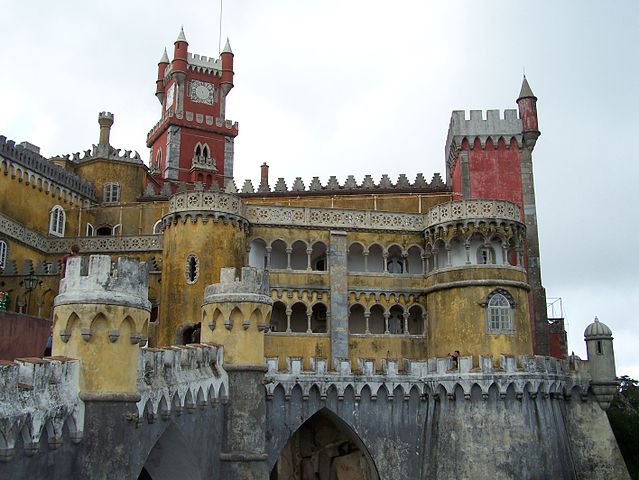
Another famous castle is Pena Palace, built in 1838 in Sintra, Portugal.

The palace started out in the 1400s as a chapel built on a hill after someone believed they saw the Virgin Mary.

Later on it was turned into a monastery for monks to live in.
In the 1700s the monastery was struck by lightning, and also destroyed by an earthquake.

After that Prince Ferdinand of Portugal took all the land and had the castle built for the royal family to stay there.


(from: wikipedia - pena palace)


Kid Facts - Blast from the past: Sinaloa

Sunday, December 9, 2018

Ante-Nicene Period


We just learned about the Christian Name.

Another part of early Christianity was the Ante-Nicene Period.

This was the time after the apostles, where there was a lot of mystery about what people believed.
A lot of people had different ideas about what Christianity should be like, and there were not a lot of very good church leaders for almost a hundred years.

For this time people started to call themselves Christians, but there was a lot of confusion about exactly what types of things people should believe.

People believed different things about Jesus, God and the Holy Spirit, and also weren't sure about the God from the New Testament and the Old Testament.

One of the most famous ones who did write about 2,000 different papers about Christianity was named Origen.

Because of all the confusion, after the Ante-Nicene times people worked to get together to try and talk about how to help everyone agree on what the right way was for Christians to act.


(from: wikipedia - origen)


Kid Facts - Blast from the past: Nuns

Saturday, December 8, 2018

Sahasrabhuja-arya-avalokiteśvara - Tankei


We just learned about the Seated Yuima by Jōkei.

Another famous Japanese sculpture is the Sahasrabhuja-arya-avalokiteśvara made by famous sculptor Tankei, some time around 1200 AD in the temple known as Sanjusangen-dō in Kyoto, Japan.

Tankei was also in the Kei school, just like Jōchō, Kōkei, Unkei, Kaikei and Jōkei.

Unkei was Tankei's father.

The sculpture is of one of the types of Buddha statues called the Avalokiteśvara who has a thousand arms to try and reach out and help everyone.


(from: wikipedia - tankei)


Kid Facts - Blast from the past: Columbus Doors - Rogers

Friday, December 7, 2018

Thursday, December 6, 2018

Tsiolkovsky rocket equation


We just learned about the Jules Verne - From the Earth to the Moon.

Another part of rocket science history is the Tsiolkovsky rocket equation.

Because of the wonderful stories from people like Jules Verne, a man in Russia named Konstantin Tsiolkovsky came up with a bunch of scientific math equations and graphs that people could use to launch rockets.

His math paper was called the Exploration of Cosmic Space by Means of Reaction Devices, and it was one of the first serious papers where people were talking about space travel.

The equation he came up with was called the Tsiolkovsky rocket equation.


(from: wikipedia - tsiolkovsky rocket equation)


Kid Facts - Blast from the past: Remotely Triggered Earthquakes

Wednesday, December 5, 2018

Cephalopod Eyes


We just learned about the Cephalopod - Suckers.

Another different part of a cephalopid is the Cephalopod Eyes.

Different cephalopods have different shaped eyes.
Like some octopus have dumbbell shaped eyes, some squids have oval shaped eyes, cuttlefish have W shaped eyes, and nautilus have pinhole shaped eyes.

The one thing cephalopods have the same is that they can all see very well in the dark, but they can't see different colors very well.
Their eyes are built a lot like human eyes, but where our eyes block a lot of light, theirs let in as much as possible so that they can see in the very dark depths of the ocean.


(from: wikipedia - cephalopod eye)


Kid Facts - Blast from the past: Yellow Spotted Climbing Toad

Tuesday, December 4, 2018

Dental Alveoli


We just learned about the Amelogenesis.

Another part of the mouth is the Dental Alveoli, also known as the tooth sockets.

These are the part of the jaw that holds on to the roots of the teeth to keep them from wiggling around.


(from: wikipedia - dental alveolus)


Kid Facts - Blast from the past: Sternoclavicular Ligaments

Monday, December 3, 2018

Potala Palace


We just learned about the Forbidden City.

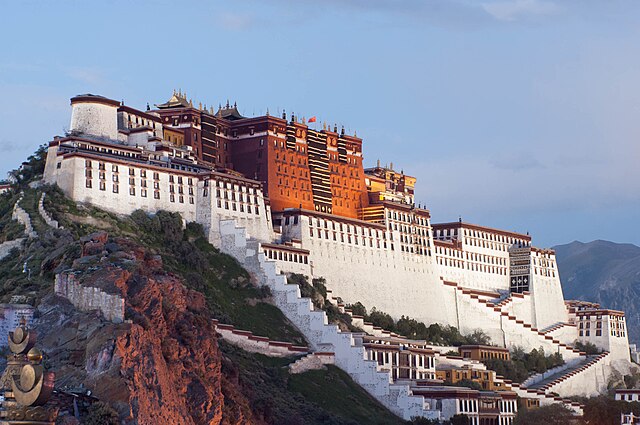
Another famous palace is the Potala Palace, built in 1645 AD in Tibet.

This palace is 1,300 feet by 1,150 feet wide, and the palace goes 980 feet high where it is built on top of a big hill called "Marpo Ri" which means Red Hill.
It has over 1,000 rooms, 10,000 shrines and about 200,000 statues.

The spiritual ruler of Tibet is known as the Dalai Lama, and for about 300 years the Dalai Lamas lived in this palace, until there was a war.
Now it is a museum where people can visit and go inside.

The palace is named after Mount Potalaka, which some people believe is a hidden magical mountain somewhere in India.

The main part of the palace is called the "Red Palace" where the main halls and shrines are where the Dalia Lama lived.


(from: wikipedia - potala palace)


Kid Facts - Blast from the past: Baja California

Sunday, December 2, 2018

Christian Name


We just learned about the Split of Christianity and Judaism.

Another part of Christian hisorty is the Christian Name.

The word Christian wasn't a word until Jesus came around. Christian comes from Christ, which comes from the Greek word χριστός (christos) which was the Greek translation of the Hebrew word מָשִׁיחַ‎ (māšîaḥ) which means the messiah, the savior and liberator of the people.

After Jesus came around and had some followers, people started calling them Christians, but it wasn't always used as a nice word.
This mostly started in a town called Antioch, where they called the Apostles Christians.
There were many people who didn't like the followers of Jesus, so calling someone a Christian meant they were trying to call them names, or say that they weren't good people.
Later on some very important Christians like Ignatius of Antioch took on the name with honor, and it became a good word to use.

People also sometimes called Christians Nazarenes, because Jesus was from the town of Nazareth.
Other times people would talk about the Christian belief as "The Way" because of Jesus talking about "I am the way, the truth, and the life."


(from: wikipedia - christians)


Kid Facts - Blast from the past: Mount Athos

Saturday, December 1, 2018

Seated Yuima - Jōkei


We just learned about the Amitabha Triad of Jōdo-ji - Kaikei.

Another ancient Japanese sculpture is the Seated Yuima - Jōkei.

Yuima was another name used for Buddha long ago.

Jōkei was also from the Kei school, like Jōchō, Kōkei, Unkei and Kaikei.
He worked alongside Unkei, and some people believe that he may have also been Kōkei's son, just like Unkei was.

Jōkei carved this statue over 56 days out of colored wood, using a type of wood-block sculpture called yosegi.
You can see the chair that the Yuima is sitting in is made out of many small colored blocks.
The sculptures eyes are made out of sculpted crystal.


(from: wikipedia - jōkei (sculptor))


Kid Facts - Blast from the past: Character Heads - Messerschmidt

Friday, November 30, 2018

Norwegian - Dog, Cat


We just learned that to ask if someone speaks Norwegian you say Kan du norsk?.

To say dog in Norwegian, you say hund and it sounds like hoo-un-d  

To say cat in Norwegian, you say katt and it sounds like kah-t  


norwegian language
(from: wikipedia - norwegian language)

Greek: σκύλος (skýlos), γάτα (gáta)

ASL: dog, cat

Italian: cane, gatto

German: Hunt, Katze

Spanish: perro, gato

French: chien, chat

Thursday, November 29, 2018

Jules Verne - From the Earth to the Moon


We just learned about the HMS Erebus Rockets.

Another part of rocket science history is the book Jules Verne - From the Earth to the Moon.

In the late 1800s the famous science fiction writers Jules Verne and H. G. Wells wrote books about things that might happen in the future like rockets or space travel.

Because of some of these books, many other people came up with scientific inventions that helped make better science for how to shoot rockets.


(from: wikipedia - de la tierra a la luna)


Kid Facts - Blast from the past: Megathrust

Wednesday, November 28, 2018

Cephalopod - Suckers


We just learned about the Cephalopod Tentacle Hooks.

Another part of cephalopods is the Suckers.

Octopuses, squids and cuttlefish have suckers along the inside of their arms, and squids and cuttlefish have suckers at the end of their tentacles.

The outside of the suckers are usually shaped like a circular bowl.
The cephalopods have muscles below their suckers, that they use to make the suckers grab their prey.


(from: wikipedia - cephalopod limb)


Kid Facts - Blast from the past: Square Marked Toad

Tuesday, November 27, 2018

Amelogenesis


We just learned about the Tooth - Bell Stage.

Another part of a tooth growing is the Amelogenesis.

This is also called the Crown Stage or Advanced Bell Stage, and it is when the bell of the tooth starts to actually make the enamel that will be the hard outside of the tooth.


(from: wikipedia - human tooth development)


Kid Facts - Blast from the past: Posterior Sacroiliac Ligament