Friday, January 11, 2019

Norwegian - Black, white, brown, gray

We just learned that in Norwegian, red, orange and yellow are rød, oransje, gul,
and green, blue, purple, pink are grønn, blå, lilla, rosa.

Let's learn some more colors!

black - svart - sounds like s-vah-rt

white - hvit - sounds like h-veet

brown - brun - sounds like b-d-oo-n

gray - grå - sounds like g-d-aw


norwegian language
(from: wikipedia - norwegian language)

Greek: μαύρο, λευκό, καφέ, γκρι

ASL: black, white, brown, gray

Italian: nero, bianco, marrone, grigio

German: schwarz, weiß, braun, grau

Spanish: negro, blanco, marrón, gris

French: noir, blanc, brun, gris

Thursday, January 10, 2019

The Rocket into Planetary Space - Hermann Oberth


We just learned about the Le Prieur Rocket.

Another part of rocket history is the book The Rocket into Planetary Space by Hermann Oberth.

Oberth lived in Germany, and after reading the science fiction books by Jules Verne he loved thinking about rockets.
He became a scientist and wrote a book about launching rockets into space called "Die Rakete zu den Planetenräumen" which means "The Rocket into Planetary Space".

Later on he wrote another book called "Wege zur Raumschiffahrt" which means "Ways to Spaceflight".

In 1929 there was a movie called "Frau im Mond" which means "Woman in the Moon", and the director of the movie asked Oberth to make a fake rocket to use in the movie.

When it was made, the movie had the most real looking rocket ever made on film, with a multiple stage rocket, liquid fuel and other real parts of rocket science.

Oberth later went on to work for NASA to help make rockets for space flight.


(from: wikipedia - hermann oberth)


Kid Facts - Blast from the past: Earthquake Swarm

Wednesday, January 9, 2019

Radula


We just learned about the Octopus - Three Hearts.

Another part of a cephalopod's body is the Radula.

We know that the octopus has a beak and that it uses the beak to bite it's food.
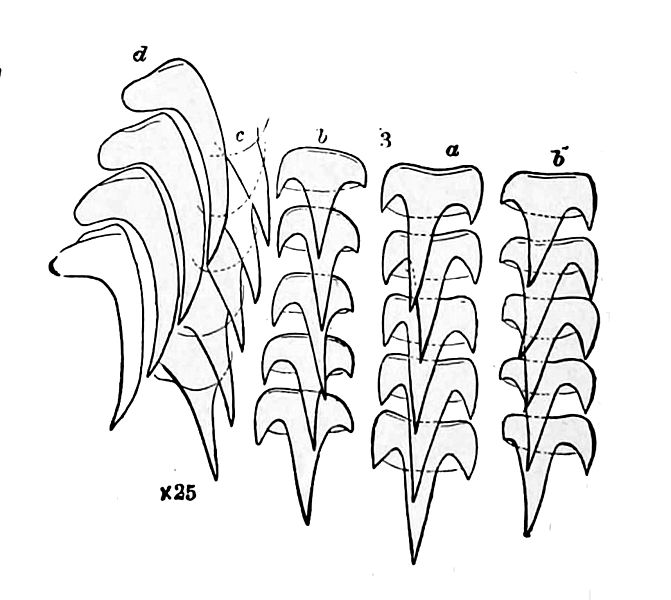
After the food gets into its mouth, there are tiny little teeth called the radula that help grind up the food.
It's almost like the octopus has a tongue with spikes on it that it rubs against the food to break it up into tiny pieces.


(from: wikipedia - radula)


Kid Facts - Blast from the past: Frog Teeth

Tuesday, January 8, 2019

Masticatory Mucosa


We just learned about the Oral Mucosa.

Another part of the skin in the mouth is the Masticatory Mucosa.

This is the part of the wet mouth skin called gingiva that is on the roof of the mouth, and the top of the tongue.
The skin on these parts of the mouth is called keratinized stratified squamous epithelium.
That is a lot of big words that mean flattened skin with a lot of layers, that isn't loose and saggy.

It is different than other skin like underneath the tongue that is very loose.


(from: wikipedia - hard palate)


Kid Facts - Blast from the past: Radioulnar Ligaments

Monday, January 7, 2019

Castillo de Coca


We just learned about the Alhambra.

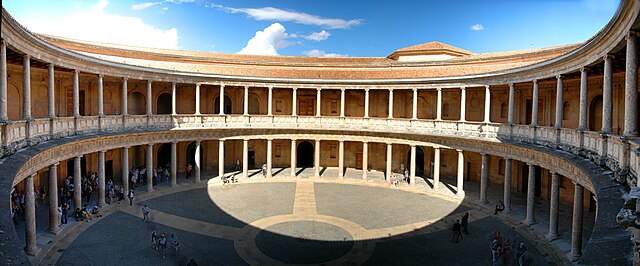
Another famous castle is Castillo de Coca, built in 1493 in Coca, Segovia, Spain.

This castle is special because it has a type of brick work called Mudejar.

There were people living in Spain that were from another country with very different styles.
Mudejar means "allowed to stay", and it was used for people that were from another country but were allowed to stay in Spain.
While they stayed there, some of the types of castles they made back home were made in Spain just like the Castillo de Coca.

The castle has a moat and a keep, and an outside wall around the main castle.
Inside the central keep is a 82 foot tower, and walkways around the top of the walls with all sorts of defenses for the people inside to use if they were being attacked from below.


(from: wikipedia - castillo de coca)


Kid Facts - Blast from the past: San Luis Potosi

Sunday, January 6, 2019

Against Heresies - Irenaeus


We just learned about the Didache - The Teaching of the Twelve Apostles.

Another part of early Christian history is the book Against Heresies, by Irenaeus.

During the early time of Christianity when people disagreed about what they should believe, there was a group of people called the Gnostics.
They believed that Christ and Jesus were two separate beings.
Like Jesus was a physical body, and Christ was a spirit that lived in him.

The bishop of France named Irenaeus was very upset about this, and decided to write a book saying why they were wrong.

His book was written some time around 180 AD, and many church leaders used that letter to tell people that they believed Gnosticism was not true.


(from: wikipedia - on the detection and overthrow of the so-called gnosis)


Kid Facts - Blast from the past: Hildegard of Bingen

Saturday, January 5, 2019

Mokujiki Shonin


We just learned about the Wooden Budda by Enkū.

Another famous Japanese sculpture is the Mokujiki Shonin.

Just like Enkū that we learned about, Mokujiki Shonin was a monk who traveled around and talked to people.
Once when he was visiting a village, he saw a sculpture of Buddha made by Enkū, and decided to become a sculptor just like him.

His sculptures always seemed very free and rough, close to nature and happy.


(from: wikipedia - mokujiki shonin)


Kid Facts - Blast from the past: George Washington - Greenough

Friday, January 4, 2019

Norwegian - Green, Blue, Purple, Pink

We just learned that in Norwegian, red, orange and yellow are rød, oransje, gul.

Let's learn more colors!

green - grønn - sounds like gee-dah-n

blue - blå - sounds like blow-ah

purple - lilla - sounds like lee-lah

pink - rosa - sounds like - dr-oh-sah


norwegian language
(from: wikipedia - norwegian language)

Greek: πράσινο, μπλε, μοβ, ροζ

ASL: green, blue, purple, pink

Italian: verde, blu, viola, rosa

German: grün, blau, lila, rosa

Spanish: verde, azul, morado, rosa

French: vert, bleu, violet, rose

Thursday, January 3, 2019

Le Prieur Rocket


We just learned about the De Laval Nozzle.

Another part of rocket history is the La Prieur Rocket.

During World War I, a French scientist came up with the idea to shoot rockets from an airplane.
He made some rockets that were a lot like the old Fire Arrows, just a tube filled with gunpowder strapped to a stick.
Usually they would only go straight for a little over 100 yards.

People were worried that this would start the airplane on fire, so he tested it by strapping an airplane to a car and driving around, and shooting the arrows from the airplane on top of the car.
It worked, so they started putting them on airplanes in 1916.

The rockets were launched when the airplane pilot pressed an electronic ignition switch in the plane, and then the rockets would shoot off one by one.

They were mostly used to shoot down balloons that the enemy was using to spy on them.


(from: wikipedia - le prieur rocket)


Kid Facts - Blast from the past: Tsunami Earthquake

Wednesday, January 2, 2019

Octopus - Three Hearts


We just learned about the Statocyst.

Another interesting thing about cephalopod bodies is the Octopus - Three Hearts.

An octopus has all th ree of it's hearts up in the head part of the body.

One of the hearts is called the systemic heart, and it pumps the blood all over their body, all the way to each arm and back.

The other two hearts are called branchial hearts, and they bring the deoxygenated blood back to the gills for more oxygen.

The blood in an octopus is thicker than a human, so it is harder for the octopus to pump through their body.
When they are swimming they do not use their systemic heart, so they get tired quickly and usually stop for a rest.


(from: wikipedia - octopus)


Kid Facts - Blast from the past: Frog Skin

Tuesday, January 1, 2019

Oral Mucosa


We just learned about the Gingiva.

Another part of the mouth is the Oral Mucosa.

This is a fancy way of saying the wet skin inside your mouth.
The oral mucosa is the skin on the inside of your cheeks, your gums, the skin on the roof of your mouth, on your tongue, under your tongue and the skin inside your lips.


(from: wikipedia - oral mucosa)


Kid Facts - Blast from the past: Ulnar Collateral Ligament

Monday, December 31, 2018

Alhambra


We just learned about the Summer Palace.

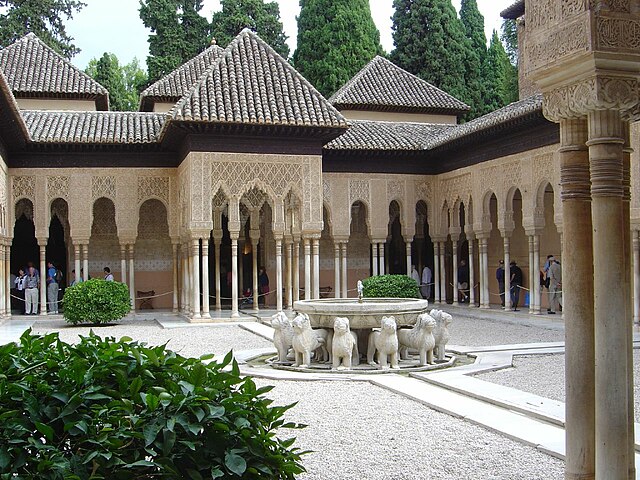
Another famous castle is the Alhambra, built in 889 AD in Granada Spain.

This is the famous castle where King Ferdinand and Queen Isabella met Christopher Columbus and sent him on his way to go on his trip to find America.

Poets from long ago called it a "pearl set in emeralds".
It has mountains all around it, with wildflowers and flowers around it.
The forest nearby has nightingale birds that sing at night, and many fountains around so the sounds are very relaxing.


(from: wikipedia - alhambra)


Kid Facts - Blast from the past: Sonora

Sunday, December 30, 2018

Didache - The Teaching of the Twelve Apostles


We just learned about the Sabbath Day in Christianity.

Another part of early Christian history is the Didache - The Teaching of the Twelve Apostles.

In the time that people were not sure what to believe or how to worship, there was a book people made with a lot of instructions, like some of the ten commandments, the Lord's prayer, and some rules about baptism or fasting.

It was called the Teaching of the Twelve Apostles, and sometimes called Didache which is the Greek word for Teaching.
The writings were made some time around the late 100s in AD, and were lost for almost 2000 years.


(from: wikipedia - didache)


Kid Facts - Blast from the past: Scholastica

Saturday, December 29, 2018

Wooden Buddha - Enkū


We just learned about the Noh Masks.

Another famous ancient Japanese sculpture is the Wooden Buddha by Enkū.

In the 1600s in Japan there was a monk named Enkū who was also a poet and an artist who carved over 100,000 wooden sculptures of Buddha.

Sometimes he made these sculptures as payment for food and a place to sleep as he traveled around Japan.


(from: wikipedia - enkū)


Kid Facts - Blast from the past: Spinning Girl - Schadow

Friday, December 28, 2018

Norwegian - Red, Orange, Yellow

We just learned about the alphabet in Norwegian.

Now let's learn some colors!

red - rød - sounds like dr-uh-ah

orange - oransje - - sounds like oo-dr-ah-n-sh-ah

yellow - gul - sounds like goo-l


norwegian language
(from: wikipedia - norwegian language)

Greek: κόκκινο, πορτοκαλί, κίτρινο

ASL: red, orange, yellow

Italian: rosso, arancione, giallo

German: rot, orange, gelb

Spanish: rojo, naranja, amarillo

French: rouge, orange, jaune

Thursday, December 27, 2018

De Laval Nozzle


We just learned about the Nell Rocket by Robert Goddard.

Another part of rocket science is the de Laval Nozzle.

When Robert Goddard was working on his rockets, he decided to use a type of nozzle that would have a pinch in the middle.
The smaller part of the nozzle puts pressure on the burning fuel, and it comes out at a supersonic speed, burning faster than the speed of sound.

The De Laval Nozzle was actually invented by a German engineer who came up with it for steam engines.


(from: wikipedia - de laval nozzle)


Kid Facts - Blast from the past: Supershear Earthquake

Wednesday, December 26, 2018

Statocyst


We just learned about the Cephalopod Skin.

Another part of a squid's body is the Statocyst.

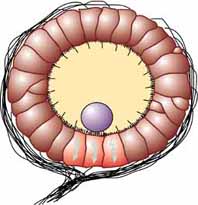
This is a sac inside the squid's head that has small hairs and a hard ball inside it.
When the squid swims around, the ball rolls around inside and moves the hairs, and the squid can tell which way it is swimming.

It also can use this statocyst to hear low sounds, when the sound is loud and the hairs are vibrating the sac.


(from: wikipedia - statocyst)


Kid Facts - Blast from the past: Tadpoles

Tuesday, December 25, 2018

Gingiva


We just learned about the Periodontal Ligament.

Another part of the mouth is the Gingiva, also known as the Gums.

The gums are the soft part of the inside of the mouth, around the teeth.

The lips and cheeks have skin that moves around, but the skin of the gums stays stuck to the bones of the jaw, so they help hold the teeth in place and help protect the parts of the teeth below the gums.

Gums are supposed to be a color called "coral pink" for lighter skinned people.
If the gums are red or bleeding, it can mean that the person has bad mouth problems and needs to brush more or use mouthwash.


(from: wikipedia - gums)


Kid Facts - Blast from the past: Humeroradial Ligaments

Monday, December 24, 2018

Summer Palace


We just learned about the Mysore Palace.

Another famous palace is the Summer Palace, built around 1500 AD in Beijing China.

It was built little by little over hundreds of years as different buildings and islands were added, and it is now over 1 square mile.

There are three islands on the land, that were built to be like three magical mountains in the East sea.
With all of the gates, halls, towers, boats and bridges, there are over 40 different buildings to see in the palace.

All of them have special names for special reasons, like the Dragon Bridge built to honor the story of the Dragon King.
Some other nice names are The Garden of Harmonious Pleasures, the Hall of Benevolence and Longevity, and the Pavilion of Precious Cloud.


(from: wikipedia - summer palace)


Kid Facts - Blast from the past: Hidalgo

Sunday, December 23, 2018

Sabbath Day in Christianity


We just learned about the Great Fire of Rome.

Another part of Christian history is the Sabbath Day.

In the old Jewish faith, people rested on the seventh day, called the shabbat, which is where we get the name Saturday.

After the Christians started to separate into their own religion, they started to move the day of worship to Sunday.
Part of the idea was that Sunday would be seen as the celebration of the resurrection and freedom from sin on the first day of every week.

Some Christians through the years have changed back to Saturday as the holy day, but others still worship on Sunday.

A fancy word for beliefs about which day is the sabbath is "Sabbatarianism".
First-day Sabbatarianism means that Sunday should be the day of worship.
Seventh-day Sabbatarianism means that Saturday should be the day of worship.
There is even Non-Sabbatarianism, which means that there should not be any special day for worship, you should pick whatever day you want to worship on.


(from: wikipedia - sabbath in christianity)


Kid Facts - Blast from the past: Daughters of Charity of Saint Vincent de Paul

Saturday, December 22, 2018

Noh Masks


We just learned about the The Great Buddha of Kamakura.

Another old Japanese sculpture was the Noh Mask.

For a while some of the people who followed Buddha did not really like sculptures of Buddha, so there were not a lot of sculptures made.

During this time there was a type of musical theater called Noh, where people wore masks and fancy outfits.

There are many Noh masks carved with different types of faces for happy, sad or angry.


(from: wikipedia - noh)


Kid Facts - Blast from the past: Jane Brown Memorial - Flaxman

Friday, December 21, 2018

Norwegian Alphabet

We just learned how to Count to ten in Norwegian.

The Norwegian alphabet is just like the English one, except for three extra letters:

Æ, - sounds like the a in the word "bad".
Ø - sounds like the i in the word "bird".
Å - sounds like the aw in the word "yawn".


norwegian language
(from: wikipedia - norwegian language)

The Greek alphabet: Α, Β, Γ, Δ, Ε, Ζ, Η, Θ, Ι, Κ, Λ, Μ, Ν, Ξ, Ο, Π, Ρ, Σ, Τ, Υ, Φ, Χ, Ψ, Ω

ASL alphabet: A, B, C, D, E, F, G, H, I, J, K, L, M, N, O, P, Q, R, S, T, U, V, W, X, Y, Z

The Italian alphabet looks the same as the English alphabet.

The German alphabet has the letters ä, ö, ü, ß

The Spanish alphabet:
A, B, C, D, E, F, G H, I, J, K, L, LL, M, N, Ñ O, P, Q, R, RR, S, T, U V, W, X, Y, Z

The French alphabet:
A, B, C, D, E, F, G H, I, J, K, L, M, N O, P, Q, R, S, T, U V, W, X, Y, Z

Thursday, December 20, 2018

Nell Rocket - Robert Goddard


We just learned about the L'Astronautique by Robert Esnault-Pelterie.

Another famous rocket was Nell made by Robert Goddard.

Goddard was a famous inventor who read about rockets in the books by Jules Verne and H. G. Wells, and came up with the very first rocket that used liquid fuel.
He named it "Nell" and launched it in 1926.
His team launched 34 rockets, going over a mile and a half in the sky, and over 500 miles per hour.

The work he did with rockets helped get people interested in space travel and rockets.


(from: wikipedia - robert h. goddard)


Kid Facts - Blast from the past: Submarine Earthquake

Wednesday, December 19, 2018

Cephalopod - Skin


We just learned about the Cephalopod - Cirrus.

Another interesting thing is the Cephalopod Skin.

Cephalods like the octopus or cuttlefish can change their skin color, or if their skin is bumpy or smooth.
A fancy word for this is polyphenism.

Their skin is made up of an outside layer that has gooey mucous and sensors to tell when it is being touched.

Underneath that top layer is a layer made of collagen, which is like a fatty cell that holds skin together.
There are also cells in that layer for changing the color of the skin.

Most of an octopuses body is made up of soft tissue like collagen, and their squishy body makes it so they can get through really small holes.
They don't have any hard parts of their body except the beak, so even a big octopus can squeeze through a 1 inch hole!


(from: wikipedia - cuttlefish)


Watch The Octopus Squeezing Through Very Tiny Spaces - Animals R Us


Kid Facts - Blast from the past: Frogspawn

Tuesday, December 18, 2018

Periodontal Ligament


We just learned about the Alveolar Process.

Another part of the mouth is the Periodontal Ligament, sometimes just called the PDL.

We learned that the tooth sits into the tooth socket bone.
The Periodontal Ligaments is a soft tissue that helps hold the tooth in place, and goes between the tooth cementum and the tooth socket.


(from: wikipedia - periodontal fiber)


Kid Facts - Blast from the past: Glenohumeral Ligaments