Wednesday, January 22, 2020

Lion


We just learned about Cats.

The big cat known as the king of the jungle is the Lion.

Lions mostly live in Africa, but there are also some in the Middle East and Europe.

Lions are big cats that are part of the "Felidae" family.
The male lions have a big mane, and all lions have a hairy fluff of fur at the end of their tails.
They are usually 6 or 7 feet long, and they can weigh over 300 pounds!

Lions live together in a family that is called a "pride".
A pride is usually a few grown up males, then some females and little lion cubs.
When the little lion cubs are about 3 years old, the boy lions are sent off to live on their own, and the girl lions stay with the pride.
When boy lions are out by themselves, sometimes they will group together with a few other boy lions until they find a home where they join a new pride as a grown up male lion.

Lions can make a lot of sounds like purring and meowing, but they are best known for the lion's roar.
It is so loud that it can be heard up to 5 miles away.

There is one type of lion called a white lion, that has white or very light colored fur.


(from: wikipedia - lion)


Kid Facts - Blast from the past: Purple Striped Jelly

Tuesday, January 21, 2020

Central Retinal Vein


We just learned about the Central Retinal Artery.

Another part of the eye is the Central Retinal Vein.

The artery brings blood to the eye, and this vein in the back of the eye then takes that deoxygenated used up blood and brings it back to the heart.

(from: wikipedia - central retinal vein)


Kid Facts - Blast from the past: Specialized Mucosa

Monday, January 20, 2020

Filchner-Ronne Ice Shelf


We just learned about the Ross Ice Shelf.

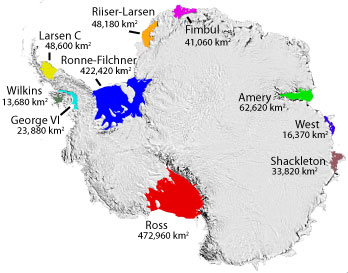
Another part of Antarctica is the Filchner-Ronne Ice Shelf.

This shelf is about 430,000 square kilometers, which is bigger than the state of California.
It is about 600 meters deep, and below the shelf the water goes down another 1,400 meters.

In 1998 an iceberg named A38 split off from the ice shelf that was over 22,000 square kilometers.


(from: wikipedia - filchner-ronne ice shelf)


Kid Facts - Blast from the past: Château de Chambord

Sunday, January 19, 2020

Icons


We just learned about the Muslim Conflict.

Another part of early Christianity is Icons.

In the old times of the church, people thought it was bad to use pictures of crosses, or even pictures of Jesus, Mary or any of the old leaders of the church.

The paintings were known as icons.

Because God said not to worship any idols, they felt that putting up artwork of something Christian was like worshipping an idol.

Later on people argued that having these paintings around was good because it helped people think about God and Jesus.


(from: wikipedia - byzantine iconoclasm)


Kid Facts - Blast from the past: Biblican Canon

Saturday, January 18, 2020

Michigan Soldiers' and Sailors' Monument - Randolph Rogers


We just learned about the sculpture The Willing Captive - Chauncey Ives.

Another famous work of American sculpture is the Michigan Soldiers' and Sailors' Monument by Randolph Rogers in Detroit Michigan, 1867.

Rogers was born in New York, but grew up in Ann Arbor Michigan.
He started off doing most of his sculpture in wood, and then later worked with marble.

When he was about 40 years old he moved to New York City and then Florence Italy to study sculpture.
He didn't really like working with marble, so he would always make his statues out of something else like wood, and then have other marble sculptors make a copy of it in marble for him.

His civil war monument in Detroit is octagon shaped.
On top is a sculpture of a heroic woman called Michigania, or Victory holding a sword and shield.
There are four male sculptures for the Navy, Infantry, Cavalry and Artillery of the Civil War.
Four female sculptures are for Victory, History, Emancipation and Union.
By the bottom are eagles with raised wings, and four plaques with Union generals Lincoln, Grant, Sherman and Farragut.


(from: wikipedia - michigan soldiers' and sailors' monument)


Kid Facts - Blast from the past: Sanchi Capital of Ashoka

Friday, January 17, 2020

Russian - Cow, Chicken, Pig

We just learned that black white brown and gray in Russian is черный (chernyy), белый (belyy), коричневый (korichnevyy), серый (seryy).

We already know that in Russian, dog is собака (sobaka) and cat is кошка (koshka).

Now let's learn about some farm animals!

cow - корова (korova) - sounds like kah-droh-vah 文A

chicken - курица (kuritsa) - sounds like koo-dree-t-sah 文A

pig - свинья (svin'ya) - sounds like s-vee-n-yah 文A

Also in Russian cows say Му-у-у (mooo), chickens say Ко-ко-ко (ko-ko-ko) and pigs say Хрю-хрю (khryoo-khryoo)!


russian language
(from: wikipedia - russian academy of sciences)

Norwegian: ku, kylling, gris

Greek: αγελάδα, κοτόπουλο, χοίρο

ASL: cow, chicken, pig

Italian: mucca, pollo, maiale

German: Kuh, Huhn, Schwein

Spanish: vaca, pollo, cerdo

French: vache, poulet, porc

Thursday, January 16, 2020

Ball Valve


We just learned about the Valve Trim.

There are a lot of different kinds of valves.
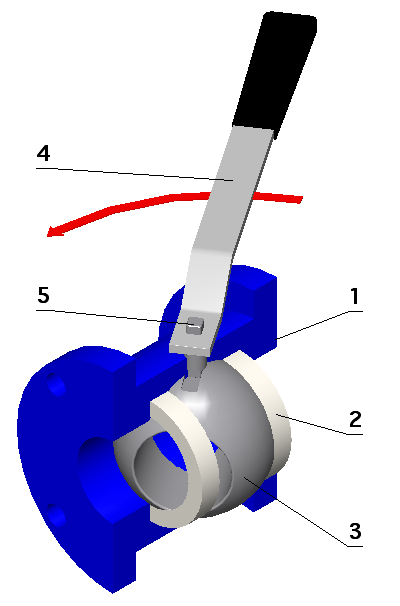
One type of valve that is used a lot is the Ball Valve.

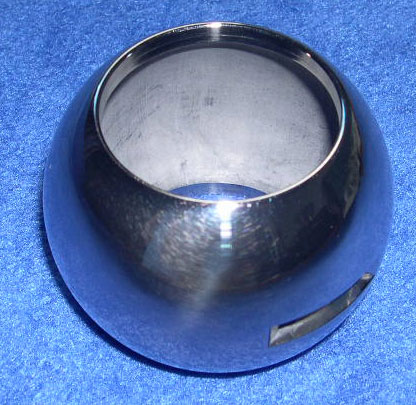
It's called a ball valve because inside the valve there is a ball.
The ball has a hole in the middle of it, and the valve handle turns the ball.
When the ball is turned one way, the water or gas can go through the hole in the ball.
When the ball is turned the other way, the ball blocks the water or gas, and keeps the valve closed.


(from: wikipedia - ball valve)


Kid Facts - Blast from the past: World War II Rocket Weapons

Wednesday, January 15, 2020

Cats


We just learned about Jellyfish Ephyra, and a whole lot of other things about Jellyfish!

Let's learn a little about Cats, like the big tigers, lions and cheetahs.

The big cats in the world all belong from the same family of animals called "Felidae"
All of the Felidae cats have retractile claws, which means they can pull their claws back into their paws or push them out to attack.

They all have whiskers on their cheeks and above their eyes.
Their tongues are all rough with little sharp spikes on them, so they can brush their fur with their tongue.
They can all meow, hiss, snarl, growl and of course purr. Even big tigers and lions!


(from: wikipedia - felidae)


Kid Facts - Blast from the past: Jellyfish

Tuesday, January 14, 2020

Central Retinal Artery


We just learned about the Optic Disc.

Another part of the eye is the Central Retinal Artery.

This is in the back of the eye at the retina, where the fresh oxygenated blood is brought to the eye for it to use.

(from: wikipedia - central retinal artery)


Kid Facts - Blast from the past: Lining Mucosa

Monday, January 13, 2020

Ross Ice Shelf


We just learned about the Larsen Ice Shelf.

Another ice shelf in Antarctica is the Ross Ice Shelf.

This is the largest ice shelf of Antarctica.
It is about 500 miles wide, and 600 miles long, almost as big as the country of France.

It sticks up above the water up to 160 feet high, but most of the shelf is actually underwater.
In some parts it os over 2,000 feet thick, which is about half a mile.

Just like the Larsen Ice Shelf, this shelf sometimes has icebergs break off.
In the year 2000, the largest iceberg ever measured in the world broke off from the Ross Ice Shelf.
It was called Iceberg B-15, and it was about 183 miles long and 23 miles wide, about the size of the island of Jamaica.


(from: wikipedia - ross ice shelf)


Kid Facts - Blast from the past: Royal Palace of Madrid

Sunday, January 12, 2020

Muslim Conflict


We just learned about the Church of the East in China.

Another part of early Christianity was the Muslim Conflict.

Around 610 AD, a man named Muhammad started a new religion called Islam, and the followers of Islam are called Muslims.

Christianity and Islam were both spreading around Europe, the Middle East and Africa all through the years 600 AD and 700 AD, and people fought over which one was true.

Most of the countries in the Middle East, northern Africa, and even Spain and Portugal became mostly Muslim.

Christianity was still spreading into Western Europe, but many countries that used to be Christian switched to Islam for hundreds of years.


(from: wikipedia - spread of islam)


Kid Facts - Blast from the past: Quartodecimanism

Saturday, January 11, 2020

The Willing Captive - Chauncey Ives


We just learned about the Clasped Hands of Robert and Elizabeth Barrett Browning by Harriet Hosmer.

Another The Willing Captive by Chauncey Ives in 1886.

Ives was born in Connecticut, and when he was a teenager he started learning how be a sculptor.
After a few jobs he moved to Italy to learn from other masters there.

In 1886 he made a sculpture of a young woman who was captured by Native Americans. After staying with the Natives for a while, her mother came to take her back, but she wasn't sure if she wanted to stay with the Natives or go back to her mother.

There are true stories like these where Natives would capture young girls and raise them as their own, and sometimes the girls would decide to stay with the Natives instead of going back home.


(from: wikipedia - chauncey ives)


Kid Facts - Blast from the past: Indus Valley Civilization

Friday, January 10, 2020

Russian - Black, white, brown, gray

We just learned that in Russian, red, orange and yellow are красный (krasnyy), оранжевый (oranzhevyy), желтый (zheltyy),
and green, blue, purple, pink are зеленый (zelenyy), синий (siniy), фиолетовый (fioletovyy), розовый (rozovyy).

Let's learn some more colors!

black - черный (chernyy) - sounds like choh-r-nee 文A

white - белый (belyy) - sounds like bee-ah-lee 文A

brown - коричневый (korichnevyy) - sounds like kah-dree-ch-nee-yeh-vee 文A

gray - серый (seryy) - sounds like see-ah-dree 文A


russian language
(from: wikipedia - russian academy of sciences)

Norwegian: svart, hvit, brun, grå

Greek: μαύρο, λευκό, καφέ, γκρι

ASL: black, white, brown, gray

Italian: nero, bianco, marrone, grigio

German: schwarz, weiß, braun, grau

Spanish: negro, blanco, marrón, gris

French: noir, blanc, brun, gris

Thursday, January 9, 2020

Valve Trim


We just learned about the Valve Spring.

Another part of the valve is the Valve Trim.

The valve stem, seat, disc and any parts that are inside the valve are all together called the Valve Trim.


(from: wikipedia - valve)


Kid Facts - Blast from the past: The Rocket into Planetary Space - Hermann Oberth

Wednesday, January 8, 2020

Jellyfish Ephyra


We just learned about the Jellyfish Polyps.

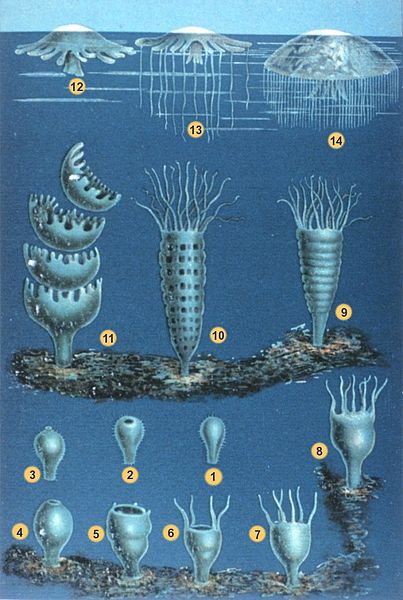
Another part of a jellyfish is the Ephyra.

After the polyps grow for a little while, they start to grow parts that look more like a jellyfish.
It starts to get a bell shape, grow some tentacles and even mouth parts.
Eventually it floats away and is like a mini-jellyfish, not quite grown yet.

This part of the jellyfish's life is known as the Ephyra.

Later on it grows up a little more and is called a Medusae, which is the science word for the jellyfish species.


(from: wikipedia - ephyra)


Kid Facts - Blast from the past: Radula

Tuesday, January 7, 2020

Optic Disc


We just learned about the Opthalmic Artery.

Another part of the eye is the Optic Disc.

At the back of the eye there is a place where all the nerves come together and go out to the brain.
Because this spot has nerves, there are no rods or cones there, so it is like a blind spot in your sight.

There are some fun eye tests that you can do to actually show that you have a blind spot where things disappear from your sight!


(from: wikipedia - optic disc)


Kid Facts - Blast from the past: Masticatory Mucosa

Monday, January 6, 2020

Larsen Ice Shelf


We just learned about the Antarctic Ice Sheet.

Another part of Antarctica is the Larsen Ice Shelf.

This is the shelf of ice that's on the Antarctic Peninsula.
An ice shelf is a big piece of ice that goes out from the land and has water underneath it.

The Larsen Ice Shelf used to be about 33,000 square miles, but because of global warming it has gotten 7,000 square miles smaller and is now 26,000 square miles.

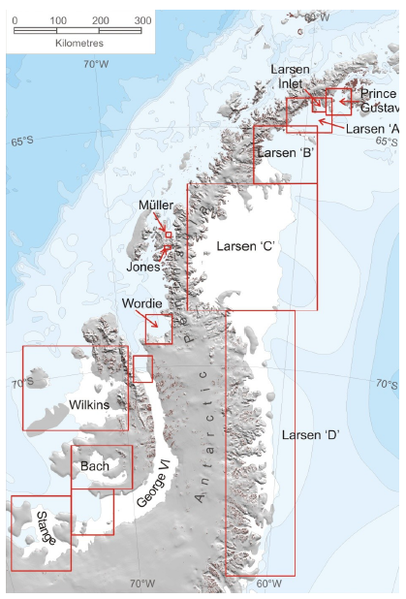
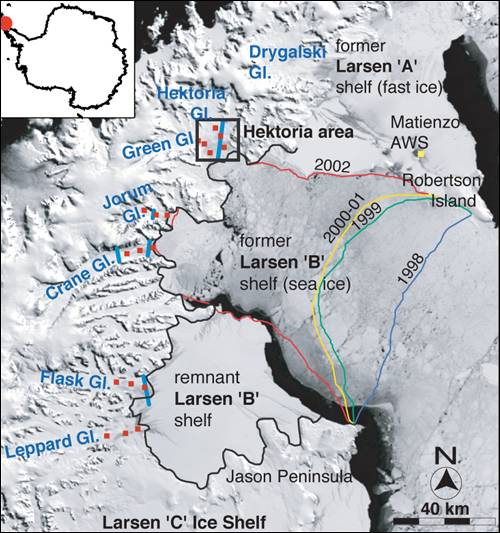
The ice shelf is split up into parts A, B, C, D, E, F and G.

Shelf A melted away in 1995 and is gone. It was about 500 square miles, twice the size of the city of Chicago.

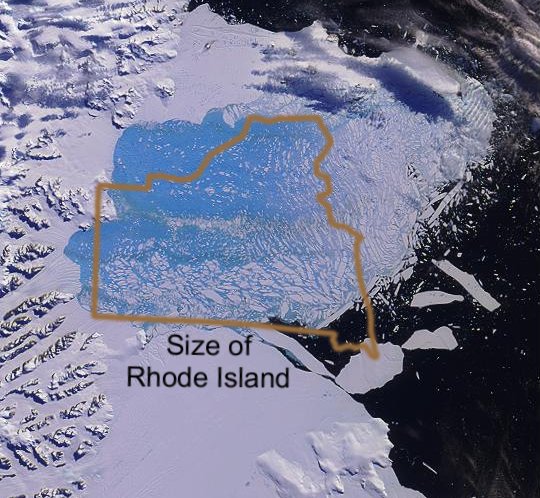
Shelf B is almost gone, and in 2002 over 1,250 square miles broke off and floated away. That is about the size of the state of Rhode Island. This ice shelf had not melted for over 10,000 years.

Shelf C is melting and breaking away also. It is 17,000 square miles. In 2017 a 2,200 square mile piece broke off and floated away. This iceberg was called A68, weighed more than a trillion tons, and was taller than a 70 story building.

Shelf D has not broken away so far and is about 8,000 square miles.


(from: wikipedia - larsen ice shelf)


Kid Facts - Blast from the past: Castillo de Coca

Sunday, January 5, 2020

Church of the East in China


We just learned about the Christian Nations in 600 AD.

Another part of early Christianity is the Church of the East in China.

People were going all over the world to tell others about God and Jesus, like Germany, England and Africa.

In the year 635 AD, a monk from Syria named Alopen went into a city in China called Chang'an, and met with Emperor Taizong.

The Emperor said it was ok for Alopen to go all over China and tell people about Christianity.
After this he traveled around and told people in China learn about God and Jesus.


(from: wikipedia - murals from the nestorian temple at qocho)


Kid Facts - Blast from the past: Hildegard of Bingen

Saturday, January 4, 2020

Clasped Hands of Robert and Elizabeth Barrett Browning - Hosmer


We just learned about the statue of Doctor John Witherspoon by American sculptor William Couper.

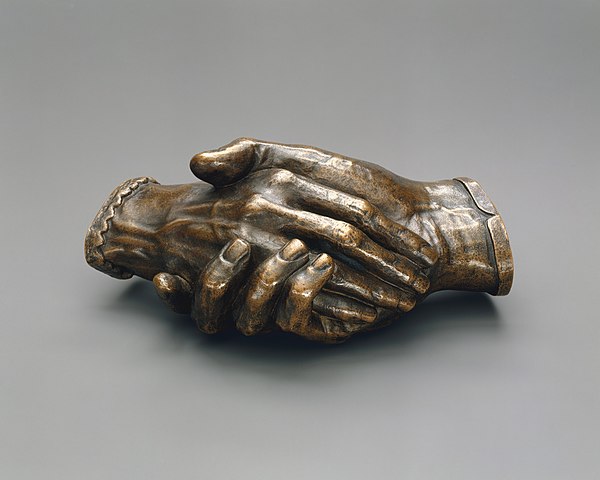
Another American sculpture is Clasped Hands of Robert and Elizabeth Barrett Browning made by Harriet Hosmer in 1853 in Washington D.C.

Harriet Hosmer was known as the first professional female sculptor.
During her time women were not allowed to go to art school, so she had to get private lessons to learn.
After she grew up she moved to Italy where she met a lot of other famous artists.

Robert and Elizabeth Barrett Browning were both very famous poets back in the 1800s, and they lived in Rome Italy.
Harriet Hosmer met them and saw how they were in love with each other, so she made a sculpture of their hands together.

Harriet had to work very hard to be good at art because many people did not think women could or should be artists.

After she was successful, she told people: "I honor every woman who has strength enough to step outside the beaten path when she feels that her walk lies in another; strength enough to stand up and be laughed at, if necessary.".


(from: wikipedia - )


Kid Facts - Blast from the past: George Washington - Horatio Greenough

Friday, January 3, 2020

Russian - Green, Blue, Purple, Pink

We just learned that in Russian, red, orange and yellow are красный krasnyy, оранжевый (oranzhevyy), желтый (zheltyy).

Let's learn more colors!

green - зеленый (zelenyy) - sounds like zeh-lee-oh-nee 文A

blue - синий (siniy) - sounds like see-nee 文A

purple - фиолетовый (fioletovyy) - sounds like fee-yah-lee-yet-oh-vee 文A

pink - розовый (rozovyy) - sounds like droh-zuh-vah-ee 文A


russian language
(from: wikipedia - russian academy of sciences)

Norwegian: grønn, blå, lilla, rosa

Greek: πράσινο, μπλε, μοβ, ροζ

ASL: green, blue, purple, pink

Italian: verde, blu, viola, rosa

German: grün, blau, lila, rosa

Spanish: verde, azul, morado, rosa

French: vert, bleu, violet, rose

Thursday, January 2, 2020

Valve Spring


We just learned about the Gasket that helps keep a valve from leaking.

Another part of a valve is the Valve Spring.

Some valves use a spring to keep a valve closed, but if there is a lot of pressure they will squeeze and let the disc open and let some pressure out.
Once enough pressure is let out, the spring will push the disc closed again.


(from: wikipedia - relief valve)


Kid Facts - Blast from the past: Le Prieur Rocket

Wednesday, January 1, 2020

Jellyfish Polyps


We just learned about the Amebocyte that lives inside a jellyfish.

Another interesting thing about Jellyfish is the Jellyfish Polyps.

When Jellyfish have babies, they are usually like little tubes that just float in the water and try to find something to stick on to.

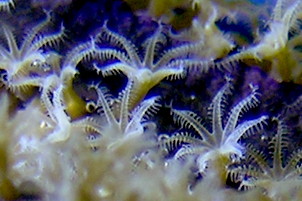
They look a lot like other hydrozoans and even coral when they are growing up.
These little baby jellyfish are called polyps.


(from: wikipedia - polyp)


Kid Facts - Blast from the past: Octopus - Three Hearts

Tuesday, December 31, 2019

Opthalmic Artery


We just learned about the Eye Movement.

Another part of the eye is the Opthalmic Artery.

This is what brings the blood up to all of the different parts of the eye.

There are a lot of other arteries that come out of this artery, like the central retinal artery, lacrimal artery, posterior ciliary arteries, muscular branches, supraorbital artery, ethmoidal arteries, medial palpebral arteries and terminal branches.

That's a lot of different arteries for such a small part of the body, but the eye has so many different things going on that there it needs blood in each different place!


(from: wikipedia - opthalmic artery)


Kid Facts - Blast from the past: Oral Mucosa

Monday, December 30, 2019

Antarctic Ice Sheet


We just learned about Mount Erebus.

Another part of Antarctica is the Antarctic Ice Sheet.

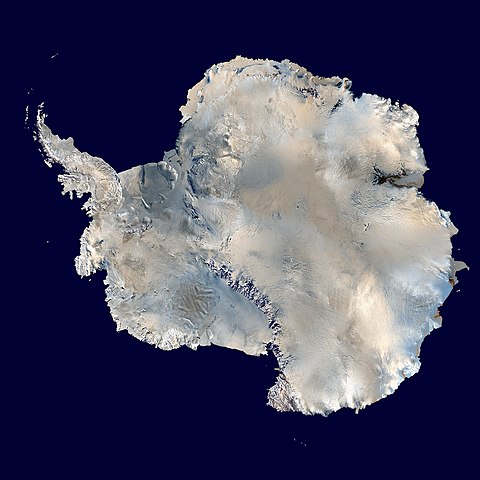
Antarctica is almost totally covered with ice.
About 98 percent is ice, which is close to the whole thing!
The huge chunk of ice covering it all is called the Antarctic Ice Sheet.

It is over 5 million square miles total, and it weighs over 26 million gigatons, which is over 58 quintillion pounds! A quintillion is a number with 18 zeroes, so that's 58,000,000,000,000,000,000 pounds of ice!

The oceans are all made of salt water, but the ice is made of fresh water.
Over half of the fresh water in the world is stored in this huge ice sheet.

In East Antarctica, the ice is sitting on top of some other land like rocks.
But on the west side, the ice goes way down below the water, over 8,000 feet!


(from: wikipedia - antarctic ice sheet)


Kid Facts - Blast from the past: Sonora

Sunday, December 29, 2019

Christian nations in 600 AD


We just learned about the Saint David.

There were a lot of Christian nations in 600 AD.

Around 325 AD there had been a lot of people going around telling people about God and Jesus, but there were only some spots around the Middle East, Europe and Africa.

By 600 AD, Christianity was in Europe at Great Britain, France, Spain, Greece and more.
It was in the Middle East through Turkey, Syria, Lebanon, Israel and more.
And it was in Africa at parts of Egypt, Libya, Tunisia, Algeria and Morocco.


(from: wikipedia - christianity in the 7th century)


Kid Facts - Blast from the past: Didache - The Teaching of the Twelve Apostles

Saturday, December 28, 2019

Doctor John Witherspoon - Couper


We just learned about the Statue of Charles Sumner by Thomas Ball.

Another famous American sculpture is the statue of Doctor John Witherspoon by William Couper, at Washington DC in 1909 AD.

John Witherspoon was a minister in the Presbyterian church, and one of the people that signed the famous Declaration of Independence.

The sculptor William Couper grew up in Virginia, and then went to Munich Germany and Florence Italy to learn from some of the famous sculptors in Europe for 22 years.

He married Eliza Chickering Ball, who was the daughter of another famous American sculptor named Thomas Ball.


(from: wikipedia - doctor john witherspoon)


Kid Facts - Blast from the past: Wooden Buddha - Enkū

Friday, December 27, 2019

Russian - Red, Orange, Yellow

We just learned about the alphabet in Russian.

Now let's learn some colors!

red - красный (krasnyy) - sounds like k-dah-ss-nee 文A

orange - оранжевый (oranzhevyy) - sounds like oh-dah-n-zh-ay-vee 文A

yellow - желтый (zheltyy) - sounds like zh-eh-l-tee 文A


russian language
(from: wikipedia - russian academy of sciences)

Norwegian: rød, oransje, gul

Greek: κόκκινο, πορτοκαλί, κίτρινο

ASL: red, orange, yellow

Italian: rosso, arancione, giallo

German: rot, orange, gelb

Spanish: rojo, naranja, amarillo

French: rouge, orange, jaune

Thursday, December 26, 2019

Gasket


We just learned about the Valve Stem that sticks up from the valve.

Another part of a valve is the Gasket.

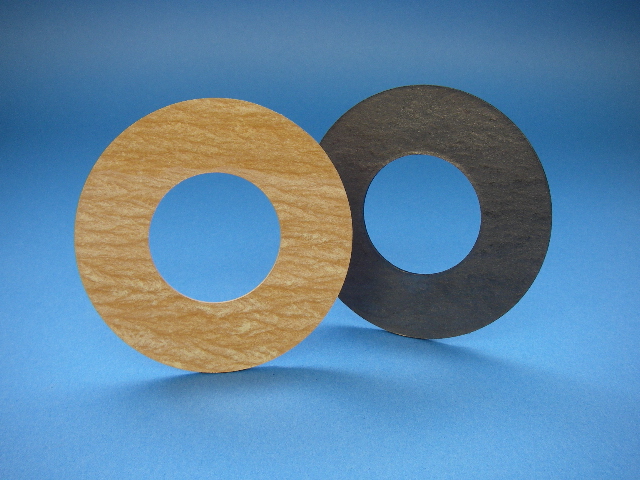
This is a small circle that goes inside any place where two pieces of a valve have to be connected.
So at the top where the bonnet goes is sometimes a gasket, and then where the ports connect to other pipes is sometimes a gasket.

It's a way to help make sure that the liquid or gas doesn't leak out through where the two parts are connected.

Sometimes they're made out of rubber, but other times they're made out of paper or even metal.


(from: wikipedia - gasket)


Kid Facts - Blast from the past: De Laval Nozzle

Wednesday, December 25, 2019

Amebocyte


We just learned about the Velarium.

Another part of a jellyfish's body is an Amebocyte.

These are teeny tiny little animals that live in a jellyfish's body and will help eat up junk that the jellyfish doesn't want to eat.
Some of them look like tiny little crabs or clams.


(from: wikipedia - amebocyte)


Kid Facts - Blast from the past: Statocyst

Tuesday, December 24, 2019

Eye Movement


We just learned about the Fovea in the back of the eye.

Another part of the eye is the group of Eye Movement that move the eye around.

There are six main muscles that move the eye.
Four of them are the "rectus" muscles, and they are attached to the top (superior) bottom (inferior) inside (medial) and outside (lateral) parts of the eye.

Whichever muscle is being used, the eye looks in that direction.
So if the superior muscle is being used, the eye looks up.
If the lateral muscles is being used, the eye looks outward.

The other two muscles are "oblique" muscles, top (superior) and bottom (inferior).
These muscles help control any twisting of the eye, or moving in diagonal directions.


(from: wikipedia - eye movement)


Kid Facts - Blast from the past: Gingiva

Monday, December 23, 2019

Mount Erebus


We just learned about the Transantarctic Mountains.

Another part of Antarctica is Mount Erebus.

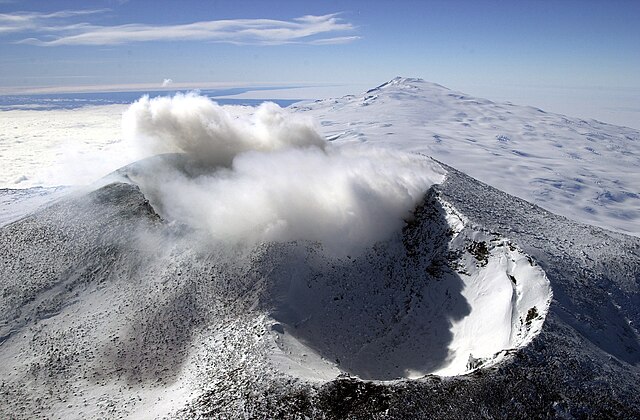
Antarctica is the coldest place on the earth, but it actually has volcanoes!
Mount Erebus is the second tallest volcano in Antarctica, and it is active.
That means that it spits out things like smoke or bits of rock from time to time.

This volcano has been active for over a million years, but it is still not hot enough to melt the south pole!


(from: wikipedia - mount erebus)


Kid Facts - Blast from the past: Summer Palace

Sunday, December 22, 2019

Saint David


We just learned about the Gregorian Chant.

Another part of early Christianity was when Saint David visited the country of Wales.

He told people about God and Jesus and helped people in Wales become Christians.
Saint David did not like monks or priests to be rich.
He said that they should not own anything, not even a book! And he even told them that they should pull their own carts instead of using horses.


(from: wikipedia - saint david)


Kid Facts - Blast from the past: Sabbath Day in Christianity

Saturday, December 21, 2019

Statue of Charles Sumner - Thomas Ball


We just learned about the The Rescue - Horatio Greenough.

Another famous American statue is the Statue of Charles Sumner made by Thomas Ball in 1878 in Boston Massachusetts.

Charles Sumner was a politician who fought against slavery in America.

The sculptor Thomas Ball started off in music, singing and playing the violin.
Later he started painting, and then he moved to Florence Italy to study art.
He stayed there for a while and would make sculptures and have them sent back to America.


(from: wikipedia - statue of charles sumner (boston))


Kid Facts - Blast from the past: Noh Masks

Friday, December 20, 2019

Russian Alphabet

We just learned how to Count to ten in Russian.

The Russian alphabet looks kind of like the English one, but there are some new letters and many that sound different.

Аа - sounds like the "a" in father
Бб - sounds like the "b" in bad
Вв - sounds like "v" in vine
Гг - sounds like the "g" in go
Дд - sounds like the "d" in do
Ее - sounds like the "ye" in yes
Ёё - sounds like the "yo" in your
Жж - sounds like the "s" in pleasure
Зз - sounds like the "z" in zoo
Ии - sounds like the "i" in police
Йй - sounds like the "y" in toy
Кк - sounds like the "k" in kept
Лл - sounds like the "l" in lamp
Мм - sounds like the "m" in map
Нн - sounds like the "n" in not
Оо - sounds like the "o" in more
Пп - sounds like the "p" in pet
Рр - sounds like the "r" when it is rolled, the same as the Spanish r
Сс - sounds like the "s" set
Тт - sounds like the "t" in top
Уу - sounds like the "oo" in tool
Фф - sounds like the "f" in face
Хх - sounds like the "ch" in loch, but with more air coming through, almost like a cat hissing
Цц - sounds like the "ts" in sits
Чч - sounds like the "ch" in chat
Шш - sounds like the "sh" in sharp
Щщ - sounds like the "sh" in sharp, and sometimes like "shch" in pushchair
Ыы - sounds like the "i" in hit
Ээ - sounds like the "e" in met
Юю - sounds like the "u" in use
Яя - sounds like the "ya" in yard

The last two letters are strange, because they don't have a sound but they change the way other letters sound when they are in a word.

Ъъ is called the "hard sign", and Ьь is called the "soft sign"

Sometimes when two letters are next to each other they make a different sound.
Just like in English, s and h sound different when they are put together like sh.

In Russian the word "объять" means "hug", and it is pronounced "ah-be-yeh-t"
The letter Ъ makes sure the "yeh" sound comes through.
Without that letter it would be "обять" sound like "ah-bee-t" because of the way that the letters "бя" go together.

The letter Ьь is a little different and is used sometimes to make something plural няня or нянъ.
It is supposed to make the letter "softer" in the word, but a lot of times it is really just something you have to remember to spell in a Russian word but you don't usually say it out loud.

russian language
(from: wikipedia - russian academy of sciences)

The Norwegian alphabet: A, B, C, D, E, F, G, H, I, J, K, L, M, N, O, P, Q, R, S, T, U, V, W, X, Y, Z, Æ, Ø, Å The Greek alphabet: Α, Β, Γ, Δ, Ε, Ζ, Η, Θ, Ι, Κ, Λ, Μ, Ν, Ξ, Ο, Π, Ρ, Σ, Τ, Υ, Φ, Χ, Ψ, Ω

ASL alphabet: A, B, C, D, E, F, G, H, I, J, K, L, M, N, O, P, Q, R, S, T, U, V, W, X, Y, Z

The Italian alphabet looks the same as the English alphabet.

The German alphabet has the letters ä, ö, ü, ß

The Spanish alphabet:
A, B, C, D, E, F, G H, I, J, K, L, LL, M, N, Ñ O, P, Q, R, RR, S, T, U V, W, X, Y, Z

The French alphabet:
A, B, C, D, E, F, G H, I, J, K, L, M, N O, P, Q, R, S, T, U V, W, X, Y, Z

Thursday, December 19, 2019

Valve Stem


We just learned about the Valve Seat.

Another part of a valve is the Valve Stem.

This is the part that sticks up out of the valve, and is used to help open and close the valve disc which lets gas or water go or stop.

There is a valve stem on a bicycle tire that sticks out.
If you hook a pump up to the valve stem, it will push in a pin which will allow air to go in or come out.


(from: wikipedia - valve stem)


Kid Facts - Blast from the past: Nell Rocket - Robert Goddard

Wednesday, December 18, 2019

Velarium


We just learned about the Jellyfish Statocyst.

Another part of some jellyfish is the Velarium.

For the box jellyfish, underneath the edge of the bell on the inside it folds in, kind of like a little shelf.
This makes it so that when they squish their bell to swim, it makes it like a torpedo and pushes water out faster than normal.

Because of this these are the fastest jellyfish in the world, and we already know they are one of the most dangerous because of their sting!
They can swim up to 20 feet per minute.
That's still not even one mile per hour, but for a stinging jellyfish that's pretty quick.


(from: wikipedia - box jellyfish)


Kid Facts - Blast from the past: Cephalopod Skin

Tuesday, December 17, 2019

Fovea


We just learned about the Photoreceptor Cells.

Another part of the eye is the Fovea, sometimes called the fovea centralis, central fovea or fovea of the retina.
The word fovea just means a pit or a depression, and there are other parts of the body that have small pits so sometimes people have to say fovea centralis of the retina to make sure everyone knows which fovea they are talking about.

In the back of the eye by the macula on the retina is a small pit that is full of the cones we talked about.

This part of the eye is where the best sight comes from, when you are focused on looking at something while reading a book or driving a car.


(from: wikipedia - fovea centralis)


Kid Facts - Blast from the past: Periodontal Ligament

Monday, December 16, 2019

Transantarctic Mountains


We just learned about the Antarctic Peninsula.

Another part of Antarctica is the Transantarctic Mountains, sometimes just called TAM.

This mountain range goes from one end of Antarctica to the other, and splits it between the East and West sides.
It is about 3,500 kilometers long,
The high summits and low valleys of the TAM are some of the only places on the continent that are not totally covered up by ice.


(from: wikipedia - transantarctic mountains)


Kid Facts - Blast from the past: Mysore Palace

Sunday, December 15, 2019

Gregorian Chant


We just learned about the Christianity in Britain.

Another part of early Christianity is Gregorian Chant.

This is a type of singing that monks or people in church would do, where choirs would sing very slowly with not a lot of different notes.

It was very popular in the churches for choirs to learn songs in Gregorian chant and then sing them during service.
They were usually sung in the Latin language.

Many people have believed for a long time that Pope Gregory I was the one who came up with this and told everyone to learn it, but other historians now think maybe it was someone else.

The legends say that a dove came down and spoke into Gregory's ear and told him what to do.


(from: wikipedia - gregorian chant)


Gregorian chant - Deum verum - Callixtus


Kid Facts - Blast from the past: The Great Fire of Rome

Saturday, December 14, 2019

The Rescue - Horatio Greenough


We just learned about the Statue of Freedom by Thomas Crawford.

Another famous American sculpture is The Rescue by Horatio Greenough in 1850, built to be by the U.S. Capitol in Washington D.C.

In the early years of America, there were many wars between the American settlers and the Native Americans.

This statue shows a scared American pioneer woman holding her child, and a Native American warrior holding a tomahawk.
A large pioneer man is holding on to the Native American to keep him from attacking the woman, but also trying not to hurt the Native American.

In those days people were afraid of Native Americans and thought they were just savages that only wanted to kill Americans and did not know anything about the world like books or science or church.

So this statue was a way to show that the powerful Americans would come in and stop the Natives from killing people, and also help teach them how to be smart and good like Americans.

After the wars with the Native Americans were over, people looked at this statue again and did not like it anymore, because people felt differently about the past.

Many Native Americans were killed in the wars, and all of the land was taken over by Americans.
So when people looked at this statue they saw it as an American being cruel to the Native Americans.

In 1958 the statue was removed from the Capitol and put into storage, and later on in 1976 when it was being moved it was dropped and broken into many pieces.


(from: wikipedia - the rescue (statue))


Kid Facts - Blast from the past: The Great Buddha of Kmakura

Friday, December 13, 2019

Russian - Six, seven, eight, nine, ten

We learned in Russian that 1-5 is раз (raz), два (dva), три (tri), четыре (chetyre), пять (pyat').
Now let's count up to ten!

6 шесть (shest') - sounds like she-s-t 文A

7 семь (sem') - sounds seh-m 文A

8 восемь (vosem') - sounds like voh-seh-m 文A

9 девять (devyat') - sounds like deh-v-yah-t 文A

10 десять (desyat') - sounds like deh-s-yah-t 文A


russian language
(from: wikipedia - russian academy of sciences)

Do you remember how to say it in other languages?

Norwegian: seks, syv, åtte, ni, ti

Greek: έξι, εφτά, οχτώ, εννέα, δέκα

ASL: Six, seven, eight, nine, ten

Italian: sei, setto, otto, nove, dieci

German: seis, sieben, acht, neun, zehn

Spanish: seis, siete, ocho, nueve, diez

French: six, sept, huit, neuf, dix