Saturday, April 13, 2019

Chola Nataraja


We just learned about the Ajanta Caves.

Another famous Indian sculpture is the Chola Nataraja.

From around 400 years in India around 800 AD there were kings and rulers known as the Cholas.

These people really tried to improve the buildings and artwork of their country, and build things that would last for a thousand years.

There are many famous bronze statues that were made during this time.
One of the most famous is the Nataraja.

One of the hindu deities is named Shiva, and sometimes they call him Nataraja which means lord of the dance.


(from: wikipedia - chola art and architecture)


Kid Facts - Blast from the past: Bianzhong of Marquis Yi of Zeng

Friday, April 12, 2019

Norwegian - Our table is short


We just learned that in Norwegian:
This house is big: Dette huset er stort
This chair is small: Stolen er liten
My drink is cold: Min drikke er kald
your food is hot is Maten er varm
and their car is tall is Deres bil er høy

To say our table is short you would say Vårt bord er kort.

Our - Vårt - sounds like voh-rt
table - bord - sounds like boo-r
is - er - Sounds like ay-r
short - kort - Sounds like koh-rt

So all together To say our table is short you would say voh-rt boo-r ay-r koh-rt.

norwegian language
(from: wikipedia - norwegian language)

Greek: Το τραπέζι μας είναι σύντομο (To trapézi mas eínai sýntomo)

ASL: Our table is short

Italian: Il nostro tavolo è breve

German: Unser Tisch ist kurz

Spanish: Nuestra mesa es bajo

French: Notre table est courte

Thursday, April 11, 2019

Toxicology


We just learned about the Fingerprints.

Another part of forensic science is Toxicology.

Long ago when someone died and it was a mystery, it was very hard to tell what happened.
If a bad person had killed someone by using poison, there was no good way to prove it so they could be sent to jail.

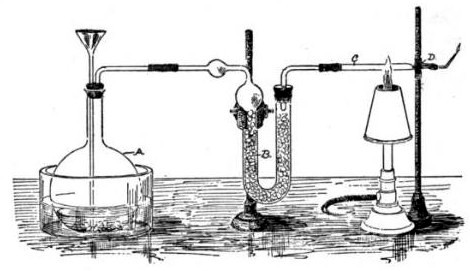
In 1832, a scientist named James Marsh came up with a test that could be used to show if a poison called arsenic was used to kill someone.
Arsenic did not have a smell or a strong taste, so people would sometimes sneak it into someone's food to poison them.
With the Marsh test, they would take some liquid from the body of the person that was poisioned.
Either some blood, or saliva (or spit) from their mouth, or urine from their bladder.
That liquid would be put into a bottle with some other chemicals, then burned up with some other gases, and then if it left a silvery black stain after being burned, it was proof that arsenic was used.

After Marsh proved to everyone that this test worked, it was used by police all over the world to put people in jail for trying to poison other people!

Because this worked so well, people worked on coming up with other ways to test for chemicals in a person's body.
These days scientists can test hair, blood, saliva, sweat or even food that is in the intestines that was not totally digested yet.

Toxicology helps the police prove what the truth is, using the evidence that is in the body!

(from: wikipedia - marsh test)


Kid Facts - Blast from the past: Liquid Rocket Propellants

Wednesday, April 10, 2019

Lion's Mane Jellyfish


We just learned about the Cannonball Jellyfish.

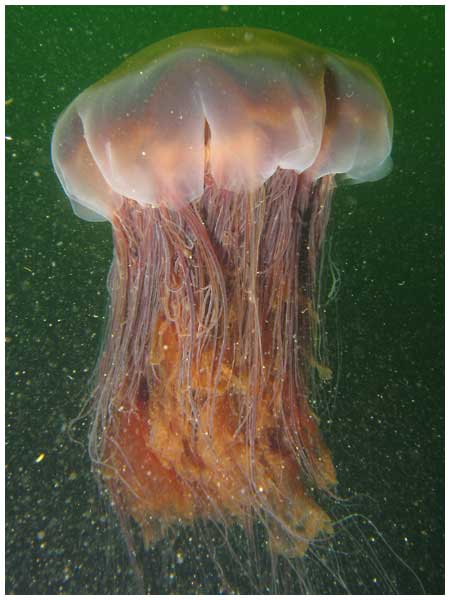
Another type of jellyfish is the Lion's Mane Jellyfish, also called the Giant Jellyfish or the Hair Jelly.

This is the largest type of jellyfish in the world, with the biggest one ever found being over 7 feet wide, and over 120 feet long.
That's taller than a house, and even longer than the blue whale!

Most of these jellies only grow to be about 2 feet wide, and they live in the very cold parts of the pacific ocean.
They swim about 65 feet under the water, and eat very tiny animals.
Other big animals like leatherback sea turtles love to eat these jellyfish for a snack!

They have over a thousand stinging tentacles, but they don't hurt too bad for humans, just the tiny animals they want to eat.


(from: wikipedia - lion's mane jellyfish)


Lion's Mane Jellyfish - Matteo Endrizzi


Kid Facts - Blast from the past: Flamboyant Cuttlefish

Tuesday, April 9, 2019

Fimbriated Fold


We just learned about the Frenulum.

Another part of the mouth is the Fimbriated Fold of the tongue, also sometimes called the Plica Fimbriata.
The word fimbria comes from the latin word for "fringe"
These are two folds of skin on the bottom of the tongue, going front to back on either side of the frenulum.

For most people these just look like lines with bumps going down the tongue, but for some people there are small pieces of skin sticking out longer.


(from: wikipedia - fimbriated fold of tongue)


Kid Facts - Blast from the past: Transverse Tarsal Ligaments

Monday, April 8, 2019

Zwinger


We just learned about the Enceinte.

Another part of a castle is a Zwinger.

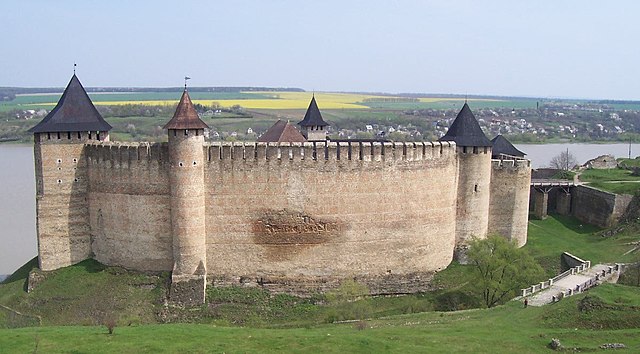
Some castles would have an outside wall and then an inside wall.
The place in between the two walls is called the zwinger.

This was made so that if attackers broke through the outside wall, the people defending the castle would be able to attack them easily in a small space before they could break into the main castle space.


(from: wikipedia - zwinger)


Kid Facts - Blast from the past: Baja California Sur

Sunday, April 7, 2019

The Great Persecution


We just learned about the Antipope.

Another part of early Christianity was the Great Persecution.

In Rome in the year 303 AD the Christians were already not treated very well, but the Roman emperors named Diocletian, Maximian, Galerius, and Constantius really did not like Christians.

They thought that Christianity should go away, and everyone should be forced to Roman gods like Jupiter.
Everyone was forced to make a sacrifice to the Roman gods, or they would be killed.

The Roman emperors ordered that Christian churches were burned to the ground, and any books or writings about Christianity were burned.
In some cities, they would bring large groups of people together and make them give a sacrifice to a Roman god or they would be killed.

This was a very tough time to be a Christian, but people still managed to save many of the old Christian writings that we know of today that helped make up the Bible!


(from: wikipedia - 20,000 martyrs of nicomedia)

(from: wikipedia - diocltianic persecution)


Kid Facts - Blast from the past: Prochorus

Saturday, April 6, 2019

Ajanta Caves


We just learned about the Sanchi Stupa.

Another group of famous sculpture in India is the Ajanta Caves.

This is a group of 30 caves, built over a long time between 100 BC to around 650 AD.
The caves were carved into a 250 foot wall of rock.

In each of the cave areas are tall columns, and sculptures of buddha or other statues.
The caves were used as homes for some monks, places to hide during dangerous storms, and places for travelers to stop and rest on their journey.


(from: wikipedia - ajanta caves)


Kid Facts - Blast from the past: Leshan Giant Buddha

Friday, April 5, 2019

Norwegian - Their car is tall


We just learned that in Norwegian:
This house is big: Dette huset er stort
This chair is small: Stolen er liten
My drink is cold: Min drikke er kald
and your food is hot is Maten er varm


To say their car is tall you would say Deres bil er høy.
Their - Deres - sounds like day-dray-ss
car - bil - sounds like bee-l
is - er - sounds like ah-dr
tall - høy - Sounds like hah-ee

So all together Deres bil er høy sounds like day-dray-s bee-l ah-dr hah-ee.


norwegian language
(from: wikipedia - norwegian language)

Greek: Το αυτοκίνητό τους είναι ψηλό (To aftokínitó tous eínai psiló)

ASL: Their car is tall

Italian: La loro auto è alto

German: Ihr Auto ist groß

Spanish: Su coche es alto

French: Leur voiture est haut

Thursday, April 4, 2019

Fingerprints


Let's keep learning about Forensics, the science of a detective!

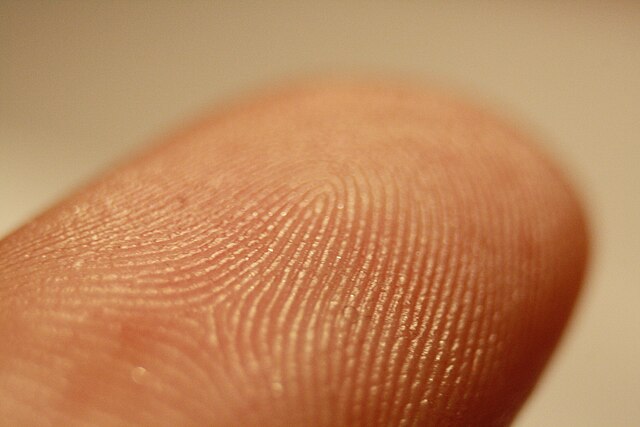
Another part of forensic science is Fingerprints.

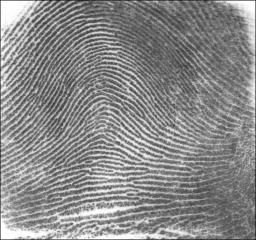
Everyone's fingers have tiny little ridges that are made over years and years of touching things.

The skin on the hand is the epidermis, and the fingerprints are called epidermal ridges.
These little ridges stick up, and have oils on them that is made by the skin.
When a person touches something, the oil from the ridges leaves a mark.

A good way to test it is to touch a mirror or a piece of glass, and it should show the finger print.

Detectives figured out that using a little brush with some ink on it, they could find fingerprints on windows, desks, or anything a person touches.
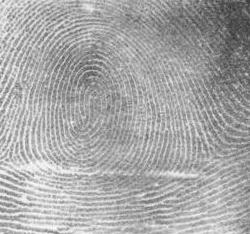
To match up the fingerprints, they take a persons finger and get ink on it, then make a mark on a piece of paper.
If the paper mark matches the one they found, then it is for sure a match, as no two people have the same fingerprints.

There are special names for some types of shapes on the fingerprints, like arch, loop, and whorl.


(from: wikipedia - fingerprint)


Kid Facts - Blast from the past: Solid Rocket Propellants
Wednesday, April 3, 2019

Cannonball Jellyfish


We just learned about the Black Sea Nettle.

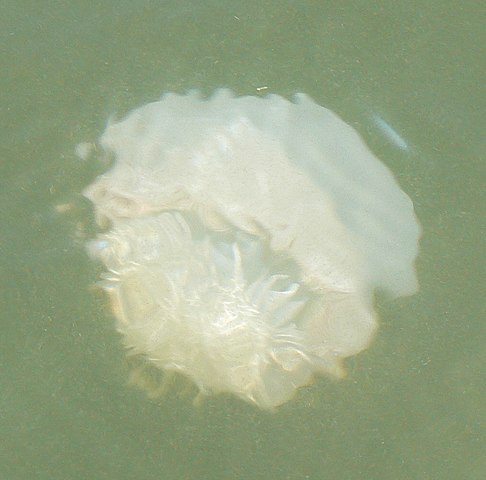
Another type of jellyfish is the Cannonball Jellyfish, also called the cabbagehead jellyfish, or Stomolophus meleagris.

It gets its name because it is about the size of a cannonball, and it is round and sometimes brown colored.
They grow to about 10 inches wide, and underneath they have arms taht they use to catch prey or to swim.

These jellies are usually found in the Atlantic ocean, all the way from North America to South America.
Sometimes they are found in the Pacific ocean too, but not as much.

They mostly eat small animals like plankton, by letting out some mucus that has a toxin poison in it.
This poison keeps away predators and stings the small fish or plankton so they can eat them.

Humans normally would only get an itchy sting from these jellies, but they can cause humans to have heart problems or eye problems if they are stung.

The leatherback sea turtle is the top predator for these jellies and will eat them right up.


(from: wikipedia - canonball jellyfish)


Cannonball! - Monterey Bay Aquarium


Kid Facts - Blast from the past: Orthoceras Nautilus

Tuesday, April 2, 2019

Frenulum


We just learned about the Foramen Cecum.

Another part of the mouth is the Frenulum.

This is the piece of skin underneath the tongue that helps hold your tongue in place.


(from: wikipedia - frenulum of tongue)


Kid Facts - Blast from the past: Talocalcaneal Ligaments

Monday, April 1, 2019

Enceinte


We just learned about the Bailey.

Another part of a castle is the Enceinte.

This is wall and towers that go around a courtyard area to protect it from outside attackers.


(from: wikipedia - enceinte)


Kid Facts - Blast from the past: Colima

Sunday, March 31, 2019

Antipope


We just learned about the Pope.

Another part of early Christian history is the Antipope.

This might sound like a bad person who is fighting against the Pope, but really it's just another person who wants to be Pope.

Sometimes when there is a new pope being chosen there are two people who want the job.
After one person gets chosen as the pope, sometimes the other person does not agree, and tries to say that they are the pope instead.

So the person that was chosen becomes the pope, and the other one who disagrees is called the antipope.


(from: wikipedia - antipope)


Kid Facts - Blast from the past: Philip the Evangelist

Saturday, March 30, 2019

Sanchi Stupa


We just learned about the Mshatta Facade.

Another famous Indian sculpture is the Sanchi Stupa.

A stupa is a dome shaped building that is like a temple for worship in India.

The town of Sanchi has a big one called The Great Stupa that was built sometime around 200 AD.

We learned before about the Sanchi Capital of Ashoka that was on top of a big pillar just outside the building.

Close to the Sanchi Stupa are a few other stupas, and only a few miles away is a place with over 60 stupas!
These stupas had sculptures all over them, and also some other pillars with capitals like the one with the lions.


(from: wikipedia - sanchi)


Kid Facts - Blast from the past: Tang Dynasty Tomb Figures of Liu Tingxun

Friday, March 29, 2019

Norwegian - Your food is hot


We just learned that in Norwegian:
This house is big: Dette huset er stort
This chair is small: Stolen er liten
My drink is cold: Min drikke er kald


Let's learn about more things we see every day.

To say your food is hot you would say Maten er varm.

Your food - Maten - sounds like mah-ten

is - er - sounds like eh-r

hot - varm - Sounds like vah-r-m


So all together Maten er varm sounds like mah-ten eh-r vah-r-m.

norwegian language
(from: wikipedia - norwegian language)


Greek: Το φαγητό είναι ζεστό (To fagitó eínai zestó)

ASL: Your food is hot

Italian: Il vostro cibo è caldo

German: Ihr Essen ist heiß

Spanish: Tu comida está caliente

French: Votre nourriture est chaud

Thursday, March 28, 2019

Forensics


We just learned about the Falcon Heavy rocket engine made by SpaceX.
From rocket fuel to navigation systems to the history of rockets, we've learned a whole lot about rockets!

Let's move on to something new, called Forensics!

This is the science of figuring out things that happened, by looking around for clues.
The word "forensic" comes from the Latin language and means "of or before the forum".
In the old days when someone did something bad, they would have to come before a group of people called a forum and tell them what happened.

When detectives and police officers are working to solve crimes, they use forensic science to look around at the place where the crime happened and see if they can figure out what really happened.

This can be things like fingerprints, talking to people who saw the crime, or even looking at what kind of animals are in the area!

Famous detectives from books like Sherlock Holmes were experts in forensics and could figure out any crime that happened!


(from: wikipedia - forensic science)


Kid Facts - Blast from the past: Rocket Propellant

Wednesday, March 27, 2019

Black Sea Nettle


We just learned about the Fried Egg Jellyfish.

Another type of jellyfish is the Black Sea Nettle, also called the black jellyfish, sarlacc jellyfish, or chrysaora achlyos.

This type of jelly lives in the Pacific Ocean, from California to British Columbia.

They can grow to be very big, over 3 feet wide and about 20 feet long.
The color of their bell top can be dark purple or black, and their tentacles are usually a lighter purple color.

For food these jellies eat plankton or other jellyfish by stinging them and then using their tentacles to bring them to to their mouths.
Their tentacles have thousands of stingers that stun or kill their prey.
People would get a painful sting from them, but they are not deadly.


(from: wikipedia - chrysaora achlyos)


Diving with Black Sea Nettle Jellyfish ( Chrysaora achlyos ) - CDub


Kid Facts - Blast from the past: Firefly Squid

Tuesday, March 26, 2019

Foramen Cecum


We just learned about the Sulcus Terminus.

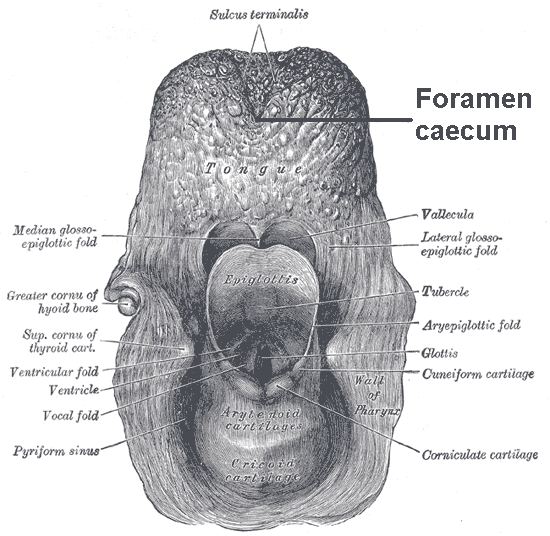
Another part of the tongue is the Foramen Cecum.

Remember the median sulcus is the line that goes down the middle of your tongue.
At the back of your tongue, and at the end of that line is the foramen cecum.

We also learned that the sulcus terminus is a v shape at the back of the tongue.
In the middle of the v shape is the foramen cecum.

So right where the "median sulcus" line and "sulcus terminus" v shape meet is the "foramen cecum" point.


(from: wikipedia - tongue)


Kid Facts - Blast from the past: Talocrural and Ankle Ligaments